


Most pet sitting in Ireland costs between €20 and €50 per visit, with overnight stays running €40 to €70 a night, according to market data from Northside Doggies. A quick drop-in to feed the cat and top up water bowls sits at the low end. A full overnight sleepover with an anxious spaniel who needs medication sits at the top.
Here’s the quick breakdown:
- Drop-in visits: €20–€28 per visit (Housesitter, Pet Sitters Ireland)
- Dog walking: €19–€23 per walk, depending on length
- Daytime sitting/daycare: €25–€50 per day
- Overnight stays: €40–€70 per night
- Twice-daily visits: around €36 per day
If you want a fast sanity check against your own quote, Care gives localised estimates, and comparing that against a vet’s baseline fee, like the €30 first consultation at Dublin Bay Vets, helps you understand what a reasonable contingency looks like if something goes wrong while you’re away.
Key Takeaways
Typical pet sitting in Ireland costs €20 to €50 per day for drop-ins and daytime care, and €40 to €70 per night for overnight stays, with location, pet complexity and booking timing driving most of the variation.
| Point | Details |
|---|---|
| Know your headline range | Budget €20–€50 per day for visits or daycare, and €40–€70 per night for overnight sitting. |
| Watch the top three price drivers | Location, number of pets, and care complexity (medication, mobility, anxiety) move quotes the most. |
| Factor in extras | Bank holidays often add roughly €10 per visit, while multi-pet and longer bookings can bring discounts. |
| Get quotes before you book | Compare at least three local sitters through Workily rather than accepting the first price offered. |
| Use Workily for vetted, fast booking | Verified profiles, instant booking and secure payments make comparing sitters and locking in cover far quicker. |
Table of Contents
- Pet sitting costs in Ireland: the full price breakdown
- What actually changes the price a sitter quotes you?
- What does each type of pet sitting actually include?
- How do you get an accurate quote from a sitter?
- Sample budgets: putting the numbers to work
- How does a vetted platform make pricing easier to trust?
- A practical tip from booking sitters directly
- Ready to book vetted pet care? Here’s the simplest route
- Frequently asked questions
- Sources
Pet sitting costs in Ireland: the full price breakdown
Prices vary more than most first-time bookers expect, mostly because “pet sitting” covers wildly different jobs. Feeding a self-sufficient cat once a day is a different task to managing an elderly dog’s insulin injections three times a day, and sitters price accordingly.
Here’s how the market typically breaks down by service type and animal:
| Service type | Typical price range | Notes |
|---|---|---|
| Cat sitting (single visit, ~40 mins) | €25 | Feeding, litter, brief check-in |
| Dog drop-in visit (1–3 pets) | €20–€28 | Feeding, water, toilet break |
| Dog walk (30 minutes) | €19–€23 | Price rises with walk length |
| Daytime dog care | €28–€50 | Full day supervision |
| Overnight stay (sitter in your home) | €40–€70 | Evening through morning |
| Boarding (sitter’s home or kennel) | Varies by provider | Often cheaper per night for multiple nights |
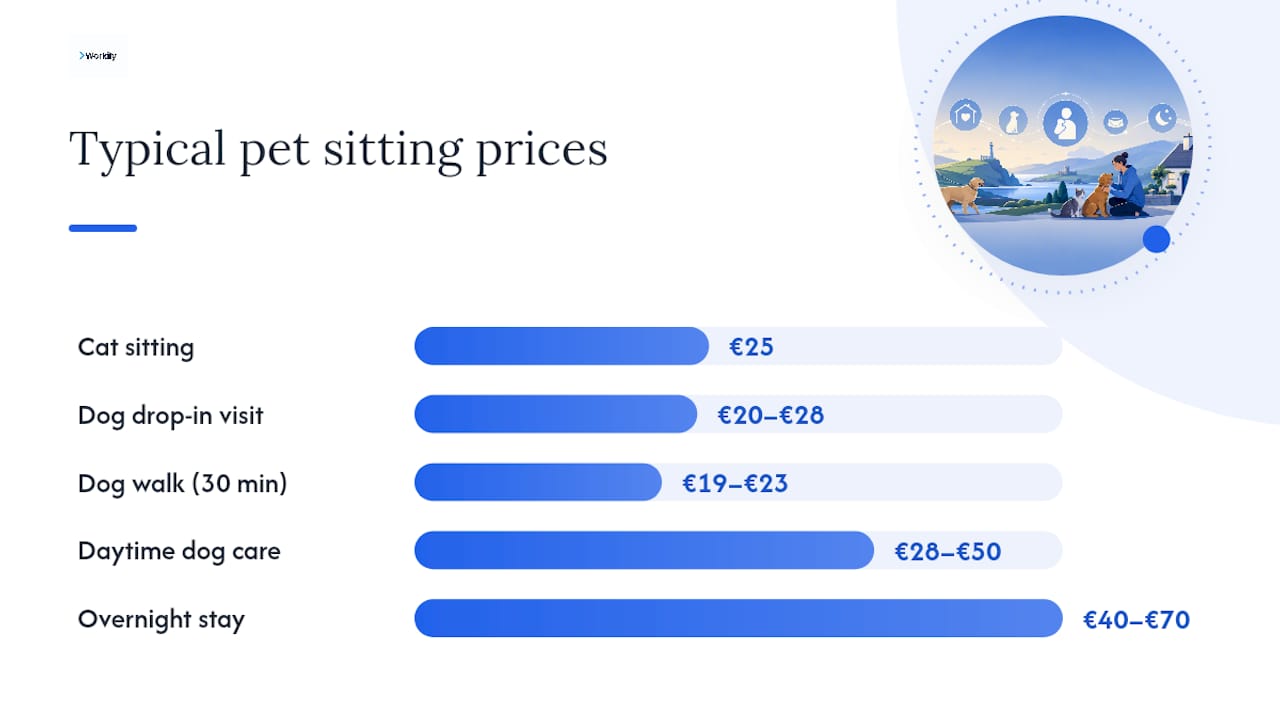
A commonly cited figure across sitter price lists is the €20 per-visit rate for a simple drop-in, rising to roughly €36 for two visits a day, based on Housesitter.ie’s published pricing. That gap between one and two visits daily is often where budgets get away from people planning a week-long trip.
Beyond the headline rate, watch for these common extras:
- Bank holiday surcharges: typically a moderate additional fee per visit
- Multiple pets: small per-animal increase, though many sitters bundle up to three pets at one rate
- Medication administration: often an added fee, sometimes included in base price if simple
- Travel time: rural addresses or estates outside a sitter’s usual radius can add a call-out charge
- Extended or last-minute bookings: short-notice requests sometimes carry a premium, while longer bookings often earn a discount
What actually changes the price a sitter quotes you?
Location is the biggest single factor. A sitter working in Dublin city centre faces higher living costs and more competition for their time than one covering a rural parish in County Leitrim, and rates reflect that. Urban sitters in Dublin, Cork and Galway tend to sit at the higher end of every range above; smaller towns and rural counties often come in noticeably lower.
Duration and frequency matter almost as much. A single 20 minute cat visit costs far less than an hour-long dog walk with training reinforcement built in. And how often you book changes the maths too, weekly regulars typically get a better rate than one-off holiday cover, because sitters value predictable income over sporadic bookings.
The other big drivers, roughly in order of impact:
- Number of pets: most sitters price up to three animals at one rate, then add a smaller fee per extra pet
- Complexity of care: administering insulin, managing separation anxiety, or handling an elderly pet with mobility issues all push the price up
- Travel time: distance from the sitter’s base eats into their day and gets priced accordingly
- Experience and insurance: a sitter with public liability cover and years of client references generally charges more than someone starting out
- Booking window: Christmas week, bank holiday weekends and peak summer dates often carry premium pricing because demand spikes while sitter availability doesn’t
Pro Tip: If you know your travel dates months in advance, ask your sitter whether booking a longer stretch, say ten days instead of two separate weekend bookings, qualifies for a per-night discount. Many sitters will drop their nightly rate for extended stays because it reduces their own admin and travel overhead, even though the total booking value is higher.
What does each type of pet sitting actually include?
Price alone tells you nothing about value unless you know what’s bundled in. Here’s what to expect from each service category.
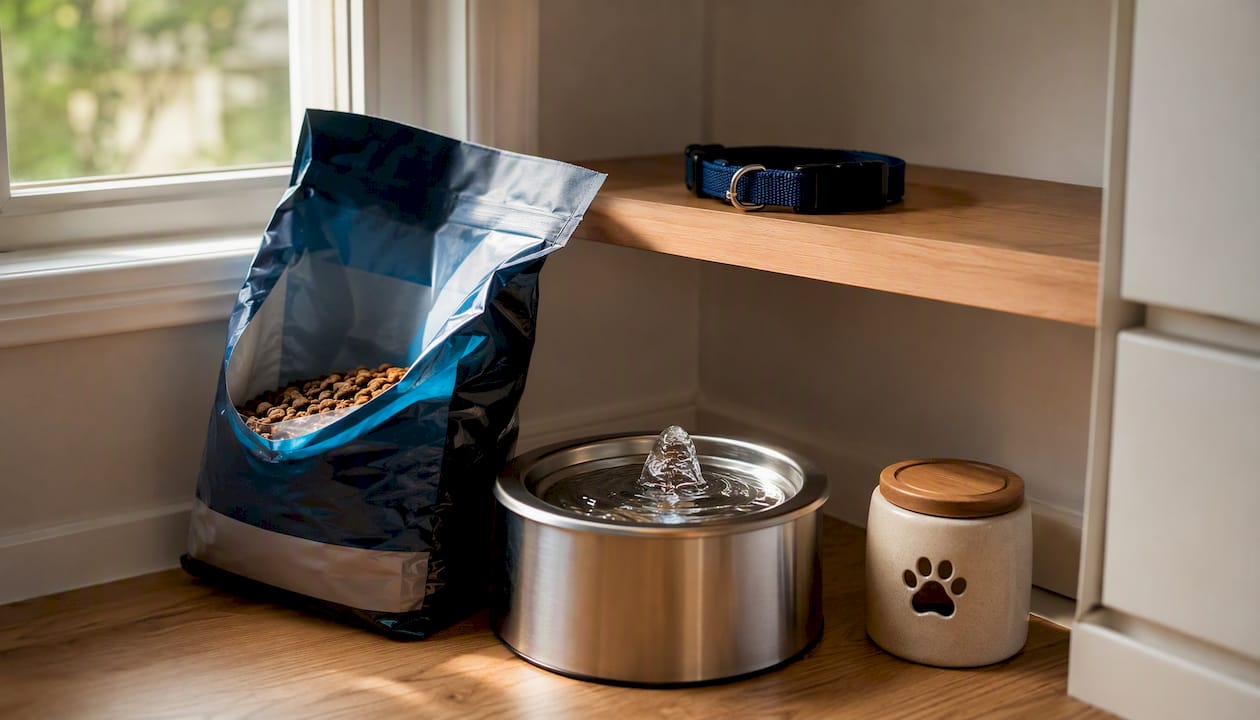
Drop-in visits are the entry point: a sitter calls to your home once or twice a day to feed, refresh water, let the dog out to the garden, and do a quick welfare check. Most include a text or photo update; not all include a full walk.
Dog walking is exactly what it sounds like, usually 30 to 60 minutes, often bundled with a drop-in visit for an extra fee rather than sold entirely separately.
Daytime sitting or daycare means a sitter has your pet with them, or comes to yours, for several hours during the day. Expect feeding, exercise, and often more frequent updates since the sitter is present longer.
Overnight sleepovers at your home mean the sitter stays in your house overnight, which most owners prefer for dogs used to their own territory. This typically includes evening and morning feeding, a late walk, security checks, and staying with the pet through the night.
Live-in stays or sitter’s home boarding shift the location to the sitter’s own house. This can suit sociable dogs well but needs more vetting, ask about other animals in the home, garden security, and how many pets they take at once.
Kennel or cattery boarding is the traditional option: your pet stays at a licensed facility rather than in a home. It’s often cheaper per night for straightforward cases but offers less one-to-one attention than in-home sitting.
A useful checklist for any service, whatever the label: feeding as instructed, fresh water, toileting or walks, medication given correctly and on schedule, photo or text updates, and secure handling of your house keys or alarm code. A sitter who administers twice-daily medication for a diabetic cat is doing meaningfully more than one topping up a bowl of dry food, and the price should reflect that.
How do you get an accurate quote from a sitter?
Vague requests get vague quotes. Give a sitter this information up front and you’ll get a number you can actually compare against another sitter’s:
- Exact dates and times you need cover, including whether you need morning and evening visits or just one
- Number, species and age of pets, plus any breed-specific needs (a boisterous Labrador puppy is not the same job as a sleepy senior cat)
- Health conditions and medication, including dosage and timing
- How they’ll access your home, key, code, or key safe, and whether you have an alarm
- Your general location, so travel time can be factored in
Once you’ve got quotes in hand, ask each sitter these questions before booking:
- Do you carry public liability insurance?
- Can you provide references from previous clients?
- Have you cared for this breed or condition before?
- What’s your cancellation and refund policy?
- How and when do you expect payment?
Watch for red flags: a sitter who won’t put terms in writing, can’t produce a single reference, or gets evasive when you ask about vaccination requirements or insurance. On payment, most Irish sitters expect a deposit to confirm a holiday booking, with the balance due on the final day or before you leave, bank transfer and cash are the norm, though some accept card payments through booking platforms.
Sample budgets: putting the numbers to work
Numbers in a table only help once you convert them into your own situation. Here are four common scenarios worked through.
Weekend away (2 nights, one dog, twice-daily visits): 4 visits at roughly €20 each = €80, or one overnight stay at €40–€50 per night = €80–€100.
One-week holiday (7 nights, one dog, overnight sitter): 7 nights at €40–€70 = €280–€490. Add a bank holiday surcharge of €10 if travel falls over a long weekend.
Daily weekday dog walks for a month (20 walks): 20 walks at €19–€23 = €380–€460 per month, often reduced slightly for a standing weekly arrangement.
Boarding vs in-home care, one week: Kennel boarding often lands somewhat below in-home overnight rates per night, but in-home care avoids the stress of a new environment for anxious pets, worth the difference for many owners.
| Scenario | Rough calculation | Estimated total |
|---|---|---|
| Weekend, twice-daily visits | 4 × €20 | €80 |
| Weekend, overnight sitter | 2 × €40–€50 | €80–€100 |
| One week, overnight sitter | 7 × €40–€70 | €280–€490 |
| Monthly weekday walks | 20 × €19–€23 | €380–€460 |
Build in a small buffer for the unexpected. If your pet needs an emergency vet visit while you’re away, a first consultation can run from around €30 to €60 depending on the clinic, based on pricing from Urban Vets and Value Vets. Adding one consultation fee’s worth of headroom to a holiday pet-care budget is cheap insurance against a nasty surprise.
How does a vetted platform make pricing easier to trust?
Comparing quotes gets far easier when every sitter on the list has already been checked out, rather than you doing that legwork call by call. That’s the practical gap Workily fills for pet owners trying to line up cover before a trip.
Vetted profiles, transparent pricing, and the ability to book the same day rather than waiting on callbacks change how confident you feel handing over house keys to someone new.
What that looks like in practice on Workily:
- Verified professionals, so you’re not relying on a stranger’s own word for their experience or insurance
- Instant booking, useful for last-minute trips when you don’t have weeks to shop around
- Secure payments handled through the platform rather than cash changing hands informally
- Clear pricing upfront, so you can compare local sitters against the ranges covered above before committing
Workily’s trust and safety process is built around the same vetting standard used across its home and business services categories, backed by a 98% satisfaction rate across more than 100,000 customers. If you’re already comparing pet sitter costs against other household services like house cleaning, the same comparison approach applies: get more than one quote before you book.
A practical tip from booking sitters directly
The single biggest cost-saver isn’t haggling on the per-visit rate. It’s sticking with one sitter your pet already knows, rather than starting from scratch every time you travel.
The first booking with a new sitter always costs more in hidden ways: a longer briefing call, a trial visit to check they get on with your dog, the anxiety of not quite knowing what you’re getting. Once a sitter knows your cat hides under the bed for the first ten minutes of every visit, or that your terrier needs his thyroid tablet wrapped in cheese, that knowledge has real value. A returning sitter also tends to be more flexible on notice periods and, in some cases, offers a modest loyalty discount simply because repeat clients are worth more to their business than one-off bookings.
One specific choice that paid off for pet owners we’ve spoken to through the platform: picking a sitter who was upfront about handling medication correctly, rather than the cheapest option on the list. A dog with early kidney disease needs consistent timing on medication and diet, and a sitter who treats that as routine, rather than an inconvenience, is worth the extra few euro per visit. The cost difference between the cheapest and most capable sitter on a given street is often smaller than people assume, sometimes only €5 to €10 per visit, but the difference in reliability can be substantial.
Ready to book vetted pet care? Here’s the simplest route
Workily gives Irish pet owners a faster route to trustworthy cover than working the phones or scrolling local Facebook groups hoping someone replies. Every sitter listed has already been through a vetting process, so the guesswork that usually eats up hours before a trip is largely removed before you even send your first message.

Getting started takes three steps: search for pet sitters in your area, compare profiles and reviews side by side, then either book instantly for last-minute cover or request a quote if you want to negotiate specifics like medication or multiple daily visits. Requesting quotes from two or three sitters through Workily’s booking page costs nothing and gives you a genuine like-for-like comparison rather than relying on one person’s word for what’s fair. If you’d rather talk through your pet’s specific needs before committing, you can also ask a professional directly for tailored advice.
Need someone to do it instead? Book, Ask or Hire a trusted professional in your area through Workily.
Frequently asked questions
How much does a pet sitter cost per day in Ireland?
Expect to pay roughly €20 to €50 per day for drop-in visits or daytime care, depending on location, number of pets and how much hands-on attention they need.
Is overnight pet sitting more expensive than daytime visits?
Yes. Overnight stays typically cost €40 to €70 per night because the sitter is committing their full evening and morning, not just a short call-in.
What’s included in a standard pet-sitting visit?
Most visits cover feeding, fresh water, a toilet break or short walk, and a photo or text update. Medication, extended walks and multiple daily visits usually cost extra.
Do pet sitters charge more on bank holidays?
Many do, typically an additional €10 per visit, reflecting the reduced availability of sitters on those dates.
Is pet sitting a good side hustle in Ireland?
It can suit people with flexible schedules and genuine animal experience, though building a steady client base and public liability insurance takes time before the income becomes reliable.
What are the red flags to watch for when hiring a sitter?
Be wary of anyone unwilling to put terms in writing, unable to provide references, or vague about insurance, vaccination requirements or their cancellation policy.
When should I pay a pet sitter?
Most sitters ask for a deposit to confirm a booking, with the remaining balance due before or on the last day of the booking, paid by bank transfer, cash, or through a booking platform.
How can I get an accurate quote from a sitter?
Give exact dates, the number and type of pets, any medical needs, and how they’ll access your home. The more detail you provide upfront, the more comparable the quotes you’ll receive.
Sources
- Dublin Bay Vets — prices
- Value Vets — price list
- Urban Vets — price list
- Housesitter
- How Much Is A Dog Sitter In Ireland? — Northside Doggies