
Most tumble dryer repairs in Ireland cost between a modest and mid-range amount, covering the call-out, parts, and labour for the majority of common faults. Minor repairs, such as a broken belt or a faulty door latch, sit at the lower end and are almost always worth doing. Major faults like a failed motor or a cracked drum push toward the top of that range, where replacement starts to make more sense. According to Fixr’s repair cost data, many common dryer repairs cluster in the mid-hundreds once parts and labour are combined, a pattern that holds broadly for Irish tradespeople too. ConsumerAffairs documents a similarly wide spread depending on fault and brand.
Quick cost snapshot:
- Call-out / diagnostic fee: a typical range around the mid tens up to about eighty euros (sometimes credited against the repair)
- Simple repairs (belt, door latch, thermal fuse): usually a low to mid-hundreds range all-in
- Mid-range repairs (heating element, thermostat, sensor): often a moderate sum somewhat above simple repairs all-in
- Complex repairs (motor, drum bearing, condenser unit): tends to be at the higher end of typical repair costs, where replacement may be considered
- Verdict: Repair is usually sensible if the dryer is under eight years old and the fault is not a motor or drum replacement.
Key takeaways
Most tumble dryer repairs in Ireland cost between €80 and €300 all-in, and repair is usually the right call for machines under eight years old with minor to mid-range faults.
| Point | Details |
|---|---|
| Typical repair cost band | Most Irish dryer repairs cost €80–€300 all-in, depending on fault and parts. |
| When to replace instead | If the repair quote exceeds 50% of a new machine’s cost, replacement is usually better value. |
| Ask about the call-out fee | Always confirm whether the diagnostic fee is credited against the repair before the technician visits. |
| Clean the vent first | A blocked lint vent causes most heating faults and costs nothing to fix yourself. |
| Use Workily for vetted quotes | Workily connects you with verified local repairers for instant booking and secure, comparable quotes. |
Table of Contents
- What drives the cost of a tumble dryer repair
- Estimated repair costs by fault type
- Call-out fees and labour rates: what to expect in Ireland
- Should you repair or replace your dryer?
- Common faults, simple checks, and when to call a professional
- How long does a dryer repair take?
- How to compare quotes and choose a trustworthy repairer
- Why manufacturer guidance and verified marketplaces reduce your risk
- The mistake most homeowners make with dryer repairs
- Book a vetted dryer repairer through Workily
- Frequently asked questions
- Sources
What drives the cost of a tumble dryer repair
Three things determine what you pay: the diagnostic fee, the cost of the replacement part, and the labour time to fit it. VAT at 23% is included in most Irish trade quotes, but always confirm this upfront. Travel surcharges can add €10–€25 for rural locations in counties like Roscommon, Donegal, or Kerry, where a technician may be driving 30 minutes each way.
The main cost components:
- Diagnostic / call-out fee: Charged to cover the technician’s time visiting and identifying the fault. Typically €50–€80 in Irish cities; slightly higher in rural areas.
- Labour: Either an hourly rate (commonly €60–€90/hour in Ireland) or a flat job rate agreed upfront.
- Replacement parts: The single biggest variable. A belt costs a fraction of what a motor does.
- VAT: Standard Irish rate of 23% applies to most appliance repair services.
- Travel surcharge: Common outside major urban centres.
Machine type matters too. A basic vented dryer uses simpler, cheaper parts than a heat-pump model. Heat-pump dryers, which are increasingly common given their energy efficiency, use proprietary components that can be harder to source and more expensive to replace. Older machines from discontinued product lines face the same problem: parts availability shrinks as models age, which drives up both price and waiting time.
| Part type | Relative cost tier | Typical part cost (€) |
|---|---|---|
| Drive belt | Low | €10–€30 |
| Door latch / switch | Low | €30–€40 |
| Thermal fuse / thermostat | Low–Medium | €30–€50 |
| Heating element | Medium | €20–€90 |
| Drum bearing | Medium–High | €40–€100 |
| Motor | High | €80–€200+ |
| Condenser / heat-pump unit | High | €100–€300+ |
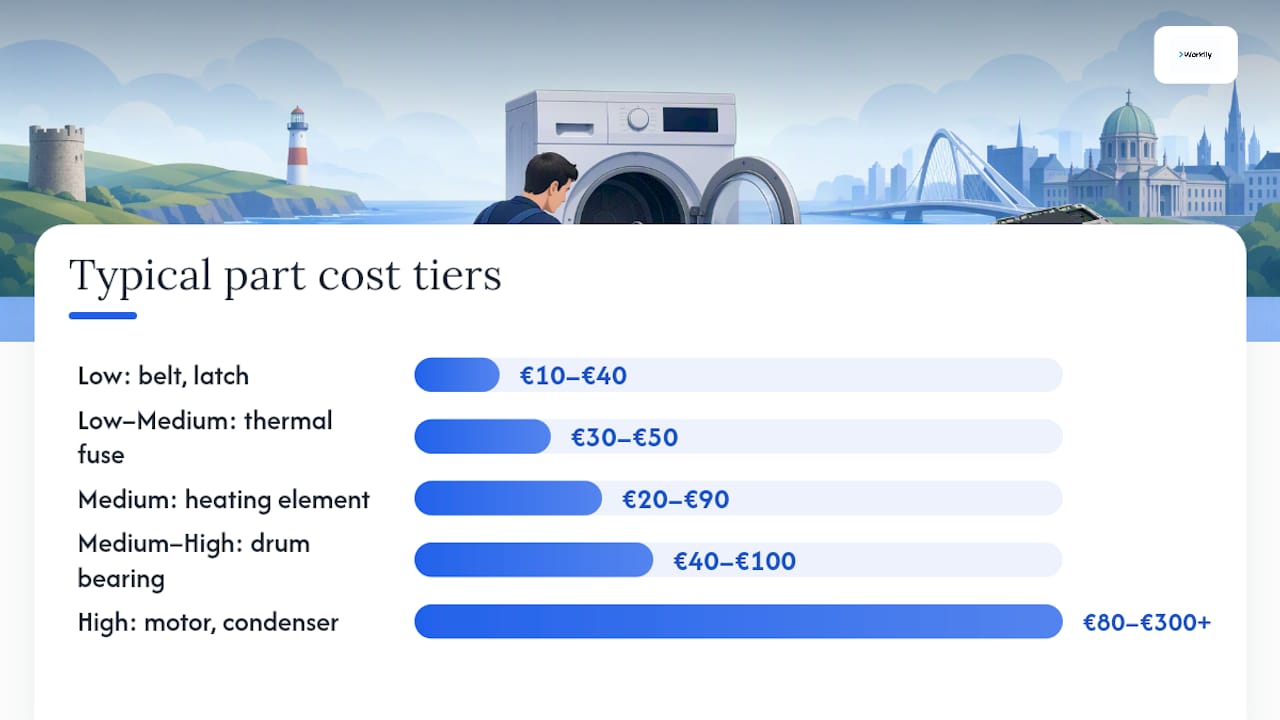
Part costs above are for the component alone. Labour to fit them adds significantly to the final bill, as discussed in the next section.
Estimated repair costs by fault type
The table below gives realistic all-in price ranges for Irish homeowners, combining a typical call-out fee, parts, and labour. These are estimates based on industry cost guides from Fixr and ConsumerAffairs, adjusted for Irish labour rates.
| Fault | Typical Irish cost range (€) | Complexity |
|---|---|---|
| Dryer won’t heat (heating element) | €155–€225 | Medium |
| Drum won’t turn (broken belt) | €80–€150 | Low |
| Noisy drum (worn bearings) | €150–€225 | Medium–High |
| Door won’t latch (door switch/latch) | €60–€90 | Low |
| Thermostat / thermal fuse failure | €80–€90 | Low–Medium |
| Motor failure | €200–€350+ | High |
| Condenser or heat-pump fault | €180–€385 | High |
A heating element replacement is a good example of how a bill builds up. The part itself, sourced from a specialist supplier, typically costs €20–€90. Add a €60 call-out fee and an hour of labour at €75, and the total lands around €155–€225. If the diagnostic fee is credited against the repair, you save €50–€60 on that figure. Not every repairer offers this, so ask before they arrive.
Key fault patterns to know:
- Belts and latches are the cheapest repairs. A snapped belt is often a 30-minute job once the machine is open.
- Thermal fuses are inexpensive parts but require correct diagnosis, since a blown fuse is often a symptom of a blocked vent rather than a standalone fault.
- Motors and drum replacements are where the maths shifts. When the repair quote approaches or exceeds half the cost of a new machine, replacement is usually the smarter call.
Call-out fees and labour rates: what to expect in Ireland
Most Irish appliance repairers charge a flat call-out fee to visit and diagnose the fault. This covers their travel and the first inspection. Whether that fee is credited against the repair if you proceed varies by company, so it is one of the first questions to ask.
Typical Irish labour cost structures:
- Flat call-out + hourly rate: €50–€80 call-out, then €60–€90 per hour. A one-hour repair totals €110–€170 before parts.
- Flat job rate: Some repairers quote a single price for the whole job once they have diagnosed the fault. This can be better value for complex repairs.
- Travel surcharge: €10–€25 extra for rural areas or long distances.
The Checkatrade appliance repair cost guide notes that diagnostic visits are standard across the industry and that labour rates vary noticeably by region, a pattern that applies equally in Ireland.
Two example breakdowns:
Small repair (broken belt, Dublin): €65 call-out (credited) + €30 belt + 45 minutes labour at €75/hour = approximately €151 total.
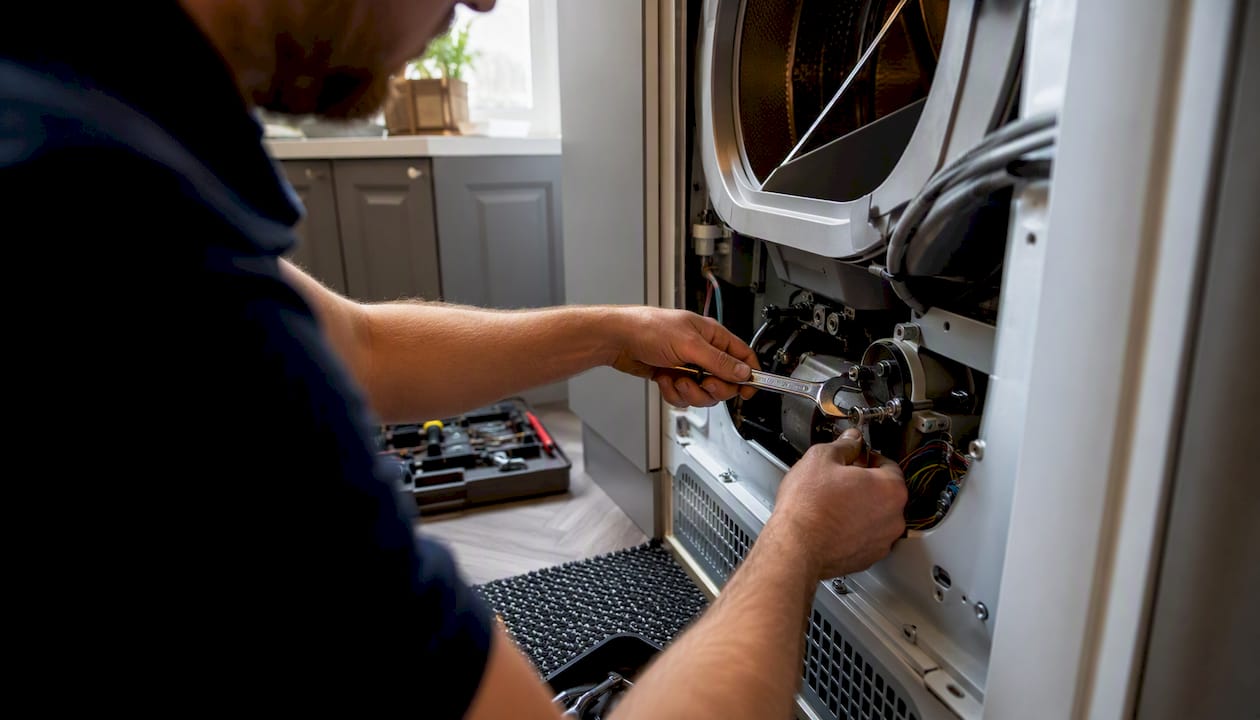
Motor replacement (rural Galway): €75 call-out (not credited) + €150 motor + 2 hours labour at €80/hour = approximately €385 total. At that price, a new budget dryer becomes a serious alternative.
Should you repair or replace your dryer?
The short answer: if the repair costs less than 50% of what a comparable new dryer would cost, and the machine is under eight years old, repair is almost always the right call.
Beko’s guidance on repair versus replacement specifically highlights appliance age and energy efficiency as the two key factors. An older dryer that needs a costly repair may consume significantly more electricity than a modern A-rated heat-pump model, meaning the running cost difference compounds over time.
Decision checklist:
- How old is the dryer? Under 5 years: repair almost always makes sense. 5–8 years: depends on fault severity. Over 10 years: replacement is often better value.
- What is the repair quote as a percentage of a new machine? Above 50%: lean toward replacement.
- Is the fault a symptom of wider wear? A motor failure on a 9-year-old machine often signals other components are close behind.
- Are parts readily available? Discontinued models can mean long waits and inflated part costs.
- How energy-efficient is the current machine? Older vented dryers cost considerably more to run than modern heat-pump equivalents.
- Do you have a matched laundry pair? Replacing one appliance and not the other can affect resale value and aesthetics, which sometimes tips the decision toward repair.
Pro Tip: The 50% rule is a useful starting point, but it has exceptions. A high-end heat-pump dryer that costs €900 new is worth repairing even at €350 if the fault is a one-off component failure and the machine is only four years old. Apply the rule as a guide, not a verdict.
Common faults, simple checks, and when to call a professional
Before booking a technician, a few quick checks can save you the call-out fee entirely.
Safe checks you can do yourself:
- Clean the lint trap and the external vent thoroughly. A blocked vent is the single most common cause of a dryer that runs but produces no heat, and it takes five minutes to fix.
- Check the power supply. A tripped circuit breaker or a loose plug connection causes a surprising number of “broken dryer” call-outs.
- Inspect the door seal and latch visually. If the door is not closing fully, the machine will not start.
- Check for error codes on digital displays and cross-reference them with the manufacturer’s manual.
When to stop and call a professional:
- Any fault involving the electrical heating element, motor, or internal wiring.
- Gas dryers (rare in Ireland but not unknown): gas appliances must be serviced by a registered Gas Safe technician.
- Any repair requiring the drum to be removed or the machine to be fully disassembled.
- Faults that recur after a DIY fix, which usually indicate a deeper underlying issue.
Pro Tip: If your dryer keeps blowing thermal fuses, do not just replace the fuse. A recurring fuse failure almost always means the vent is partially blocked or the heating element is running too hot. Fix the root cause first.
Laundry area plumbing and venting can also affect dryer performance. If your machine is connected to a shared utility space, it is worth checking your laundry plumbing setup for any blockages or drainage issues that might be contributing to the problem.
How long does a dryer repair take?
Most simple repairs, a broken belt, a door latch, a blown thermal fuse, are completed on the same day or the next day. The technician diagnoses the fault on-site, and if they carry common parts in their van (many do), the job is done within the hour.
Typical repair timeline:
- On-site diagnosis: 20–45 minutes.
- Simple repair with part in stock: Same visit, 30–90 minutes total.
- Part needs ordering: 2–5 working days for standard parts from Irish or UK suppliers.
- Rare or proprietary parts (heat-pump components, discontinued models): 1–3 weeks, sometimes longer.
- Workshop repairs (machine taken away): Add 1–3 days for transport and bench time.
Some repairers offer expedited or same-day service for an additional premium, typically €20–€40 extra. For a household without a second dryer, that premium is often worth paying, particularly in winter.
How to compare quotes and choose a trustworthy repairer
Getting two or three quotes is the single most effective way to avoid overpaying. Prices for the same fault can vary by €80–€100 between repairers in the same city.
Questions to ask every repairer before they visit:
- Is the call-out fee credited against the repair if I proceed?
- Do you provide a written quote before starting work?
- What warranty do you offer on parts and labour?
- Where do the replacement parts come from (OEM, aftermarket, or reconditioned)?
- What is the expected turnaround if parts need to be ordered?
- Are you registered with any trade body or can you show credentials?
Red flags to watch for:
- A very low quote with no breakdown of parts and labour.
- A request for a large cash payment upfront before any work is done.
- Reluctance to provide a written estimate.
- No clear answer on warranty or parts origin.
- Pressure to decide immediately without time to compare.
Using a platform like Workily to find local appliance repair professionals means you can compare vetted tradespeople, read verified reviews, and request quotes from multiple repairers in one place. That written record also matters if a dispute arises later. For broader context on how Irish homeowners budget for appliance repairs, the Workily appliance repair cost guide covers the full picture across common household appliances.
Why manufacturer guidance and verified marketplaces reduce your risk
Beko’s published guidance on repair versus replacement is one of the clearest manufacturer resources available to Irish homeowners. It frames the decision around two variables that most people overlook: the machine’s remaining useful life and its energy consumption relative to newer models. Following that framework before accepting a repair quote can save you from spending €200 on a machine that will cost you more in electricity over the next three years than a replacement would.
How Workily reduces uncertainty when booking a repairer:
- All professionals on the platform are vetted before they can accept bookings.
- Instant booking means same-day availability is visible without phone calls.
- Secure online payment protects both parties and creates a clear transaction record.
- Verified reviews give you a realistic picture of a tradesperson’s reliability before they arrive.
Using a vetted marketplace means you arrive at the repair with a written record of the quote, the professional’s credentials, and a clear payment trail. That paper trail is also what many appliance manufacturers require to preserve any remaining warranty on the machine.
Using an unverified sole trader carries a real risk: no written guarantee, no recourse if the repair fails within weeks, and no way to confirm the parts used were genuine. For advice on what to look for when hiring any tradesperson in Ireland, the Workily trust and safety page sets out the vetting standards applied to every professional on the platform.
The mistake most homeowners make with dryer repairs
The most common error is accepting the first quote without asking whether the diagnostic fee is credited, and without cleaning the vent before the technician arrives. Those two oversights together can add €100 to a bill that should have been much lower.
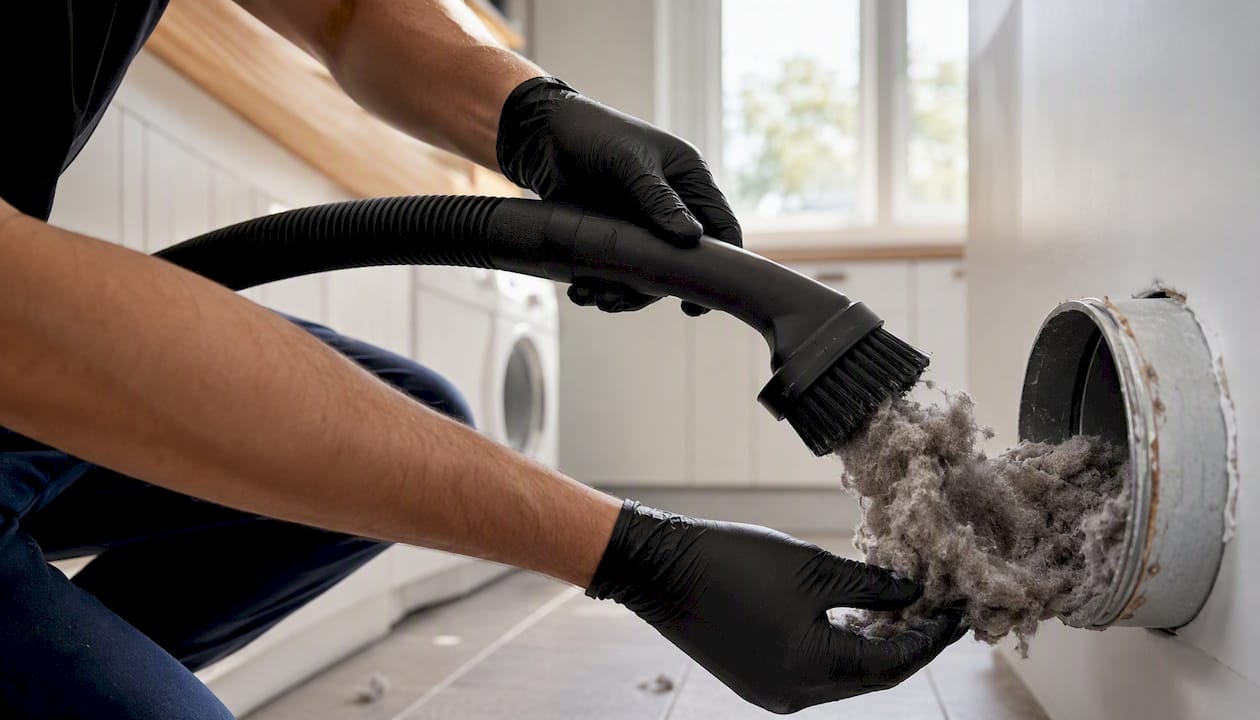
The second mistake is ignoring the vent entirely. A blocked vent does not just cause overheating; it shortens the life of the heating element and the motor. A technician who replaces a heating element without checking the vent is solving the symptom, not the cause. The element will fail again within months. Ask specifically whether the vent was inspected as part of the repair.
For further reading on how Irish homeowners approach home service costs and trade hiring, the Workily blog covers a range of cost guides and practical hiring advice, including how to read quotes and what credentials to check.
Book a vetted dryer repairer through Workily
Finding a reliable appliance repairer in Ireland does not have to mean calling around and waiting for callbacks. Workily connects homeowners directly with vetted, reviewed professionals who are available for same-day or next-day bookings, with secure payment and a clear written record of every job.

You compare real quotes from real local repairers, not guesswork. Whether you need a quick diagnosis or a full motor replacement, book a professional instantly or browse local appliance repairers to request quotes and compare availability. Not ready to book yet? Ask a Pro for a remote consultation first.
Need someone to do it instead? Book, ask, or hire a trusted professional in your area through Workily.
Frequently asked questions
How much does it cost to repair a tumble dryer in Ireland?
Most repairs cost between €80 and €300 all-in, covering the call-out fee, parts, and labour. Simple faults like a broken belt or door latch sit at the lower end; motor or condenser failures push toward €300 or more.
Is it worth repairing a tumble dryer or should I replace it?
As a general rule, repair is worth it if the quote is less than 50% of the cost of a comparable new machine and the dryer is under eight years old. Beko’s guidance also recommends factoring in energy efficiency, since an older dryer can cost significantly more to run than a modern heat-pump model.
What is a typical call-out fee for an appliance repairer in Ireland?
Call-out fees in Ireland typically range from €50 to €80. Some repairers credit this fee against the repair cost if you proceed; others do not. Always ask before booking.
How long does a tumble dryer repair take?
Simple repairs with parts in stock are usually completed on the same visit, within 30–90 minutes. If parts need to be ordered, expect 2–5 working days for standard components, or up to three weeks for rare or proprietary parts.
Why does my dryer run but produce no heat?
The most common causes are a blocked lint vent, a blown thermal fuse, or a failed heating element. Clean the vent and lint trap first; if the problem persists, a technician will need to test the fuse and element.
What is the most expensive dryer repair?
Motor replacement and condenser or heat-pump unit failures are typically the most costly repairs, often reaching €200–€350 or more once parts and labour are included. At that price point, comparing the quote against a new machine is strongly advisable.
How do I find a reliable dryer repairer in Ireland?
Request at least two or three quotes, check that the repairer provides a written estimate, and confirm their warranty on parts and labour. Using a vetted platform like Workily lets you compare local professionals with verified reviews and book securely online.
Does dryer brand affect repair cost?
Yes. Common brands with widely available parts, such as Beko, Hotpoint, and Indesit, tend to have lower parts costs and shorter waiting times. Premium or less common brands may use proprietary components that are harder to source and more expensive.
{
  "@context": "https://schema.org",
  "@type": "FAQPage",
  "mainEntity": [
    {
      "@type": "Question",
      "name": "How much does it cost to repair a tumble dryer in Ireland?",
      "acceptedAnswer": {
        "@type": "Answer",
        "text": "Most repairs cost between €80 and €300 all-in, covering the call-out fee, parts, and labour. Simple faults like a broken belt or door latch sit at the lower end; motor or condenser failures push toward €300 or more."
      }
    },
    {
      "@type": "Question",
      "name": "Is it worth repairing a tumble dryer or should I replace it?",
      "acceptedAnswer": {
        "@type": "Answer",
Beko's guidance also recommends factoring in energy efficiency, since an older dryer can cost significantly more to run than a modern heat-pump model."
      }
    },
    {
      "@type": "Question",
      "name": "What is a typical call-out fee for an appliance repairer in Ireland?",
      "acceptedAnswer": {
        "@type": "Answer",
        "text": "Call-out fees in Ireland typically range from €50 to €80. Some repairers credit this fee against the repair cost if you proceed; others do not. Always ask before booking."
      }
    },
    {
      "@type": "Question",
      "name": "How long does a tumble dryer repair take?",
      "acceptedAnswer": {
        "@type": "Answer",
        "text": "Simple repairs with parts in stock are usually completed on the same visit, within 30–90 minutes. If parts need to be ordered, expect 2–5 working days for standard components, or up to three weeks for rare or proprietary parts."
      }
    },
    {
      "@type": "Question",
      "name": "Why does my dryer run but produce no heat?",
      "acceptedAnswer": {
        "@type": "Answer",
        "text": "The most common causes are a blocked lint vent, a blown thermal fuse, or a failed heating element. Clean the vent and lint trap first; if the problem persists, a technician will need to test the fuse and element."
      }
    },
    {
      "@type": "Question",
      "name": "What is the most expensive dryer repair?",
      "acceptedAnswer": {
        "@type": "Answer",
        "text": "Motor replacement and condenser or heat-pump unit failures are typically the most costly repairs, often reaching €200–€350 or more once parts and labour are included. At that price point, comparing the quote against a new machine is strongly advisable."
      }
    },
    {
      "@type": "Question",
      "name": "How do I find a reliable dryer repairer in Ireland?",
      "acceptedAnswer": {
        "@type": "Answer",
        "text": "Request at least two or three quotes, check that the repairer provides a written estimate, and confirm their warranty on parts and labour. Using a vetted platform like Workily lets you compare local professionals with verified reviews and book securely online."
      }
    },
    {
      "@type": "Question",
      "name": "Does dryer brand affect repair cost?",
      "acceptedAnswer": {
        "@type": "Answer",
        "text": "Yes. Common brands with widely available parts, such as Beko, Hotpoint, and Indesit, tend to have lower parts costs and shorter waiting times. Premium or less common brands may use proprietary components that are harder to source and more expensive."
      }
    }
  ]
}