
In Galway, an emergency plumber call-out generally involves a fixed fee plus hourly labour charges that increase for out-of-hours or weekend work. Simple repairs within an hour can cost a moderate amount, while complex burst pipe or sewer jobs may be significantly more expensive once parts and longer labour are included.
The three factors that move the bill most sharply:
- Call-out fee: charged the moment a plumber commits to attending, regardless of whether a repair is carried out
- Time of day: evenings, weekends, and bank holidays attract significant surcharges, often doubling the standard hourly rate
- Repair complexity: hidden pipework, specialist parts, or excavation can multiply a simple-looking job several times over
Most Galway plumbers will credit the call-out fee against the final invoice if work proceeds. Check this before they arrive. If your home insurance includes emergency cover, the call-out fee alone rarely triggers a worthwhile claim once you factor in the policy excess.
Pro Tip: Turn off your mains water supply the moment you suspect a serious leak. Every minute of active flow adds to the damage a plumber will need to repair, and that directly increases your bill.
Key takeaways
| Point | Details |
|---|---|
| Call-out fee range | Expect €80–€150 to get a plumber to your door in Galway, credited against the job if work proceeds. |
| Out-of-hours premium | Evening, weekend, and bank holiday rates run 50–100% above the standard €80–€120 hourly rate. |
| Stop damage first | Turn off the mains water immediately to limit repair scope and reduce total labour time on site. |
| Always verify credentials | Check Gas Safe registration for any gas work; ask for public liability insurance and a written quote before work starts. |
| Compare quotes via Workily | Workily lets Galway homeowners compare verified emergency plumbers with transparent pricing and instant booking. |
Table of Contents
- Is your plumbing problem actually an emergency?
- How emergency plumbers break down their charges
- What common emergency jobs actually cost in Galway
- How location within Galway affects your call-out price
- Response times and what urgency costs you
- What the call-out fee actually includes (and what it does not)
- Practical steps to reduce your emergency plumbing bill
- Will your home insurance cover the cost?
- Red flags and how to vet an emergency plumber quickly
- How these cost estimates were calculated
- What the UK 2026 average call-out fee looks like
- Plumber hourly rates: standard hours versus out-of-hours
- Regional cost differences: what Galway homeowners can learn from London data
- How long will the repair actually take, and what does that mean for cost?
- Payment methods and managing the bill
- Why verified booking changes the cost equation
- Workily connects Galway homeowners with verified emergency plumbers
- Sources
Is your plumbing problem actually an emergency?
Not every dripping tap justifies an emergency call-out rate. Knowing the difference saves you a significant surcharge.
True emergencies — call immediately:
- Burst pipe with active flooding
- Sewage backing up into the home
- Complete loss of water supply to the property
- A leak near or involving a gas-connected appliance (call Gas Networks Ireland first)
- Boiler failure in winter with vulnerable occupants present
- Overflowing toilet that cannot be contained
Borderline cases — often manageable until morning:
- Slow drip from a tap or joint that can be caught in a bucket
- Low water pressure without visible leakage
- Single radiator not heating when others work normally
- Toilet running continuously but not overflowing
The honest test: if water is actively damaging your property or creating a health risk right now, it is an emergency. If it is inconvenient but containable, a next-day standard appointment will cost you considerably less.
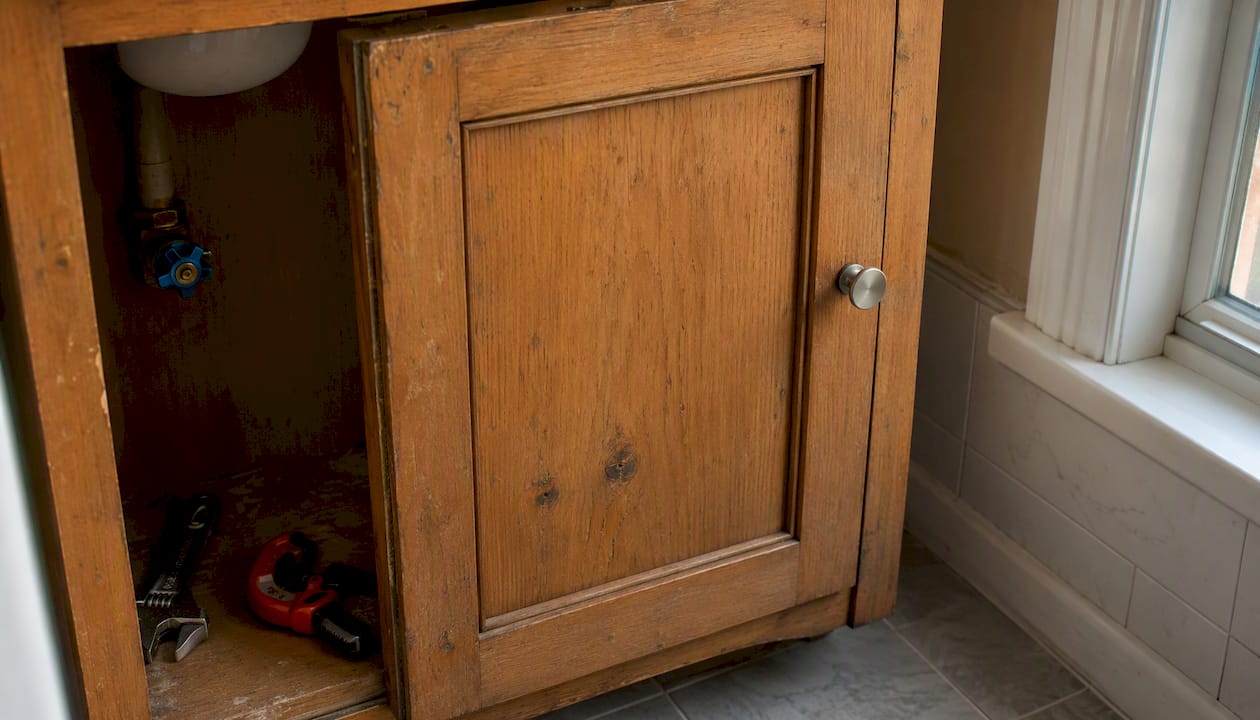
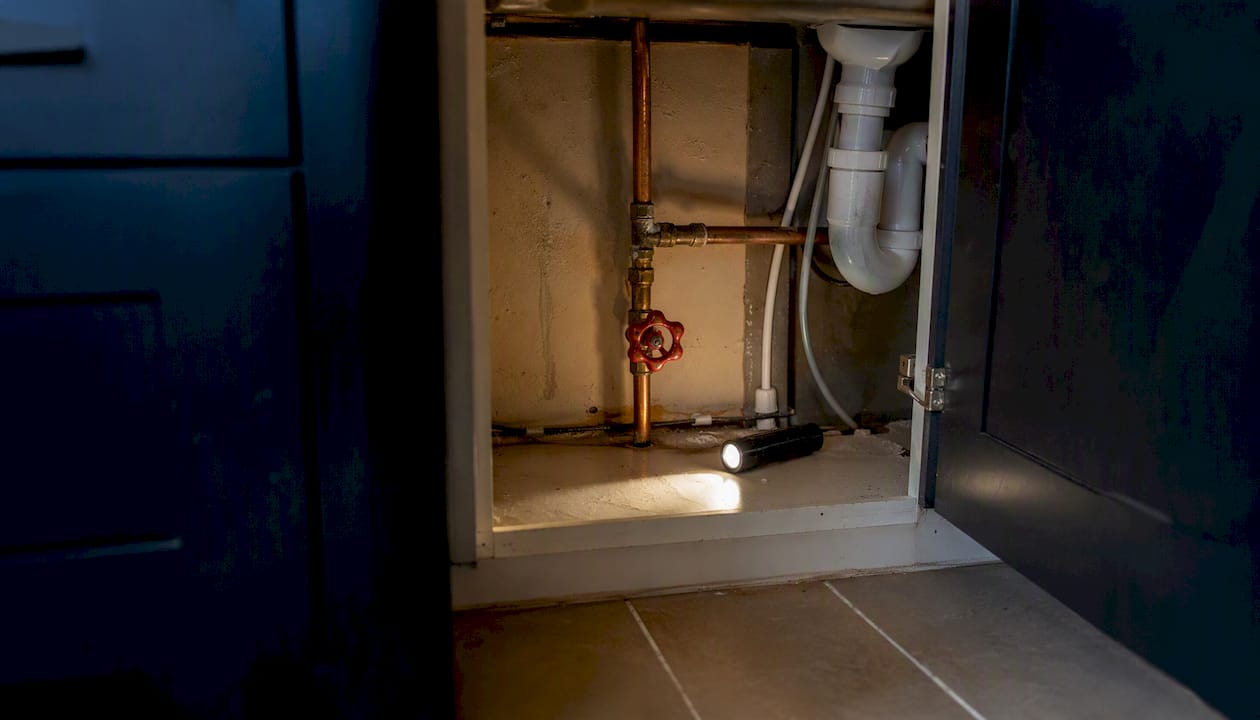
Pro Tip: Locate your mains isolation valve before any emergency happens. In most Galway homes it sits under the kitchen sink or near the front boundary. Knowing where it is takes seconds off your response time and can prevent thousands in water damage.
How emergency plumbers break down their charges
Understanding the line items on an emergency quote stops you from being caught off guard. According to Plumber Call-Out Charges: Cost Breakdown 2026, the call-out fee and hourly rate are the two largest determinants of any emergency bill.
The main charge components:
- Call-out fee: covers the plumber’s travel to site and the first diagnostic assessment. It is charged whether or not a repair is completed.
- Hourly labour rate: billed from arrival or from the start of active work, depending on the plumber’s terms. Out-of-hours rates are typically 50–100% higher than the standard daytime rate.
- Minimum charge: many plumbers set a minimum labour block of one hour even if the job takes 30 minutes.
- Parts and materials: almost always charged at cost plus a mark-up, typically 15–30%.
- VAT: applies at the standard Irish rate of 23% on labour and materials unless the plumber is below the VAT registration threshold.
| Charge type | What it usually covers | How it typically appears on an estimate |
|---|---|---|
| Call-out fee | Travel, first attendance, initial diagnosis | Fixed line item, stated upfront |
| Hourly labour | Active repair time on site | Per-hour rate × hours worked |
| Out-of-hours premium | Evening, weekend, or bank holiday surcharge | Percentage uplift or separate higher hourly rate |
| Minimum charge | First hour or minimum labour block | “Minimum 1 hour” or similar note |
| Parts and materials | Components, fittings, temporary repair items | Itemised list or “materials at cost + X%” |
| VAT | 23% on labour and materials (if VAT-registered) | Separate line or included in totals |
Always ask whether the call-out fee is credited against the repair cost if you proceed. Most reputable Galway tradespeople will say yes.
What common emergency jobs actually cost in Galway
These are realistic ranges for Galway, informed by Emergency Plumber Cost Guide (UK Prices 2026) and adjusted for Irish market conditions. Treat them as planning benchmarks, not fixed quotes.
| Emergency job | Typical low–high range (€) | Minimum visit time | Key variable |
|---|---|---|---|
| Burst pipe (accessible) | €200–€350 | 1–2 hours | Pipe location and material |
| Burst pipe (concealed/under floor) | €400–€700 | 2–4 hours | Access, excavation needed |
| Blocked drain (internal) | €150–€300 | 1–2 hours | Blockage depth and cause |
| Blocked sewer (external) | €250–€550 | 2–3 hours | Excavation or jetting required |
| Leaking toilet (cistern or seal) | €120–€250 | 1 hour | Part availability |
| Leaking radiator | €120–€250 | 1–1.5 hours | Valve type, system pressure |
| Water heater failure | €200–€450 | 1.5–3 hours | Unit age, part sourcing |
| Frozen pipe | €150–€300 | 1–2 hours | Pipe accessibility |
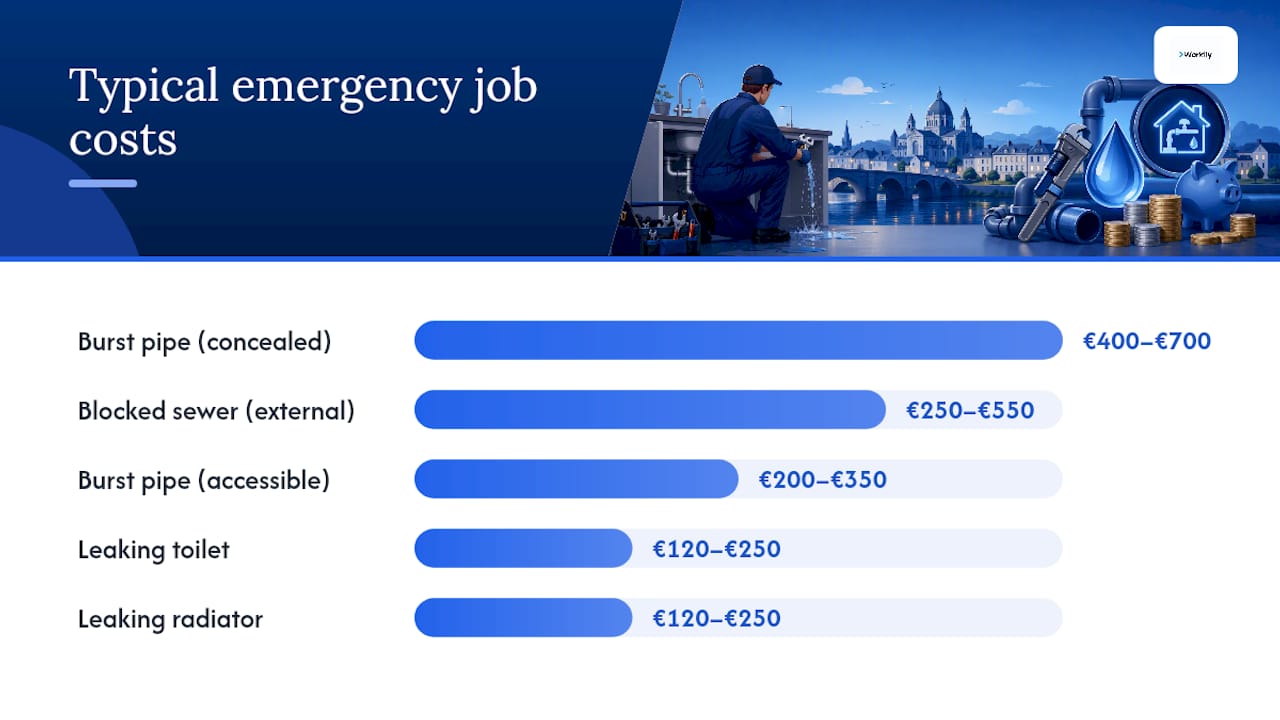
What moves a job from the low end to the high end: concealed pipework behind tiles or under concrete, the need to source specialist or non-standard parts, any requirement for excavation, and whether a second visit is needed because parts are unavailable on the first call.
A short but important caveat: any work on gas-connected appliances requires a Gas Safe registered engineer. A plumber without gas certification cannot legally touch a gas boiler, gas water heater, or gas supply pipework. Similarly, oil-fired heating systems require an OFTEC-registered technician. These are separate regulated trades, and combining them with standard plumbing work adds both cost and lead time.
How location within Galway affects your call-out price
Galway city and the surrounding county present meaningfully different cost profiles, and it is worth understanding why before you call.
Urban Galway (city centre, Salthill, Knocknacarra, Renmore):
- Plumbers based locally can reach you faster, which reduces the travel component of the call-out fee
- Parking restrictions and one-way systems in the city centre can add a small surcharge or extend arrival time
- Higher density of available tradespeople means more competition and slightly better pricing on standard jobs
County Galway (Connemara, Tuam, Ballinasloe, Clifden, Oughterard):
- Travel time from the nearest available plumber can be 30–60 minutes or more, and many charge travel time at their hourly rate
- Rural properties may face a flat travel surcharge on top of the standard call-out fee
- Parts availability is more limited; a second visit to complete a repair is more common, adding to the total cost
- Bank holiday and overnight cover is harder to source in rural areas, and the premium for securing it is higher
Exceptional premium factors across Galway:
- Bank holiday call-outs: expect surcharges of 75–100% above the standard rate
- Overnight attendance (midnight to 7 AM): often the highest-cost window, with some plumbers charging a flat overnight premium regardless of job duration
- Restricted access (narrow lanes, no parking, gated developments): can add a small surcharge or delay arrival
Response times and what urgency costs you
How quickly a plumber arrives in Galway depends on the time of day, the day of the week, and how many tradespeople are actively covering emergency work in your area.
-
Within the hour: possible in Galway city during daytime on weekdays if you reach a plumber with no current job. Expect to pay a premium for this level of urgency. Some providers, similar to the one-hour response standard advertised by Pimlico Plumbers in London, market rapid response as a distinct service tier.
-
1–4 hours: the realistic window for most Galway city emergency call-outs during evenings and weekends. Out-of-hours surcharges apply from the moment of attendance.
-
4–8 hours: more typical for rural county Galway, or for any call placed after midnight when fewer plumbers are actively covering emergencies. Minimum charges and overnight premiums apply.
-
Next business day: the appropriate response for borderline emergencies that can be safely contained. Standard hourly rates apply, and this is almost always the most cost-effective option if the situation allows it.
The CPI Service emergency plumber cost guide notes that after-hours and holiday premiums can substantially increase hourly costs, with some tradespeople applying a percentage multiplier to their standard rate rather than a flat fee. Always confirm the out-of-hours rate before agreeing to attendance.
What the call-out fee actually includes (and what it does not)
The call-out fee is not a deposit. It is a charge for the plumber’s time and travel to reach you, and it is usually non-refundable if you decide not to proceed with the repair.
Typically included in the call-out fee:
- Travel to your property
- Initial inspection and diagnosis
- First 30–60 minutes of labour (varies by plumber)
- Basic temporary measures (isolating a valve, applying a temporary patch)
Commonly excluded and billed separately:
- Specialist parts or components not carried on the van
- Waste disposal for removed materials
- Any permits required for drainage or structural work
- Work carried out by a subcontractor (gas engineer, electrician)
- Extended diagnostic work if the fault is not immediately obvious
- Return visits if parts need to be ordered
Pro Tip: Before the plumber starts work, ask two questions: “Is the call-out fee credited against the final bill if I proceed?” and “Can you give me a written estimate before you begin?” A reputable tradesperson will say yes to both. If they refuse either, that is a warning sign.
Practical steps to reduce your emergency plumbing bill
Acting quickly and intelligently in the first few minutes of a plumbing emergency can meaningfully reduce the total cost.
- Turn off the mains water supply at the isolation valve (usually under the kitchen sink or at the boundary stopcock). This stops active damage immediately.
- Switch off the immersion heater or boiler if water is near the unit or if you suspect a leak in the heating circuit.
- Turn off electricity at the consumer unit if water is near sockets, light fittings, or the fuse board. Water and live electrics are a serious safety risk.
- Take photos and short videos of the damage before you call. This speeds the plumber’s diagnosis, reduces time on site, and supports any insurance claim.
- Note the location of isolation valves for individual appliances (under sinks, behind toilets, near the boiler). Telling the plumber exactly where these are saves time.
- Contain the water with towels, buckets, or plastic sheeting to limit secondary damage to floors and ceilings.
- Call during business hours if at all possible. If the situation is serious but not actively worsening, waiting until 8 AM on a weekday can halve the labour cost.
For same-day emergency home repair bookings, using a vetted platform to compare fixed-price options is one of the most effective ways to avoid an inflated out-of-hours bill.
Pro Tip: Ask the plumber for a fixed-price quote for the whole job before they start, not just a call-out fee. Many will agree to this for straightforward repairs, and it removes the risk of an open-ended hourly bill.
Will your home insurance cover the cost?
Home insurance can cover emergency plumbing costs, but the conditions are specific and the excess often makes small claims uneconomical.
Check your policy for:
- Accidental damage cover: most standard policies cover sudden, unexpected water damage but exclude gradual leaks or wear-and-tear
- Emergency home assistance add-on: some policies include a 24-hour helpline and will send a plumber directly, covering the call-out and basic repair up to a set limit
- Policy excess: if your excess is €250 and the repair costs €300, claiming saves you €50 but may increase your premium at renewal
- Preferred supplier clauses: some insurers require you to use their approved tradesperson; using your own may invalidate the claim
- Cause of damage: insurers routinely reject claims where the damage resulted from a pre-existing fault or lack of maintenance
A practical rule: for emergency bills under €400, calculate whether the claim is worth making once you subtract the excess and factor in the likely premium increase. Many Galway homeowners find it cheaper to pay privately for smaller jobs and reserve insurance for major incidents.
Pro Tip: If you do intend to claim, photograph everything before any repair begins and keep all receipts. Insurers can and do reject claims where there is no evidence of the original damage or the repair cost.
Red flags and how to vet an emergency plumber quickly
A genuine emergency creates pressure to accept the first person who answers the phone. That pressure is exactly what unreliable tradespeople exploit.
Vetting checklist before you agree to attendance:
- Ask for the plumber’s name, business name, and a contact number you can call back on
- For any gas-connected work, verify registration on the Gas Safe Register before they touch anything
- Ask whether they carry public liability insurance (minimum €2 million is standard in Ireland)
- Request a written estimate or at minimum a verbal quote with a clear hourly rate and call-out fee before attendance
- Ask about the guarantee on their work (most reputable plumbers offer at least 12 months on labour)
Red flags to walk away from:
- Demands for full cash payment upfront before any work is done
- Refusal to provide a written receipt or invoice
- No verifiable business address or registration number
- Pressure to approve additional work without a clear explanation of why it is needed
- Inability or unwillingness to confirm their insurance
CIPHE and APHC both publish guidance on professional standards for plumbing and heating engineers. A plumber who is a member of either body has agreed to a code of conduct and competence standards that give you a meaningful baseline of assurance.
Pro Tip: Use the Workily marketplace to compare verified emergency plumbers in Galway. Every professional listed has been through a vetting process, so you skip the background check and go straight to comparing quotes and availability.
How these cost estimates were calculated
Transparency about sources matters when you are budgeting for an unplanned expense.
- Primary UK cost guides consulted: Checkatrade’s 2026 plumber call-out cost breakdown and MyJobQuote’s 2026 emergency plumber cost guide. These provide the structural framework for call-out fees, hourly rates, and out-of-hours premiums.
- Localisation approach: UK sterling figures were not directly converted to euro. Instead, the cost structure (call-out fee as a fixed component, hourly rate multipliers for out-of-hours work, minimum charge conventions) was applied to Irish market context, with ranges set to reflect Galway’s cost of living and trade labour market.
- International context: LendEDU’s international cost roundup illustrates the wide spread possible in emergency plumbing bills depending on job complexity and timing. This was used to validate the range width, not to set specific figures.
- Trade body sources: CIPHE, APHC, Gas Safe Register, and OFTEC were used for vetting guidance and regulatory context, not pricing.
- Limitations: emergency plumbing costs in Galway vary significantly by individual tradesperson, season, parts availability, and job specifics. The ranges here are planning benchmarks. Always get a written quote before work begins.
- Sources consulted: 2026 cost guides, trade body guidance pages, and emergency response service pages. All figures reflect market conditions as understood in 2026.
What the UK 2026 average call-out fee looks like
For context, UK cost guides published in 2026 show emergency plumber call-out fees typically ranging from around £50 to £150 for standard hours, rising to £100–£300 or more for out-of-hours attendance. These figures, drawn from Checkatrade’s 2026 breakdown, reflect the British market in sterling and are not directly applicable to Irish pricing.
The key takeaway for Galway homeowners is that the Irish market broadly mirrors this structure. The call-out fee exists to compensate the plumber for committing their time and travel; the hourly rate is the variable that compounds quickly on complex jobs.
Plumber hourly rates: standard hours versus out-of-hours
During standard working hours (roughly 8 AM to 6 PM on weekdays), Galway plumbers typically charge €80–€120 per hour for labour. That rate reflects the going rate for skilled trades in the west of Ireland and aligns with the pattern documented in UK guides for comparable urban markets.
Out-of-hours is where costs accelerate. An overnight call between midnight and 7 AM can push the effective hourly cost to €180–€240 or more, depending on the plumber and the urgency of the job.
Day rates are less common in emergency plumbing than in planned project work, but some plumbers offer a capped day rate for complex jobs expected to run six hours or more. This can work in the homeowner’s favour on a major repair, so it is worth asking about on larger jobs.
Regional cost differences: what Galway homeowners can learn from London data
London’s borough-by-borough premium structure is well documented. That pattern is instructive for Galway, even though the scale is different.
In Galway, the equivalent dynamic plays out between the city centre and the county. A plumber travelling from Galway city to Clifden in Connemara faces a 75-kilometre round trip; many will charge travel time at their standard hourly rate, adding €60–€100 to the call-out cost before they have touched a pipe. A homeowner in Salthill, three kilometres from the city centre, faces none of that.
The practical implication: if you live outside Galway city, ask specifically about travel charges when you call. Some plumbers include a set radius in their call-out fee (typically 10–15 km); beyond that, travel time is billed separately. Knowing this upfront prevents a surprise line item on the final invoice.
How long will the repair actually take, and what does that mean for cost?
Total time to resolution, from your first call to a completed repair, varies considerably by job type. Here is a realistic breakdown for common Galway emergency scenarios:
Leaking toilet or tap: 30–90 minutes on site if parts are available. Total time from call to completion: 2–4 hours during business hours, 3–6 hours out-of-hours. Cost impact: relatively contained, usually within the minimum charge window.
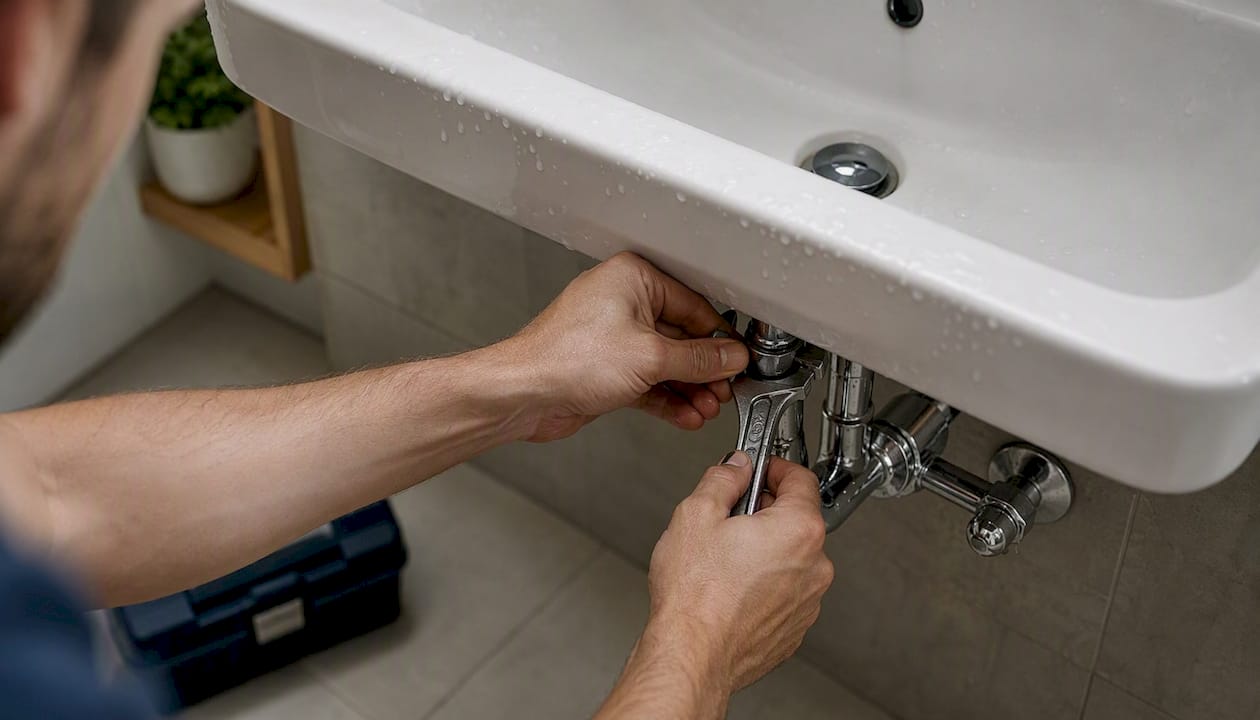
Burst accessible pipe: 1–2 hours on site. Total time from call to completion: 2–5 hours. Cost impact: moderate, but rises sharply if the pipe is behind a wall or under a floor.
Blocked drain: 1–3 hours depending on whether jetting equipment is needed. Total time: 2–5 hours. Cost impact: variable; a simple blockage clears quickly, but a root-infiltrated sewer line can extend to a half-day job.
Boiler or water heater failure: 1.5–3 hours on site, but parts sourcing can extend this to a second visit. Total time to full resolution: same day to 48 hours. Cost impact: potentially significant if a part needs to be ordered.
Every additional hour on site at an out-of-hours rate compounds the bill. Containing the immediate damage and scheduling a morning visit, when the situation allows it, is consistently the most cost-effective decision a homeowner can make.
Payment methods and managing the bill
Most Galway plumbers accept card payment, bank transfer, and cash. A few smaller sole traders may prefer cash or bank transfer only, so it is worth confirming before they arrive, particularly for larger jobs where you may want a payment trail for insurance purposes.
Deposits: for emergency call-outs, a deposit is unusual and should be treated with caution. Some plumbers may ask for a small deposit to confirm a booking slot during peak periods; this is reasonable if it is clearly documented. A demand for full payment before work begins is a red flag.
Staged payments: on larger jobs (burst pipe with excavation, full water heater replacement), it is reasonable for a plumber to request payment for materials upfront and labour on completion. Get this agreed in writing before work starts.
Final payment timing: most tradespeople expect payment on completion. Paying by card or bank transfer gives you a record; cash payments should always come with a written receipt and a VAT invoice if the plumber is VAT-registered.
For emergency plumber bookings through a vetted platform, secure online payment is handled through the platform itself, which removes the ambiguity around payment timing and gives both parties a clear record.
Why verified booking changes the cost equation
The conventional wisdom on emergency plumbing is that you call whoever answers first and accept whatever they charge. That approach made sense when there was no alternative, but it consistently produces the worst outcomes: inflated call-out fees, no written quote, and no recourse if the work is substandard.
What the data actually shows is that the two biggest cost risks in an emergency are not the repair itself but the call-out fee structure and the out-of-hours premium. Both are negotiable when you have more than one option in front of you. A homeowner who can compare two or three verified quotes in the time it takes to mop up a burst pipe is in a fundamentally different position from one who is calling numbers from a late-night Google search.
The argument against using a platform in an emergency is usually speed: “I don’t have time to compare.” In practice, instant booking on a vetted marketplace takes about the same time as calling three numbers and waiting for callbacks. The difference is that you arrive at a confirmed booking with a known price rather than a verbal estimate from someone you cannot verify.
There is also a subtler point about parts and return visits. A plumber who knows their work is reviewed and their rating is visible has a stronger incentive to carry the right parts and complete the job on the first visit. That single factor can be the difference between a €250 repair and a €500 two-visit job.
Workily connects Galway homeowners with verified emergency plumbers
When a pipe bursts at 10 PM on a Sunday, the last thing you need is an unverified number from a search result. Workily gives Galway homeowners something more useful: a marketplace of vetted, reviewed professionals available for instant booking, with transparent pricing and secure online payment built in.

Every professional on Workily has passed a verification process covering qualifications, insurance, and customer reviews. For gas-connected emergencies, you can filter for Gas Safe registered engineers directly. Same-day availability is visible before you commit, so you know exactly when help is coming and what it will cost.
Book a verified emergency plumber in Galway now and get a confirmed quote before anyone sets foot in your home.