

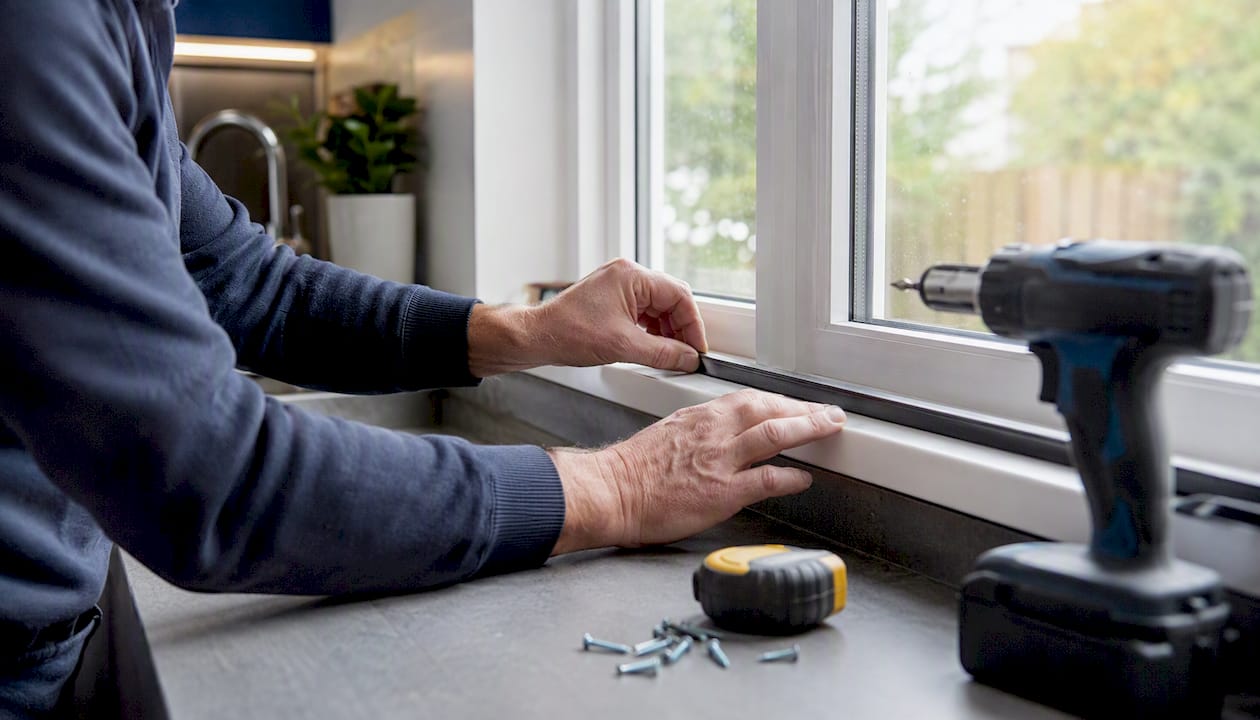
Hiring a vetted professional through Workily is the fastest, safest way to get do-it-yourself projects home to a proper finish without the compliance risk. A verified tradesperson brings insurance, statutory guarantees under the Consumer Rights Act 2022, and accountability a DIY attempt simply can’t match.
- Skip the risk: book a checked, insured professional instead of guessing your way through wiring, gas or structural work.
- Need it today? Use same-day booking for urgent repairs.
Key Takeaways
Hiring a vetted, insured tradesperson through a platform like Workily protects your legal position and your finished project far more reliably than attempting the work yourself.
| Point | Details |
|---|---|
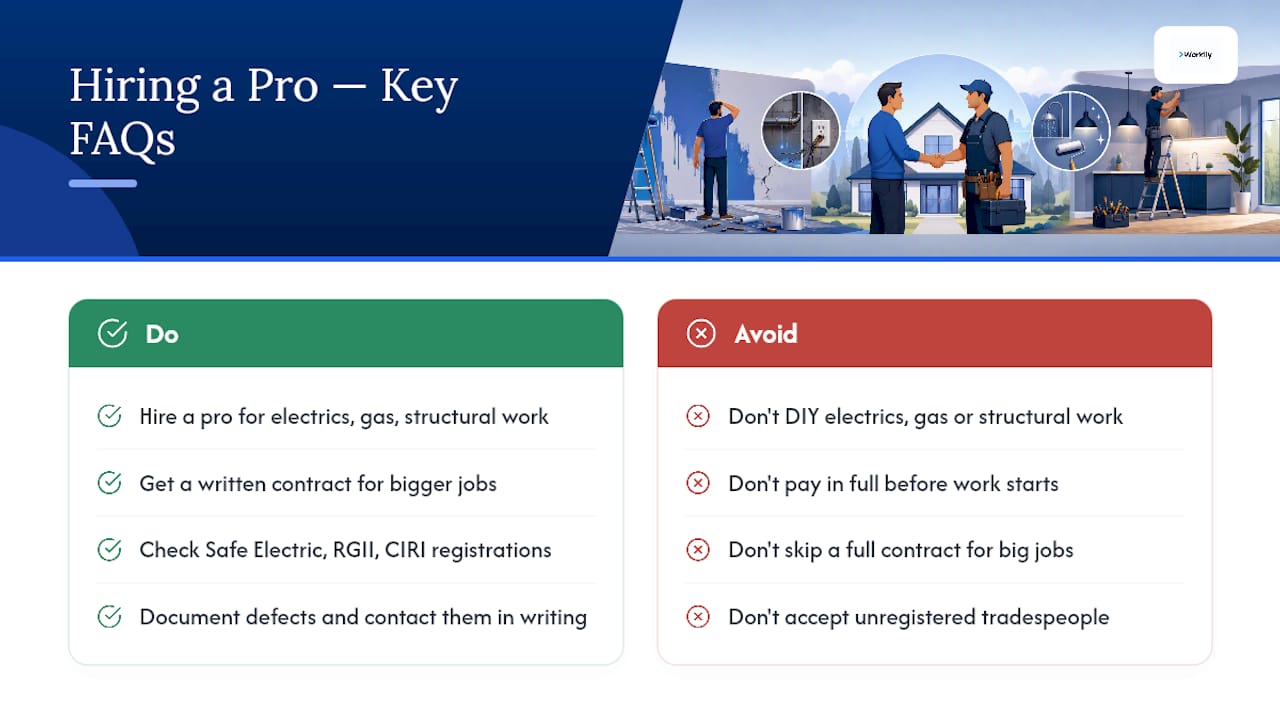
| Verify registration first | Check Safe Electric, RGII or CIRI status before agreeing to any job involving electrics, gas or building work. |
| Insist on a written contract | Get itemised pricing with VAT, start and completion dates, insurance details and warranty terms in writing. |
| Know your statutory rights | The Consumer Rights Act 2022 entitles you to repair, price reduction or termination if work doesn’t conform. |
| Stage your payments | Hold back a 5–10% retention until snags are fixed, and avoid full payment upfront. |
| Book through a vetted platform | Workily checks registration and insurance before listing pros, with a reported 98% satisfaction rate and same-day booking. |
Table of Contents
- Why hire a vetted professional instead of tackling it yourself
- What legal checks should you make before hiring a tradesperson?
- What should a written contract for home improvement work include?
- What questions should you ask before booking a tradesperson?
- How much do home improvement jobs cost and how long do they take?
- How does Workily vet and connect you with a tradesperson?
- What to do if the work is substandard or the trader doesn’t turn up
- Frequently asked questions
- Sources
Why hire a vetted professional instead of tackling it yourself
The gap between a confident DIY attempt and a compliant, insured job is wider than most homeowners expect. A verified tradesperson gives you building compliance, statutory protection under the Consumer Rights Act 2022, and a guarantee on the finished work. You also get cost certainty upfront, rather than discovering halfway through a job that you need specialist tools or a second trip to the merchants.
Some jobs simply aren’t DIY territory, whatever your confidence level:
- Any electrical work beyond changing a light fitting.
- Gas appliance installation or servicing.
- Structural alterations, including removing internal walls.
- Complex plumbing involving new pipework or drainage.
- Roofing work at height or involving structural repair.
Pro Tip: Choose a tradesperson based near your project rather than the cheapest quote from further afield. Someone who works regularly in your county tends to know local planning quirks and building-control expectations better than a trader who only passes through occasionally.
What legal checks should you make before hiring a tradesperson?
Home building and improvements were the second-biggest driver of calls to the Competition and Consumer Protection Commission in the first half of 2025, and the regulator responded by writing directly to traders about their obligations.
The CCPC contacted a large number of traders and logged numerous consumer contacts about the sector in that period, reminding businesses that services must be supplied “in conformity” with the contract and that consumers are entitled to remedies when they aren’t.
Under the Consumer Rights Act 2022, traders must give clear pre-contract information, including a total price inclusive of VAT (or a clear method for calculating it) where a fixed figure isn’t possible upfront, according to the CCPC’s guidance to traders.
Registration requirements vary by trade, so check the specific body before you hire:
- Electricians should hold Safe Electric registration.
- Gas installers should be registered with RGII.
- Building contractors face a phased move towards mandatory CIRI registration.
Before signing anything, verify the tradesperson’s licence or registration status, ask for proof of public liability insurance, and clarify in writing who is responsible for permits or commencement notices.
What should a written contract for home improvement work include?
A verbal agreement or a text message quote isn’t enough protection for any job above a small repair. Reputable contractors typically supply a written document covering costs, VAT, insurance and structural warranties, alongside agreed start and completion dates, according to the Irish Examiner’s guidance for homeowners.
An estimate is a rough guide and isn’t binding; a written quote, once accepted, forms the basis of your contract. Always insist on the latter for anything beyond a minor job. Your contract should cover:
- Full scope of work, described in enough detail to spot omissions later.
- Itemised price with VAT shown separately.
- Payment schedule, including any deposit limit.
- Start date and realistic completion date.
- Penalties for unreasonable delay.
- Insurance details and structural warranties.
- Who’s responsible for permits, and for any subcontractors.
Pro Tip: Stage your payments and hold back a 5–10% retention until every snag is fixed. If the main contractor brings in subcontractors, get written confirmation that the main contractor stays responsible for their work, as required under your consumer rights when buying services.
What questions should you ask before booking a tradesperson?
A short phone call before booking tells you almost everything you need to know. Ask these five questions and listen carefully to how confidently they’re answered:
- Are you registered with the relevant body for this trade, and can you show proof?
- Do you hold public liability insurance, and can you send a copy of the certificate?
- Can you give me two or three recent references I can actually contact?
- Who will physically carry out the work, you or a subcontractor?
- Will you provide a completion certificate where one applies to this job?
Watch for these red flags, and walk away if you spot more than one:
- Cash-only payment with no invoice offered.
- No written quote, only a verbal figure.
- No fixed address or landline, just a mobile number.
- A request for full payment before work starts.
- A quote significantly lower than every other one you’ve received.
- Reluctance to provide insurance proof or sign a contract.
When you do call a reference, ask how the tradesperson handled a problem on the job rather than simply whether they were happy. That answer tells you far more about accountability than a generic “yes, delighted”.
How much do home improvement jobs cost and how long do they take?
Costs vary enormously by trade, region and job complexity, but market guides give a rough starting point. Plumbers in Ireland typically charge in the region of €40 to €70 an hour or €300 to €400 for a day rate, electricians tend to sit around €45 to €70 an hour, and painters often quote €250 to €400 per day. Treat these as indicative only, since access, materials and the scale of the job all move the final price.
The biggest drivers of both cost and timeline are:
- Project complexity and the amount of prep work needed.
- Materials specified, especially anything imported or made to order.
- Whether certification or permits are required.
- Site access and how much preparation the space needs.
- Subcontracted trades adding coordination time.
- Seasonal demand, particularly before winter for roofing and heating work.
Material lead times, weather delays and a contractor’s existing workload all affect how realistic a completion date actually is, so build some flexibility into your expectations from the outset.
How does Workily vet and connect you with a tradesperson?
Workily checks registration status, verifies insurance, and surfaces genuine customer reviews before a professional appears bookable on the platform. That vetting sits behind Workily’s booking flow, alongside same-day availability and secure, staged payments so you’re never handing over cash with no paper trail.
Workily reports a 98% customer satisfaction rate across completed bookings, built on the same verification steps you’d otherwise have to do yourself: registration checks, insurance confirmation, and honest reviews from previous customers. A typical booking looks like this: a homeowner in need of a bathroom refit searches, compares three verified quotes side by side, books the one that fits, and pays in stages as the work progresses rather than upfront in full.
Pro Tip: If you’re weighing up whether a job like painting a room is worth doing yourself, compare the time cost against a quick quote from a verified pro. Often the maths favours booking.

What to do if the work is substandard or the trader doesn’t turn up
Act methodically rather than emotionally, and keep a paper trail from the first sign of trouble.
- Stop work immediately if there’s any safety risk.
- Photograph every defect before anything is covered up or painted over.
- Contact the trader in writing, setting out the problem clearly.
- Request a specific remedy under the Consumer Rights Act 2022, such as repair, price reduction or termination.
- Check your contract’s dispute clause and apply it if the trader doesn’t respond.
- Escalate to the CCPC or the relevant trade register if the issue isn’t resolved.
Keep every email, text, photo, quote and receipt, and log the date of every phone conversation. Statutory remedies can include repair, a price reduction, contract termination or the right to withhold payment, and refunds are often due within 14 days once agreed.
A note from Thomas
Having covered Irish home services for several years, the pattern is consistent: readers who skip the paperwork end up with the worst outcomes. Hiring vetted, insured professionals through a platform like Workily removes most of that risk before it starts.
Book, ask, or hire a verified pro today
Workily gives you something a phone book full of local numbers never could: every professional on the platform has already had their registration and insurance checked before you ever pick up the phone.

That means less time chasing references and certificates, and more time getting your project actually started. You get secure staged payments, same-day booking when a job can’t wait, and a reported 98% satisfaction rate behind the professionals listed. If you’d rather compare a few options side by side before committing, request quotes from verified professionals near you and pick the one that fits your budget and timeline. Still unsure? Ask a verified professional for personalised advice, or book, ask, or hire a trusted professional in your area through Workily.
Frequently asked questions
Is it worth hiring a professional instead of doing home projects myself?
For anything involving electrics, gas, structural changes or complex plumbing, yes. You get statutory protection, insurance cover and a guarantee on the finished work that DIY simply doesn’t offer.
What does the Consumer Rights Act 2022 actually guarantee me?
It requires services to conform with what was agreed and entitles you to remedies, including repair, price reduction or contract termination, if a trader falls short.
Do I need a written contract for a small job?
For minor repairs, a written quote may be enough. For anything above a small job, insist on a full contract covering price, dates, insurance and warranties.
How do I check if a tradesperson is registered in Ireland?
It depends on the trade: electricians should be Safe Electric registered, gas installers RGII registered, and building contractors are moving towards mandatory CIRI registration.
What should I do if a tradesperson does a bad job?
Document everything with photos, contact them in writing requesting a remedy, and escalate to the CCPC if they don’t respond.
How much should I pay upfront?
Avoid paying in full before work starts. A modest deposit followed by staged payments, with a final 5–10% retention until snags are resolved, protects your position.
How does Workily vet its professionals?
Workily checks registration and insurance status and surfaces genuine customer reviews before a professional can be booked, alongside secure staged payments.
Sources
- Issues with the home building and improvement sector were the second biggest call driver to the CCPC in first half of 2025 | CCPC
- Get the best from home-building pros and tradespeople when renovating or extending | Irish Examiner