
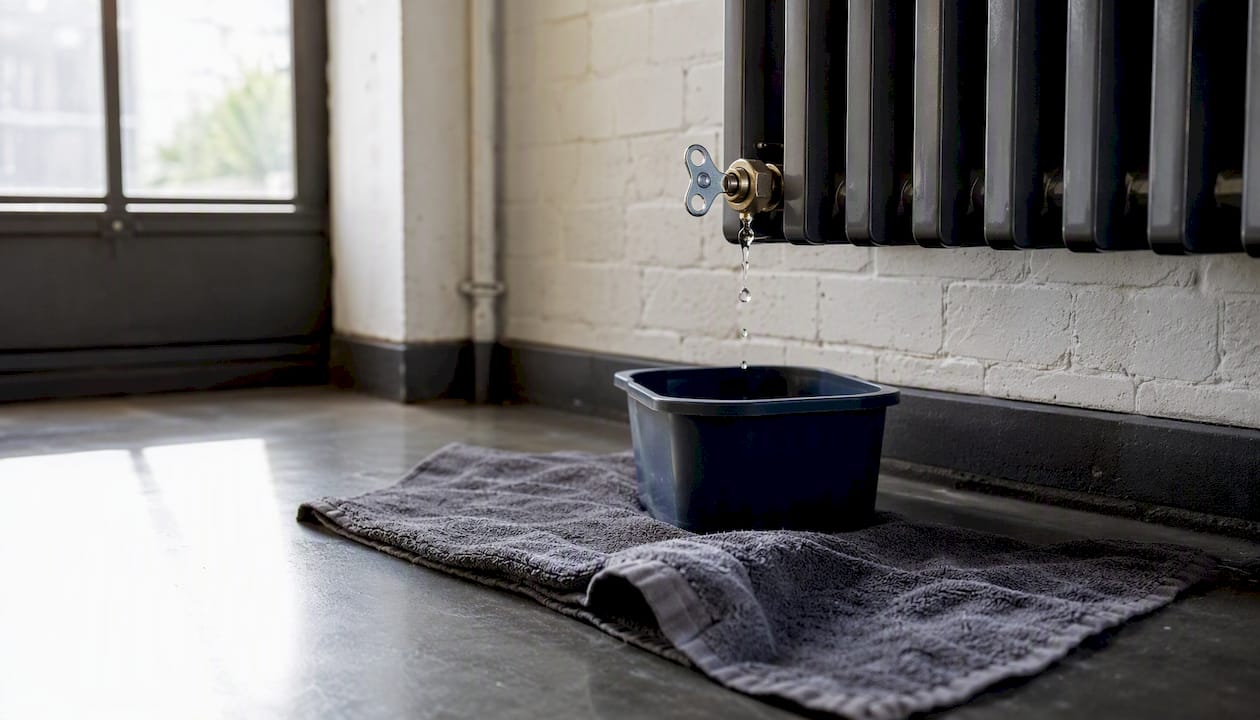
Turn off your central heating, let the radiators cool for a short period, then slowly open the bleed valve until water trickles out. Close it, check your boiler pressure, and top up if needed. That is the whole process. According to RTE’s home maintenance guidance, bleeding a hot radiator risks scalding and can draw more air into the system if the pump is still running, so the cool-down step is non-negotiable.
Before you start, have three things to hand: a radiator bleed key (or a flat-head screwdriver for some modern valves), an old towel, and a small container to catch water.
Key takeaways
Bleeding a radiator is safe and effective when the heating is off, the system has cooled, and you check boiler pressure immediately afterwards.
| Point | Details |
|---|---|
| Safety first | Never bleed a hot radiator; always switch off heating and wait 10–15 minutes before starting. |
| Tools to have ready | A radiator key (or flat-head screwdriver/Allen key), an old towel, a small container, and gloves. |
| Check boiler pressure | Pressure typically drops after bleeding; top up boiler pressure to the typical recommended range when cold using the filling loop. |
| Bleed annually | Once a year before winter keeps radiators efficient and reduces internal corrosion. |
| Use Workily for complex faults | For leaks, persistent cold spots, or boiler issues, book a vetted engineer instantly via Workily. |
Table of Contents
- How do you know if a radiator needs bleeding?
- What you need and how to prepare
- How to bleed a radiator: the step-by-step procedure
- Aftercare: check boiler pressure and confirm the system is working
- Troubleshooting: what if bleeding doesn’t fix the problem?
- When should you hire a professional heating engineer?
- How often should you bleed radiators, and why does it matter?
- An honest view on DIY heating maintenance
- Book a qualified heating engineer through Workily
- Sources
How do you know if a radiator needs bleeding?
The clearest sign is a radiator that is warm at the bottom but cold across the top. That temperature split tells you trapped air has risen and is blocking hot water from filling the upper section. British Gas confirms that a cold top combined with a hot bottom is the classic indicator that bleeding is needed.
Run a quick check while the heating is on:
- Feel the radiator top to bottom. Cold top, warm bottom means air. Cold all over, or cold at the bottom, usually points to sludge rather than air, and bleeding alone will not fix that.
- Listen for gurgling or bubbling. Air moving through the system makes a distinctive noise, especially when the pump first kicks in.
- Compare rooms. If one radiator takes noticeably longer to heat up than others on the same circuit, trapped air is a likely cause.
The sludge distinction matters. If your radiator is cold at the bottom, you are dealing with corrosion debris that has settled, not an air pocket. Bleeding will release nothing useful in that case, and the system will need a power flush by a heating engineer.
What you need and how to prepare
Bromford’s DIY guide lists the standard toolkit: a radiator bleed key, or a flat-head screwdriver or Allen key for modern radiators, plus towels and a container to catch water. Gloves are worth adding, since the water that comes out can still be warm even after the system has cooled.
Preparation steps:
- Switch off the central heating and wait at least 10–15 minutes.
- Lay an old towel on the floor directly beneath the bleed valve.
- Place your container against the wall below the valve.
- Check which type of valve your radiator has before you start. Most older radiators use a square-headed bleed key; many modern panel radiators use a slotted or Allen-key fitting instead.
Renters should protect carpets carefully, since water stains can be difficult to explain at the end of a tenancy. If you are unsure whether your tenancy agreement requires you to notify your landlord before carrying out minor maintenance, a quick check of your lease is worth the two minutes it takes.
Pro Tip: Before buying a bleed key, check the valve head on your specific radiator. Some modern radiators, particularly flat-panel designs common in newer Irish homes, use a small Allen key fitting rather than the traditional square key. Using the wrong tool risks rounding off the valve.
How to bleed a radiator: the step-by-step procedure
Toasty’s practical guide recommends warming the radiators first to identify cold spots, then switching the system off before you touch any valve. Follow that sequence here.
Which radiator to start with: begin with the radiator furthest from the boiler, or the one on the lowest floor that is showing symptoms. Working from the extremities of the system inward helps clear air pockets more efficiently, particularly in multi-storey homes.
- Run the heating briefly (10–15 minutes) to identify which radiators have cold spots. Note them, then switch the heating off and wait for the system to cool.
- Protect the area. Lay your towel on the floor and hold your container directly below the bleed valve, which is usually a small square or slotted fitting at the top corner of the radiator.
- Insert the bleed key (or screwdriver) into the valve. Turn it slowly anti-clockwise, no more than a quarter-turn.
- Listen for hissing. That is trapped air escaping. Keep the key in place and hold your container steady.
- Watch for water. The moment a steady trickle of water appears, the air has cleared. Close the valve immediately by turning clockwise until it is snug. Do not overtighten.
- Wipe up any drips and move to the next radiator that needs attention.
- Repeat for each affected radiator, working from the furthest point back towards the boiler.
If you cannot locate a bleed valve, the radiator may not have one (some decorative or older designs do not), or it may be hidden behind a panel. In that case, do not force anything. Call a heating engineer.
Pro Tip: Only open the valve a quarter-turn. A full turn risks the valve spindle coming out entirely, which turns a controlled drip into a fast leak. If a valve feels seized and will not turn with gentle pressure, stop. Forcing a corroded valve can snap it.
Aftercare: check boiler pressure and confirm the system is working
Bleeding releases water along with air, and that small loss of water lowers the pressure in your sealed heating system. Vasco’s heating guide sets out the typical pressure targets for domestic boilers.
| System state | Target pressure range | Action if outside range |
|---|---|---|
| Cold (heating off) | below 1 bar to 1.5 bar | Top up via filling loop |
| Running (heating on) | Around 2 bar | Check manual; call engineer if persistently high |
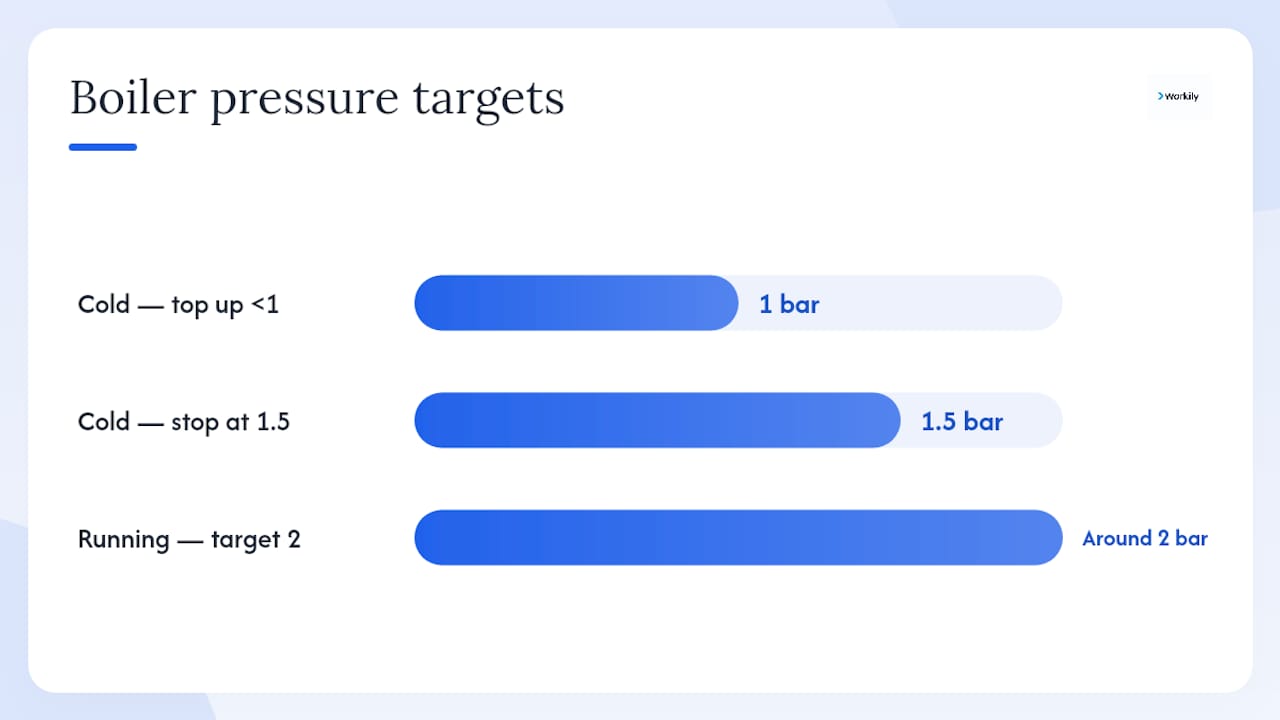
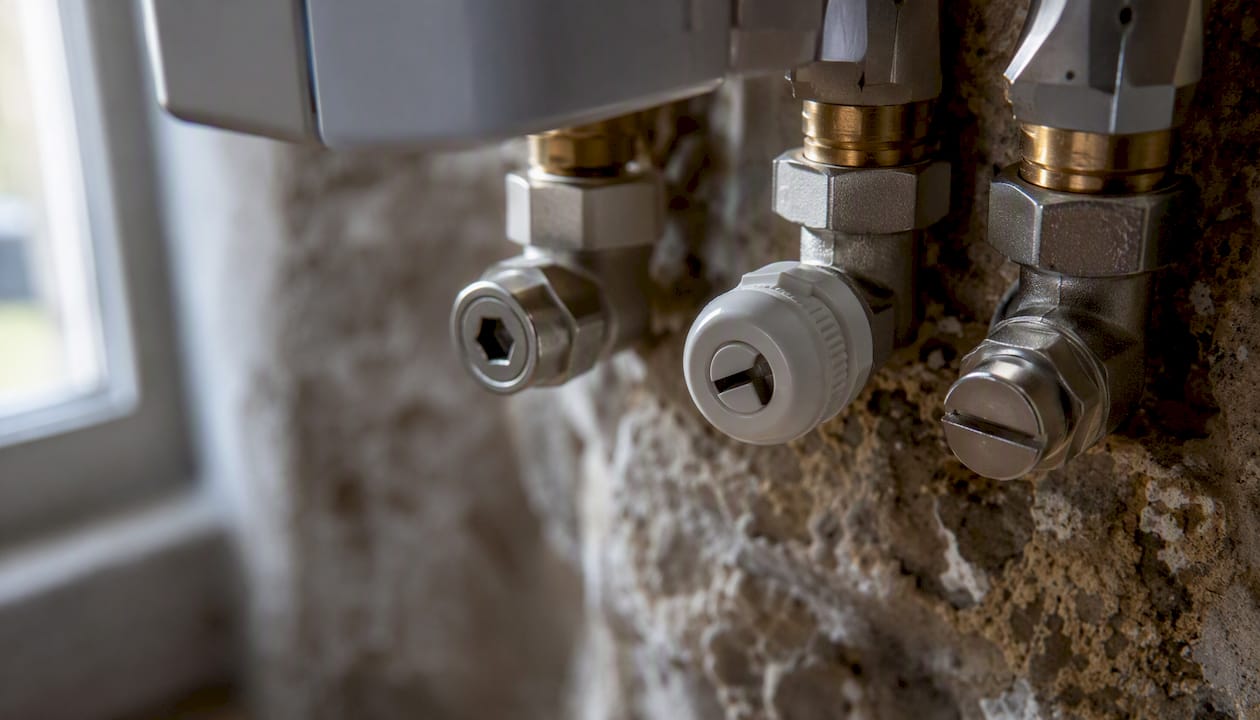
Check the pressure gauge on your boiler immediately after bleeding. It is usually a dial or digital display on the front of the unit. If the needle has dropped below 1 bar, top up via the filling loop, which is typically a braided hose or lever valve beneath the boiler. Add water slowly, watching the gauge, and stop at 1.5 bar. Always confirm the exact target range in your boiler’s manual, since figures vary by model.
Once pressure is restored, restart the heating and check each bled radiator after 20 minutes. Run your hand from bottom to top: the heat should now spread evenly across the whole panel. For a deeper look at boiler pressure checks and when a full service is due, the Workily boiler service guide covers the process in detail.
Troubleshooting: what if bleeding doesn’t fix the problem?
Sometimes you bleed a radiator correctly and it is still cold. HomeGroup’s maintenance guide identifies sludge and stuck valves as the most common culprits when bleeding fails to restore heat. Both typically need professional attention.
Common faults and what to check first:
- Radiator still cold after bleeding. Confirm both lockshield and thermostatic valves are fully open. If they are, the likely cause is internal sludge or a stuck valve spindle. A power flush or valve replacement is usually needed.
- Pressure drops repeatedly. If you find yourself topping up the boiler every few days, there is almost certainly a leak somewhere in the system. RTE’s guide flags that frequent re-pressurising is a sign of a fault that needs a qualified engineer, not more bleeding.
- Persistent gurgling or banging. If noise continues after bleeding, the issue may be air pockets deeper in the pipework or a pump problem rather than the radiator itself.
- No bleed valve visible. Do not improvise. Some radiator designs require a specialist tool or panel removal.
Stop and call a professional if:
- The radiator leaks at the valve after you close it.
- You cannot locate or operate the filling loop safely.
- The boiler pressure keeps dropping within days of topping up.
- You are uncertain about any step, particularly anything involving the boiler itself.
For basic plumbing troubleshooting in the home, Budget Rodz’s guide to unblocking a toilet is a useful companion resource for other common household fixes.
When should you hire a professional heating engineer?
Some heating problems look like a simple bleed job but are not. Hiring a qualified engineer is the right call in these situations:
- Frequent pressure loss (more than once a month) after topping up.
- Any visible water leak from a radiator, valve, or pipe joint.
- A boiler fault code or warning light appearing alongside cold radiators.
- Inaccessible valves, sealed radiator panels, or underfloor heating circuits.
- A gas boiler that needs adjustment — only a Gas Safe registered engineer should touch gas components in Ireland or the UK.
- You simply do not feel confident, and that is a perfectly valid reason.
Questions worth asking any engineer before they start:
- Are you Gas Safe registered (or RGII registered in Ireland)?
- Do you carry public liability insurance?
- Can you provide a written quote before starting work?
- What does the job include, and what might add to the cost?
Workily’s Ask a Pro service lets you speak with a verified heating engineer via video call before committing to a booking. It is useful when you want a second opinion on whether the job is DIY-able or needs a site visit. For same-day help, the Instant Pro service connects you with a local vetted engineer who can attend quickly. Every professional on the platform is verified, reviewed, and bookable with secure online payment, so you can check Workily’s trust and safety standards before you book.
How often should you bleed radiators, and why does it matter?
Tado’s heating guide recommends bleeding radiators at least once a year, ideally before the cold season begins, because it restores efficiency and reduces the risk of oxidation inside the system.
Benefits of regular bleeding:
- Faster warm-up. Radiators reach full temperature more quickly when air is not blocking water flow.
- Lower energy bills. A radiator working at full capacity uses less boiler energy to heat a room than one that is partially blocked by air.
- Reduced boiler strain. The pump works harder when it is pushing water through a partially air-locked system.
- Longer radiator life. Air in the system accelerates internal corrosion, which leads to sludge over time.
Bleed more frequently if your system has a known slow leak, if you have older cast-iron radiators, or if you notice cold spots returning within a few months of the previous bleed. A new build in Dublin or Cork may also need bleeding in its first winter as the system settles and releases air from fresh pipework.
An honest view on DIY heating maintenance
There is a tendency in home maintenance content to make every job sound equally straightforward. Bleeding a radiator genuinely is simple for most people. But the steps that follow, checking boiler pressure, operating the filling loop, diagnosing persistent cold spots, are where things can go wrong quickly if you are not confident.
The filling loop in particular deserves respect. Add too much water and the system over-pressurises; add it too fast and you can introduce more air. If your boiler manual is not to hand and you are not sure what you are looking at, a ten-minute video call with a heating engineer via Workily’s Ask a Pro costs far less than a call-out for a problem you made worse.
DIY is worth doing when the task is clearly within scope. Knowing where that scope ends is the more useful skill.
Book a qualified heating engineer through Workily
Bleeding a radiator is a job most homeowners can handle. But when the problem persists, when pressure keeps dropping, or when you would simply rather have a professional handle it, Workily gives you a faster route than ringing around.

Workily’s Instant Pro service connects you with a verified local heating engineer for same-day attendance, useful when a cold radiator becomes an urgent problem in January. If you want advice before booking, Ask a Pro lets you consult a heating specialist by video for a pay-per-session fee, no commitment required. Every professional on Workily is vetted, insured, and reviewed by real customers. Compare quotes, read reviews, and book a heating engineer in minutes.
Sources
- How to bleed your radiators – and why it’s important
- How to bleed a radiator – your step-by-step guide
- Bleeding your heating system – how do you do it?
- How to Bleed a Radiator | Toasty
- How to bleed a radiator
- How to bleed a radiator