


In this article, property management means hiring vetted tradespeople and same-day services to maintain and repair your property, not tenant or rent administration. The fastest route is booking a verified professional through an instant-booking marketplace like Workily rather than trawling classified ads or waiting on a callback that never comes.
TLDR:
- Verified tradespeople on marketplaces like Workily undergo thorough vetting, including insurance, registration, and compliance checks, reducing legal risks.
- Always request proof of public liability insurance and trade registration numbers before hiring, and photograph these documents for your records.
- Prices for urgent maintenance jobs typically range from €80 to €150 for plumbing and €70 to €120 for electricians, with same-day bookings available for urgent needs.
- Conduct a clear scope of work, get multiple written quotes, and agree on payment terms upfront to prevent disputes and ensure proper documentation.
- Out-of-hours, rural, or parts delays increase costs and timing, so scheduling routine jobs ahead and using instant booking features helps avoid costly emergencies.
Table of Contents
- What property management covers here: routine and one-off jobs
- Why a vetted marketplace beats a phone book search
- How to hire and manage tradespeople for maintenance jobs
- What maintenance jobs actually cost and how fast they happen
- Emergency checklist and the maintenance schedule that prevents most emergencies
- Legal and compliance considerations for property maintenance in Ireland
- Evaluating and negotiating contracts with maintenance providers
- Why I recommend an instant-booking marketplace over the old way
- Getting started with Workily’s instant booking
- Sources
What property management covers here: routine and one-off jobs
Property maintenance splits into two camps: the jobs you schedule and the jobs that find you at 11pm on a Sunday. Plumbing leaks, electrical faults, boiler servicing, gas-safe checks, cleaning between lets, landscaping, and general handyman work all sit under this umbrella. What it doesn’t cover is rent collection, lease renewals, or tenant disputes. That’s a different discipline entirely, handled by full property management services rather than a maintenance marketplace.
Deciding whether to call a professional or grab your own toolbox usually comes down to risk and regulation:
- Plumbing leaks and blockages: call a pro if water is escaping or a boiler is involved.
- Electrical faults: never DIY anything beyond changing a bulb; Irish law requires certified work for a reason.
- Gas appliances: always professional, always certified.
- Cleaning and landscaping: DIY-friendly, but a pro saves hours on turnover cleans between tenancies.
- Minor carpentry: fine for a confident DIYer with the right tools.
Why a vetted marketplace beats a phone book search
Hiring blind off a signboard or a Facebook group means you’re checking credentials yourself, after the work starts, if you check at all. A vetted marketplace flips that: insurance, ID, and trade registrations get verified before a tradesperson ever appears on your screen.
Workily runs that vetting process before listing anyone, backed by a 98% satisfaction rate across its bookings. Similar principles apply across Irish contractor marketplaces, which typically confirm active public liability insurance, tax compliance, and trade registration before a builder or contractor gets listed. That pre-screening matters because unlicensed electrical or gas work in an Irish home isn’t just risky, it can invalidate your home insurance if something goes wrong. Instant booking removes the guesswork: you see verified credentials and reviews before you commit, not after.
How to hire and manage tradespeople for maintenance jobs
Most maintenance disasters aren’t caused by bad tradespeople. They’re caused by homeowners skipping steps under pressure. Here’s the order that actually protects you.
- Scope the job and set urgency. A burst pipe in Cork needs someone within the hour. A gutter clean in Galway can wait a fortnight. Be honest about which one you’re dealing with.
- Check credentials before you agree to anything. Ask for proof of public liability insurance, ideally around the €2.6 million benchmark commonly held by reputable trades and cleaning firms in Ireland. For electricians, ask for their Safe Electric registration number; for gas work, ask for their RGII number. Photograph the registration card and keep it with the invoice.
- Get two or three written quotes. Compare scope, timescale, and what’s guaranteed, not just the bottom line. A cheaper quote that excludes parts or call-out fees usually ends up costing more.
- Agree scope, timeline, and payment upfront. Request before-and-after photos for anything structural, and keep every receipt. This matters if you ever need to claim on insurance or resolve a dispute.
- Leave a review and keep notes. Building a shortlist of tradespeople you trust saves you repeating this whole process every time something breaks.
Pro Tip: Keep a simple spreadsheet with each tradesperson’s name, trade, registration number, and last job date. When your boiler dies in January, you want to be scrolling a list, not starting from scratch.
What maintenance jobs actually cost and how fast they happen
Prices vary by county and by how badly you need someone today, but rough bands help you budget without getting caught out.
- Emergency plumber call-out: €80 to €150 for the visit, plus parts.
- Electrician visit: €70 to €120 for a standard call, higher out of hours.
- Boiler service: €90 to €150, best booked annually rather than in a panic.
- End-of-tenancy clean: €150 to €300 depending on property size.
- Small handyman jobs: €50 to €100 per hour, often with a minimum call-out charge.
Out-of-hours work, rural travel time in counties like Donegal or Kerry, and parts availability all push prices up. On timing, cleaning firms across Ireland routinely advertise same-day slots for straightforward jobs, while scheduled maintenance like boiler servicing is best booked weeks ahead rather than left until the heating fails. Workily’s instant booking feature exists specifically to close that same-day gap for urgent jobs, connecting you with an available verified pro rather than leaving you to call round.
Emergency checklist and the maintenance schedule that prevents most emergencies
When something goes wrong, the first five minutes matter more than the next five hours.
- Isolate the problem. Shut off the water stopcock or the relevant electrical circuit before anything else.
- Photograph the damage. You’ll need this for insurance and for the tradesperson quoting remotely.
- Call a verified emergency pro, not the first number that comes up in a search.
- Ask three questions on the call: registration number, proof of insurance, and realistic ETA.
- Log everything. Contact details, quote given, work completed, receipt.
Prevention beats emergencies almost every time. An annual boiler or heat pump service, a spring gutter and roof check, seasonal garden upkeep, and a proper clean between tenants catch small issues before they become 2am callouts. Landlords managing multiple properties across Dublin, Limerick, or Waterford find that outsourcing turnover cleaning between lets pays for itself in tenant satisfaction alone.
Legal and compliance considerations for property maintenance in Ireland
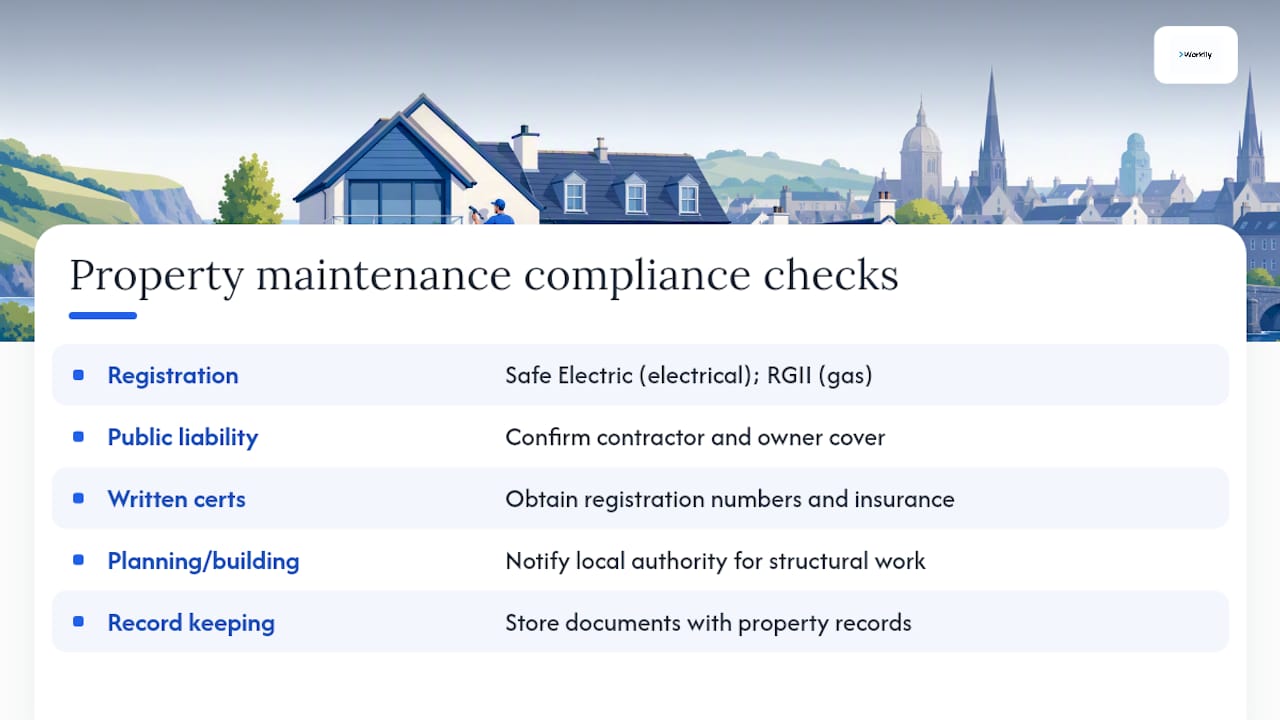
Certain jobs carry legal weight that goes beyond common sense. Electrical work must be carried out by someone registered with Safe Electric, and gas installations require RGII registration, both because Irish regulations require it and because unregistered work can void your home insurance policy outright. Landlords have additional obligations under Residential Tenancies Board rules covering minimum standards for rented accommodation, including working smoke alarms, adequate heating, and structural soundness.
Building regulations also apply to larger jobs. Anything touching load-bearing walls, extensions, or significant plumbing reconfiguration may need planning permission or building control notification through your local authority, whether that’s Dublin City Council, Cork County Council, or another local authority elsewhere. Skipping this step doesn’t just risk a fine; it can complicate a future sale when a solicitor asks for compliance certificates that don’t exist.
Public liability insurance matters here too, both yours as the property owner and the tradesperson’s. If a contractor without cover injures themselves or damages a neighbouring property, you could be exposed to a claim your own home insurance never anticipated. Common issues like plumbing complaints stemming from poor original installation often trace back to work done without proper certification years earlier, so asking for documentation now saves a legal headache later. Always request written confirmation of registration numbers and insurance cover before work begins, and store it alongside your property records rather than trusting memory.
Evaluating and negotiating contracts with maintenance providers
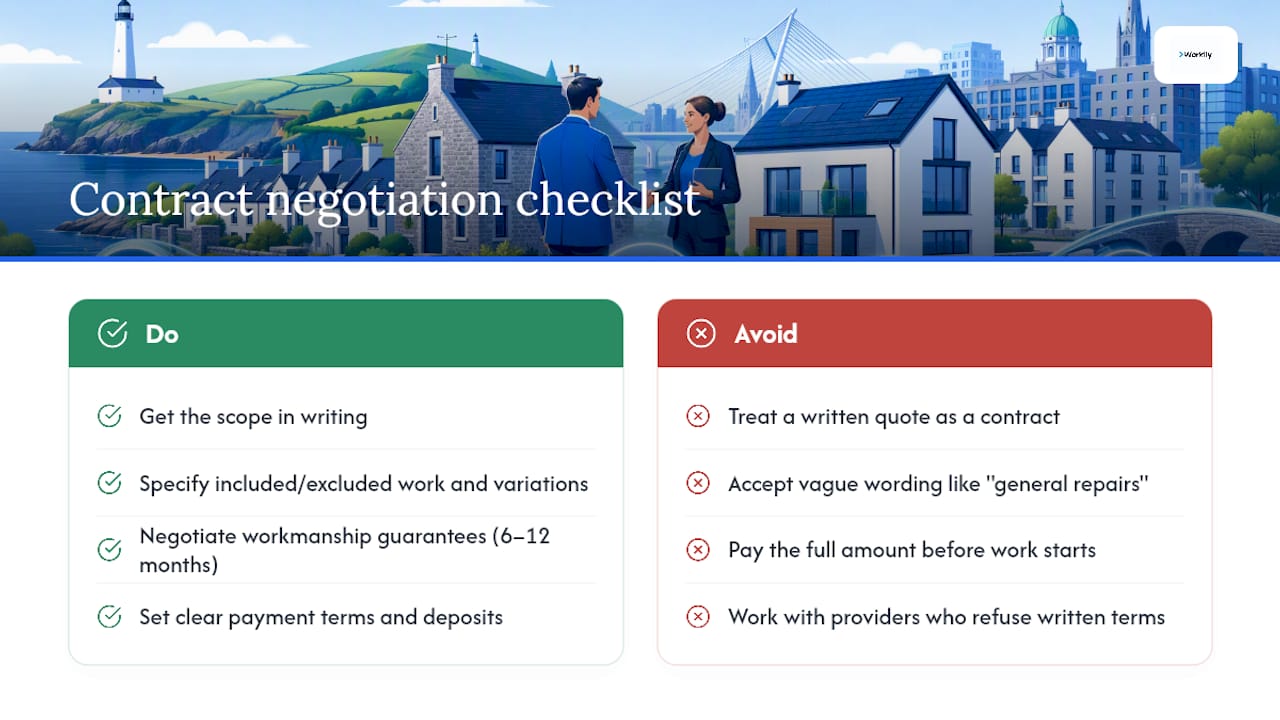
A written quote is not the same as a contract, and treating it that way is where most disputes start. Before agreeing to any job beyond a quick callout, get the scope of work in writing: what’s included, what’s excluded, and what counts as a variation that triggers extra cost. Vague language like “general repairs as needed” gives a contractor room to charge for anything.
Negotiate on more than price. Ask about guarantees on workmanship, typically six to twelve months on labour for reputable trades, and whether parts carry a separate manufacturer warranty. Payment terms deserve scrutiny too: a deposit is reasonable for larger jobs involving materials, but paying the full amount upfront before work starts leaves you with no leverage if the job goes wrong.
For recurring services like cleaning or garden maintenance, ask whether the rate is fixed or subject to review, and how much notice either side needs to give to end the arrangement. A provider unwilling to put basic terms in writing, even informally by email, is a warning sign worth taking seriously. Larger jobs involving roofing or exterior contractors particularly benefit from a written scope, since disputes over what “repair” versus “replace” meant are common and expensive to resolve after the fact.
Why I recommend an instant-booking marketplace over the old way
The old way of finding a tradesperson, a recommendation from a neighbour or a number scribbled on a fridge magnet, worked fine until it didn’t. Verified credentials shouldn’t be a lucky break; they should be the baseline. Start small: book a routine job through an instant-booking platform and see how the vetting holds up before you trust it with an emergency. Keep a preferred-provider list, do an annual safety check on your home, and store your records digitally. Try a trial booking through Workily the next time something needs fixing.
— Thomas
Getting started with Workily’s instant booking
Workily gives you instant booking with professionals whose insurance, ID, and trade registrations are checked before they’re ever listed, so you’re not the one doing the vetting under pressure. Same-day availability means a burst pipe or a dead boiler doesn’t have to mean a weekend without water or heat.

That verification backs a 98% satisfaction rate across more than 100,000 completed bookings, which gives you a concrete track record to check rather than a stranger’s word. Whether you need a plumber in Cork, an electrician in Galway, or a same-day clean before new tenants arrive in Dublin, the process is the same: search, compare verified profiles, and book. Try Instant Booking for your next maintenance job, or browse available professionals near you to compare quotes before you commit.
Primary sources and further reading
For deeper reading on vetting and credentials, see Safe Electric registration checks, public liability insurance standards, and Workily’s guides on boiler servicing and checking a tradesperson’s legitimacy.
Sources
- Public liability insurance | Clear Insurance Ireland
- Electrical contractors registration | Forward Electrical