
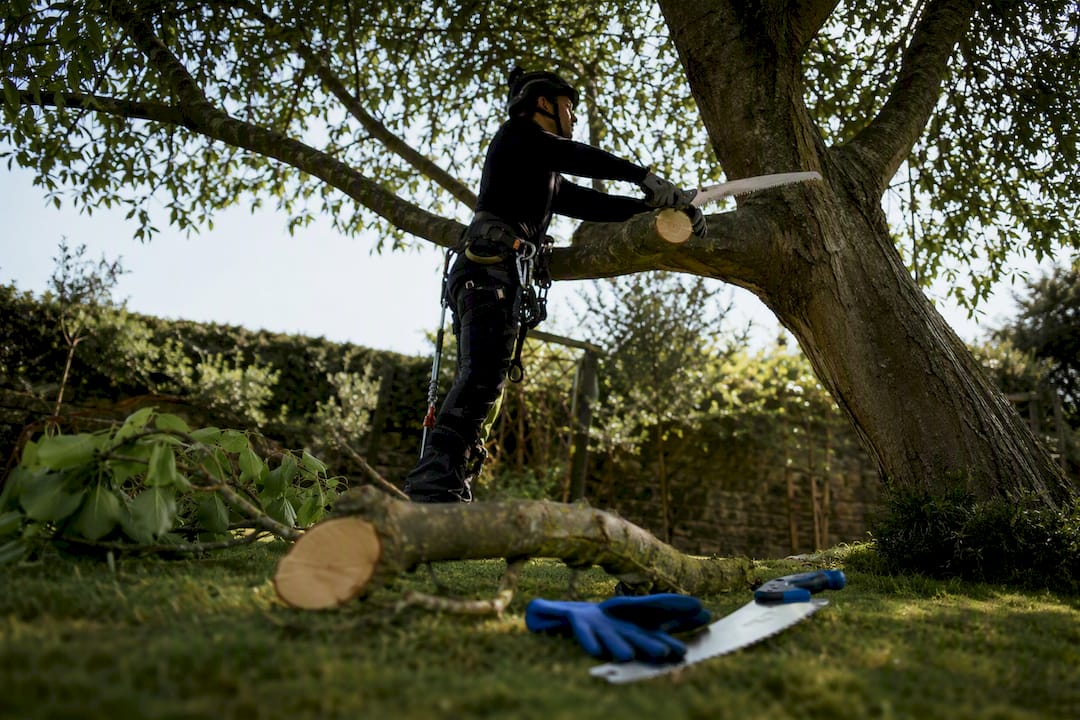
Tree trimming in Ireland typically costs €120 to €150 per hour for a team, with small jobs running €150 to €350. Removal ranges from €300 for a small garden tree to €3,000 or more for a large, complex one, and stump grinding adds €150 to €500. Get two or three written quotes, or book a vetted professional through Workily, before committing to any job.
TL;DR:
- Tree removal costs in Ireland range from around €300 for small trees to over €3,000 for large or complex ones, with stump grinding added separately at up to €500.
- Access constraints, tree health, species, and nearby utilities significantly influence the final price, often more than height and size alone.
- Always obtain two or three detailed, comparable quotes, and verify that scope, stump grinding, waste disposal, and insurance coverages are clearly included.
- Planning permissions are typically needed only for removal of protected or large trees; routine pruning usually does not require approval, but legal checks are essential.
- DIY trimming is only advisable for low, safe-to-reach branches; using power tools or working near structures greatly increases risks and costs that professional services mitigate.
Table of Contents
- How much does tree trimming cost in Ireland?
- What factors push a tree surgeon’s quote up or down?
- What should a proper tree surgery quote include?
- Do you need planning permission to trim or remove a tree in Ireland?
- How can you keep tree trimming costs down without cutting corners?
- Is DIY tree trimming actually cheaper than hiring a professional?
- What I’d tell any homeowner before they book
- Book a vetted tree surgeon through Workily instead of chasing callbacks
- Sources
- FAQ
How much does tree trimming cost in Ireland?
Pricing splits into distinct bands depending on whether you need light pruning, a full removal, or stump work afterwards. Most Irish tree surgeons charge by team time rather than a flat per-tree rate for pruning, which is why two similar-looking jobs can still land on different invoices.
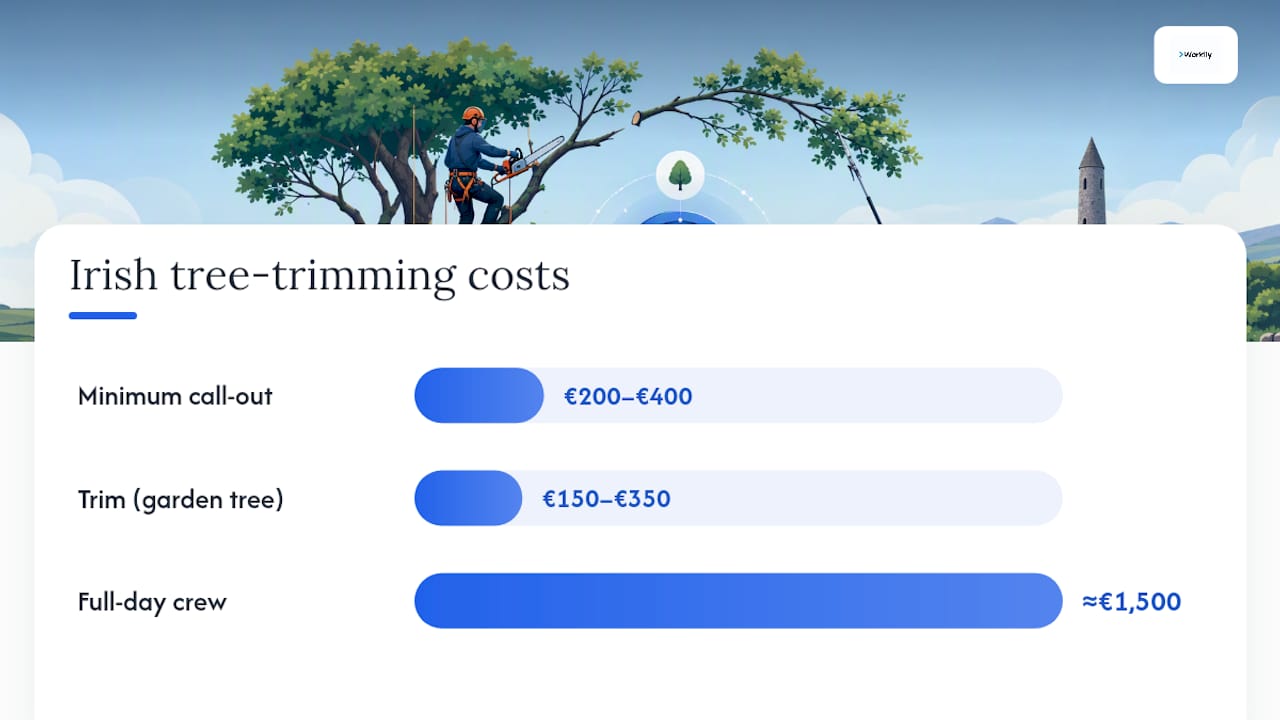
A standard crew rate runs €120 to €150 per hour, and a straightforward crown reduction or trim on a medium garden tree usually costs €150 to €350 once you factor in setup and cleanup time. Removal costs scale sharply with height and trunk diameter:
- Small tree removal (under 5 metres): roughly €300 to €700
- Medium tree removal (5 to 10 metres): roughly €700 to €1,200
- Large tree removal (10 to 15 metres): roughly €1,200 to €3,000
- Extra-large or complex removal (15 metres plus, or tight access): €3,000 to €5,000 or more
Stump grinding is billed separately in nearly every quote you’ll see, with typical charges of €150 to €500 depending on stump diameter and root spread. Chipping and waste disposal often come as add-ons too, so ask whether they’re bundled in.
Most firms also apply a minimum call-out fee of €200 to €400, which covers travel, insurance, and the time it takes to assess a job even if the actual cutting takes twenty minutes. A full day for a two-person crew tackling several trees on one property can cost several hundred to around one thousand five hundred euros once you add machine hire and skip costs.
What factors push a tree surgeon’s quote up or down?
Height and canopy size are the obvious drivers, but they’re rarely the deciding factor on their own. A 12-metre ash standing in an open field is a far simpler job than an 8-metre sycamore wedged between a conservatory and a boundary wall.
Access is often the real cost multiplier. When a crew can’t drive a chipper or crane up to the tree, or when branches have to be lowered piece by piece over a shed rather than felled in one go, labour time doubles or triples. Overhead power lines, footpaths, or busy roads nearby can trigger traffic management requirements, which adds cost and paperwork. Species and condition matter too: brittle timber, visible rot, or an aggressive root system near a foundation all raise the difficulty rating a surveyor will give the job before quoting.
- Height, canopy spread, and number of large limbs
- Access constraints (narrow gates, tight gardens, proximity to buildings or glass)
- Nearby roads, footpaths, or utility lines requiring permission or traffic control
- Tree health, species, and root behaviour
- Specialist equipment needs, such as a crane or cherry picker
- Emergency or storm-damage call-outs, which usually carry a premium
Insurance and safety planning aren’t line items you’ll see broken out on most invoices, but they’re baked into the hourly rate. A reputable outfit carries public liability cover, and that cost gets spread across every job it prices.
Pro Tip: Ask upfront whether the quoted price assumes normal access. If your garden has a narrow side gate or overhead cables, get the surveyor to walk the site before you accept a number over the phone.
What should a proper tree surgery quote include?
A vague, one-line quote is the biggest reason homeowners get stung by add-on charges halfway through a job. Before you sign anything, check the paperwork covers these points:
- Full scope of works — exactly which trees, which branches, and to what extent (crown reduction, pollarding, full removal).
- Itemised costs — labour, equipment hire, and waste disposal shown separately, not lumped into one figure.
- Stump grinding as its own line, if you want the stump gone, since it’s rarely included by default.
- VAT status and the call-out fee, stated clearly so there are no surprises on the final invoice.
- Proof of public liability insurance and accreditation — ask specifically about ISA (International Society of Arboriculture) or Arboricultural Association membership, both recognised markers of proper training among tree professional bodies operating across Ireland.
- Timescale, access requirements, and the waste removal plan — will they chip on-site, haul everything away, or leave logs for you?
- Any guarantee or aftercare covering regrowth advice or follow-up checks.
When comparing two quotes, make sure they cover identical scope. A quote that’s €200 cheaper but excludes stump grinding and skip hire isn’t actually the better deal.
Do you need planning permission to trim or remove a tree in Ireland?
Not usually for routine pruning, but removal is a different story if the tree sits on protected land, forms part of a hedgerow under development control, or exceeds certain volume thresholds. Felling licences and local authority permissions can apply to protected trees, trees tied to planning conditions, or larger-scale removals, and skipping that check can mean fines or a stalled project.
If a survey turns up bat roosts or other protected species, expect an ecology report to add weeks to the timeline and several hundred euro to the bill. Where permissions are genuinely needed, budget for weeks rather than days before work can start.
- Confirm protected status with your local authority before booking a date
- Ask your contractor whether your tree falls under felling licence rules
- Build in extra time if a survey or council submission is required
- Get this cleared before scheduling, not after, to avoid a wasted booking
How can you keep tree trimming costs down without cutting corners?
Timing and bundling are the two biggest levers homeowners actually control. Booking non-emergency pruning in late autumn or winter tends to cost less, since demand drops and leafless trees are often easier and safer to assess. Combining several trees into a single visit is another reliable saving, and most Irish tree surgeons will quote a lower per-tree rate when they’re not repeating the call-out fee.
- Book outside spring and summer peak season where the job isn’t urgent
- Bundle multiple trees, or pair tree work with wider garden maintenance, into one visit
- Ask about crown reduction instead of full removal if the tree is otherwise healthy
- Request on-site chipping and keep the timber yourself to cut disposal fees
Pro Tip: If you’re already planning a bigger garden overhaul, ask your tree surgeon and landscaper to coordinate visits. Shared access and skip hire can shave real money off both invoices.
Is DIY tree trimming actually cheaper than hiring a professional?
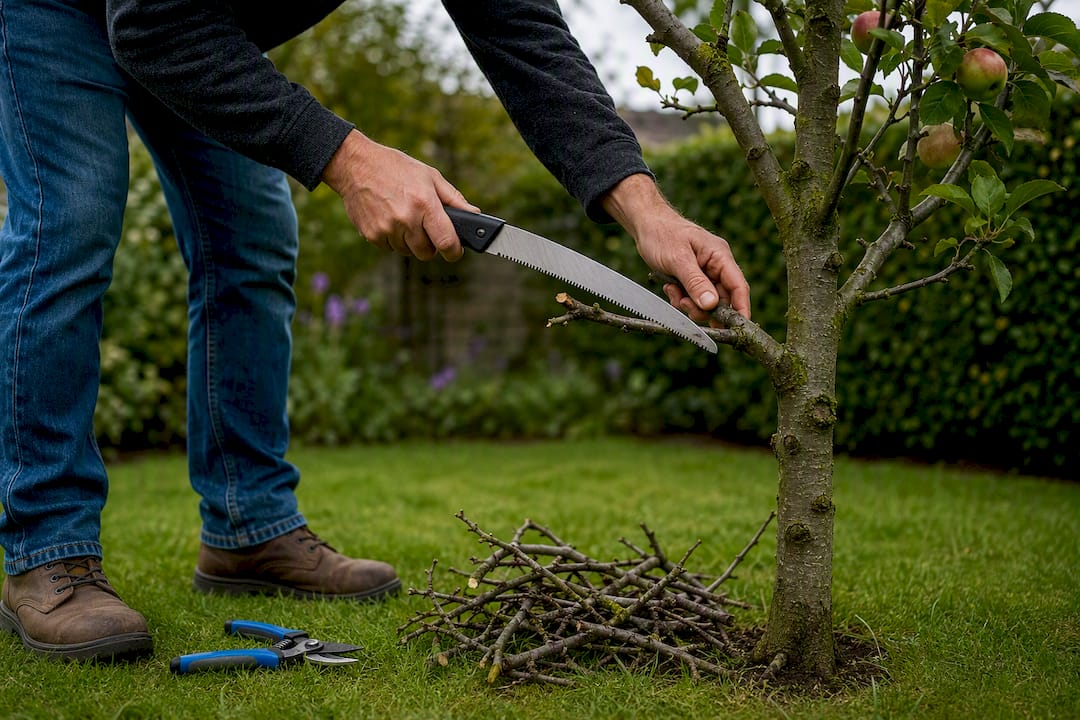
On paper, yes, obviously. A pruning saw and a Saturday afternoon cost nothing beyond the tool. In practice, the comparison only holds up for low branches you can reach safely from the ground or a short stepladder, things like deadwood on a young apple tree or a hedge-height shrub that’s strayed into “small tree” territory.
Anything involving a ladder above head height, a chainsaw, or a limb over a shed roof shifts the maths fast. A basic domestic chainsaw rental runs €40 to €60 a day, and that’s before factoring in the disposal trip, the time lost, and the very real risk of a fall or a limb landing on a fence. Emergency room visits and property damage from amateur tree work aren’t rare, and Ireland’s homeowner insurance guidance flags that trees close to a house carry their own risk considerations that a DIY job can easily aggravate rather than fix.
The other cost DIY rarely accounts for is the clean-up. Professional crews chip on-site or haul waste away as part of the quote; doing it yourself usually means multiple trips to a local recycling centre, plus whatever fee that facility charges per load. Once you tally tool hire, disposal, and the time off work, a €300 to €700 professional job for a small tree often ends up costing barely more than doing it badly yourself, minus the risk. Homeowner accounts on community forums consistently show that quotes vary by hundreds of euro for jobs that look identical from the ground, which is exactly why getting a professional to assess access and condition in person, rather than guessing, tends to save money rather than cost it.
What I’d tell any homeowner before they book
Get two or three written quotes before you agree to anything, and make sure each one covers the same scope of work. Price alone tells you nothing if one contractor is including stump grinding and disposal and another isn’t.
If you need the job done quickly, whether it’s storm damage or a tree leaning towards a boundary wall, instant booking services can connect you with a vetted professional the same day rather than leaving you waiting on callbacks. That doesn’t replace your own checks, though: always confirm public liability insurance and arboricultural accreditation before a crew sets foot in your garden.
— Thomas
Book a vetted tree surgeon through Workily instead of chasing callbacks
Using an online professional services platform lets you avoid ringing around for callbacks that never come back. You post the job once, and vetted tree surgeons in your area respond, so you’re comparing real quotes instead of waiting on voicemail.

For urgent work, storm damage overhanging a fence, a branch too close to a roof, instant booking connects you with an available professional the same day. For routine pruning or removal where you’d rather weigh a few options, request quotes through Workily and compare scope, price, and insurance side by side before you commit. Every professional on the platform goes through vetting, and you can review how that works on the trust and safety page before you book. If your garden project stretches beyond one tree, browse Workily to line up landscaping or general maintenance help at the same time.
Sources
Figures in this guide draw on Irish tree surgery pricing pages, trade cost guides, and Ireland-specific planning and insurance sources cited throughout.
- Tree Surgery Prices in Ireland 2026 – Elm Landscaping
- Tree Removal Cost in Ireland – 2025 Prices by Size
- How much does tree work cost? – Glavey Tree Experts
- Tree Removal Ireland : Laws, Permit, Application & Cost – Treeier
FAQ
How much does it cost to get a tree cut down in Ireland?
A small tree removal typically costs €300 to €700, a medium tree €700 to €1,200, and a large or complex tree €1,200 to €3,000 or more, depending on height, access, and whether stump grinding is included.
How much should I pay for tree pruning?
Most Irish crews charge €120 to €150 per hour, and a straightforward pruning job on a garden tree usually totals €150 to €350 once setup and cleanup are included.
What is the best price for tree trimming?
There’s no single “best” price since it depends on access and tree condition, but getting two or three written quotes with identical scope is the most reliable way to spot a fair rate for your specific job.
Is it cheaper to trim or cut down a tree?
Trimming or crown reduction is usually cheaper than full removal, since it takes less time and skips the cost of grinding out the stump and hauling away the entire trunk.
Do I need permission to remove a tree in Ireland?
Not for routine pruning, but removal can require a felling licence or local authority permission if the tree is protected, tied to a planning condition, or above certain size thresholds.
How much is a minimum call-out fee for tree work?
Most Irish tree surgeons apply a minimum call-out fee of €200 to €400, which covers travel, insurance, and site assessment even on small jobs.
Is stump grinding included in a tree removal quote?
Rarely. Stump grinding is almost always priced separately, typically €150 to €500 depending on stump diameter and root spread, so check whether it’s included before comparing quotes.
Can I trim my own trees to save money?
Light pruning on low branches you can reach safely from the ground is fine to do yourself, but anything requiring a ladder, chainsaw, or work near a building carries real safety and insurance risks best left to an accredited professional.