


Get multiple quotes for your job depending on its size and complexity: several for medium and major jobs, fewer for small or emergency repairs, and more for large or specialised projects. The number matters far less than making sure every contractor is quoting on the same scope. A platform like Workily makes it faster to request and compare vetted, itemised quotes side by side.
TL;DR:
- Getting three comparable quotes helps identify fair market prices and reveals outliers that may either be bargains or signs of issues.
- Providing every contractor with the same detailed brief and conditions ensures that quotes are truly comparable, avoiding scope discrepancies.
- Large or complex jobs justify seeking multiple bids or formal tendering, while small repairs typically require only one or two quotes.
- Comparing line-by-line details and checking for red flags like vague scope or missing insurance helps spot inaccurate or suspicious bids.
- An online platform like Workily streamlines obtaining vetted, itemised quotes quickly, especially for small jobs, saving time and reducing scheduling delays.
Table of Contents
- How many contractor quotes do you need, and why bother?
- Rule of thumb: quotes by job size and complexity
- How to get comparable quotes: a homeowner’s checklist
- How to interpret quotes and spot the red flags
- How long should you wait for a contractor’s quote?
- Author perspective and how Workily helps with comparable quotes
- Why three quotes is still the right default, but not for the reason most people think
- Get comparable quotes faster with a vetted online platform
- Sources
- FAQ
How many contractor quotes do you need, and why bother?
Three prices tell you something one price never can: where the real market sits. A single quote gives you no reference point, so you cannot tell whether a given price for a bathroom rewire is fair or wildly inflated. Two quotes tell you they disagree. Three or more quotes usually reveal a cluster, plus the occasional outlier that is either a bargain or a warning sign.
Price is only part of the picture, though. Each conversation with a contractor tells you something about communication quality, how carefully they read your brief, and whether their scope matches what you actually asked for.
- Multiple quotes expose which contractors misunderstood or underquoted the job
- Response time and clarity often predict how the project itself will run
- The cheapest bid is not automatically the best value once reliability is weighed in
Trade bodies and consumer protection agencies both point to the same habit: keep written records of every quote you receive, so you can compare fairly weeks later rather than relying on memory.
Rule of thumb: quotes by job size and complexity
The right number of contractor quotes scales with the size and complexity of the job, not with how anxious you feel about getting it wrong. Here is a practical breakdown for typical Irish homeowner projects.
- Small or simple jobs: a leaking tap, a fence panel, a small patch of plastering. One or two quotes are enough, especially if you already trust the tradesperson from previous work.
- Typical renovations, rewires, or bathroom fits: aim for about three comparable quotes. This is the range where three quotes are widely recommended as a sensible baseline, because it is enough to spot outliers without wasting everyone’s time.
- Large builds, extensions, or specialist work (structural engineering, listed-building restoration, heat pump retrofits): consider seeking several bids, or a more formal tendering process with a quantity surveyor involved.
There are sensible exceptions. A burst pipe at 11pm is not the moment to ring five plumbers. A tradesperson who has done reliable work for you twice before does not need to be re-vetted through three competing quotes every time. And in genuinely niche markets, such as chimney restoration or period joinery, you may only find one or two qualified specialists within a reasonable distance anyway.
How to get comparable quotes: a homeowner’s checklist
Three quotes are worthless if each contractor priced a different job. The fix is giving every contractor the exact same brief and the same conditions to quote against.
- Write one brief and send it to everyone. Include materials, finishes, exclusions, timelines, and who is responsible for permits. Sending different verbal descriptions to different tradespeople is the single biggest reason quotes end up incomparable, a point homeowner advice guides return to repeatedly.
- Demand an itemised breakdown, not a single lump sum: labour, materials, waste removal, scaffolding, and any temporary works should each appear as their own line.
- Insist on an on-site visit for anything beyond a minor repair. A contractor who quotes a rewire without seeing your consumer unit is guessing. For small jobs, clear photographs may be enough.
- Set a deadline and say so upfront. Tell contractors when you plan to decide, so they know they are one of several bidders and can prioritise accordingly.
Understanding the difference between a formal quote and a rough estimate matters here too. Confusing the two causes most of the disputes that arise after work starts.
Pro Tip: Keep your written brief as a single document, even if it is only half a page. Emailing it as an attachment, rather than describing the job differently to each contractor over the phone, is what actually makes three quotes comparable rather than three guesses.
How to interpret quotes and spot the red flags
Compare quotes line by line, not by the total figure alone. Two bids that land within a few hundred euros of each other might still hide very different scopes underneath.
A quote that comes in far below the others usually means missing scope, not a genuine discount, whether that is skipped waste disposal, no allowance for making good, or materials substituted for cheaper alternatives. A quote that sits well above the rest may simply be padded, or it may reflect a contractor who is busy and pricing to discourage the job. Either way, ask for clarification rather than assuming.
Watch for these signals:
- Vague scope descriptions with no line items or quantities
- No mention of insurance or public liability cover
- Reluctance to provide references or arrange a site visit
- A drive-by inspection lasting a couple of minutes, rather than the 30 to 60 minutes a proper renovation assessment needs
Trade associations generally caution against inviting too many firms to bid in the first place, since a detailed quote takes real time to prepare and spreading that effort across too many contractors can put off the strongest ones from bothering at all. When two quotes still disagree sharply after you have checked scope, ask both contractors to put their reasoning in writing before you decide.
How long should you wait for a contractor’s quote?
Turnaround time depends almost entirely on job size. A small repair quote can arrive within hours or a day or two once a contractor has seen photos or a short description. Larger renovation work that requires an on-site visit typically takes one to two weeks from first contact to a finished written quote, since the contractor needs to measure, assess access, and price materials properly.
- Book all your site visits within the same week where possible, so you are not stretching the decision process over a month.
- Tell each contractor roughly when you plan to compare and decide, which keeps everyone quoting to the same clock.
- If one contractor goes quiet past their stated deadline, set a final cut-off date and move on to a vetted alternative rather than letting the whole project stall.
For bigger jobs, planning your renovation timeline properly before you even request quotes saves weeks later, because you are not scrambling to fit site visits around a schedule you have not thought through.
Author perspective and how Workily helps with comparable quotes
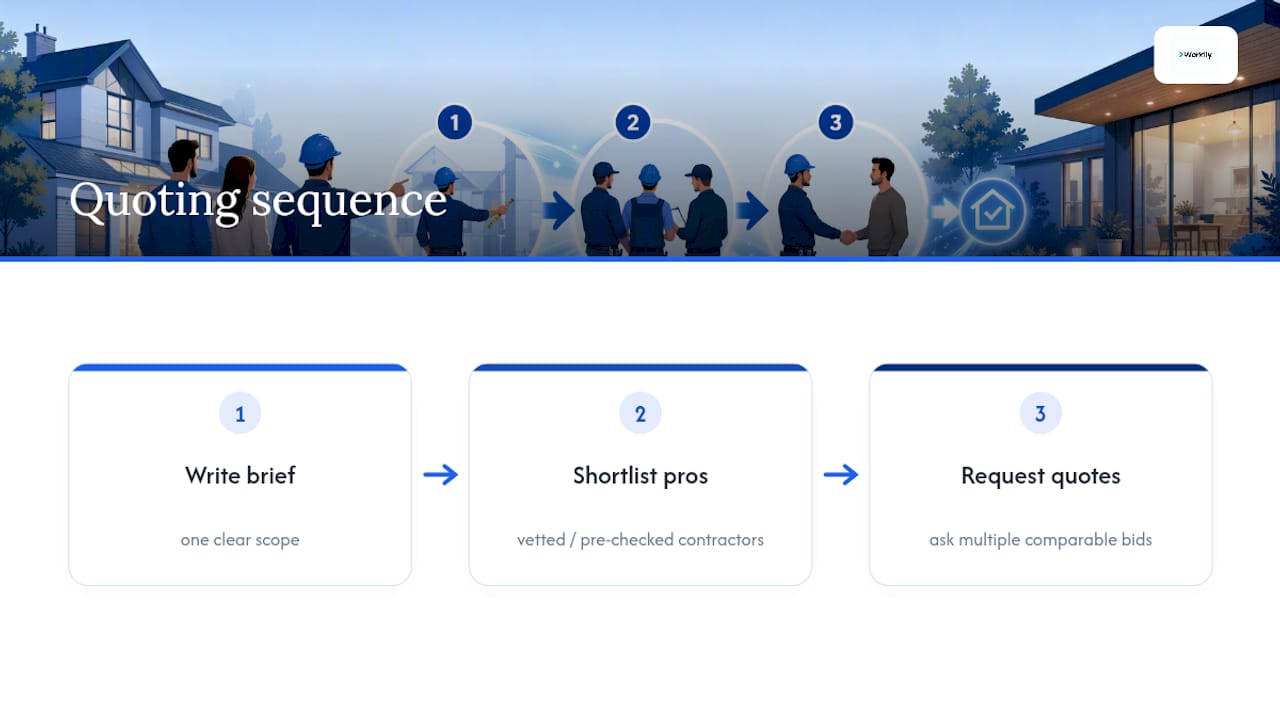
Preparing one clear brief and sending it to a shortlist of vetted contractors is the part homeowners skip, and it is the part that actually determines whether three quotes are useful or just three different guesses. A vetting process can shorten the trust-building step that normally takes days: instead of ringing around and hoping a tradesperson is properly insured, you draw from professionals who have already been checked.
That combination matters most at the quoting stage, where slow replies are often the first sign of how a contractor will behave once work starts.
The practical sequence stays the same regardless of platform: write the brief first, then request multiple quotes against it, whether through Workily or by contacting tradespeople directly.
Why three quotes is still the right default, but not for the reason most people think
Most advice on this topic treats three quotes as a magic number, as if the count itself does the work. It does not. The three-quote habit functions as a consumer-protection heuristic, and its value depends entirely on whether the homeowner gave every contractor the same brief to price. Three quotes on three different scopes are not a comparison. They are three separate, unrelated numbers that happen to sit on the same page.
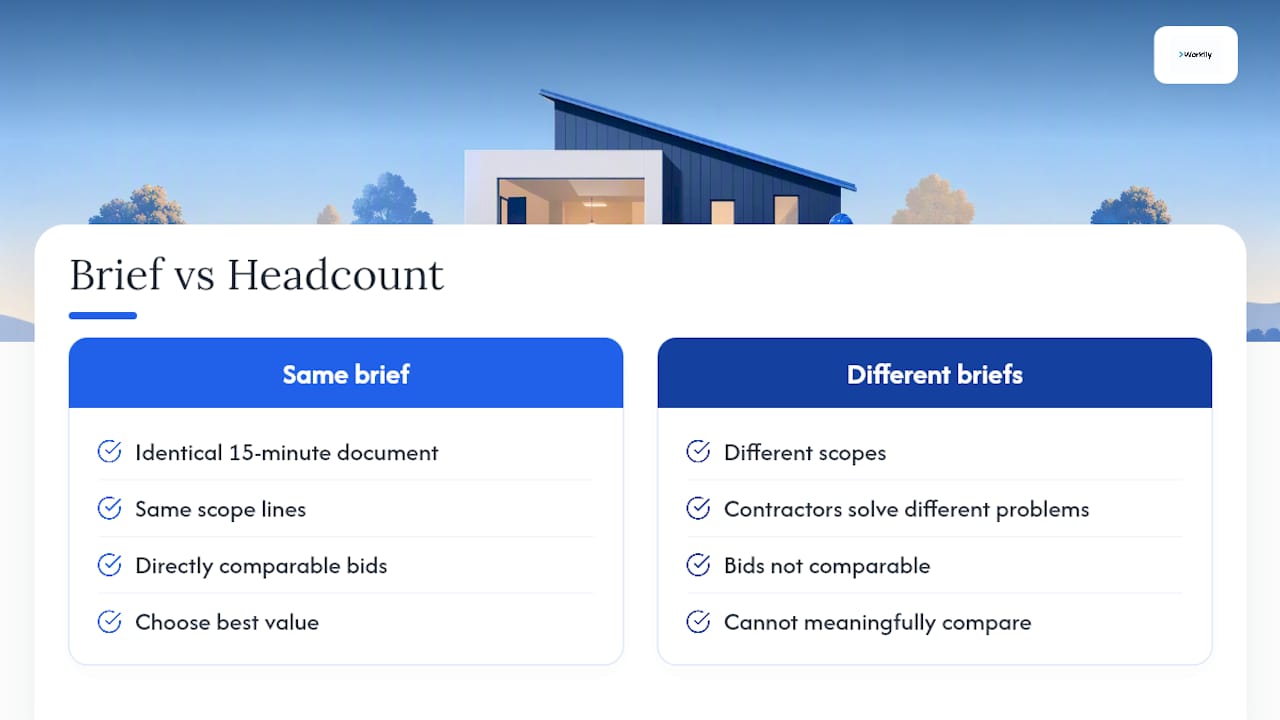
Where conventional advice falls short is in stopping at “get three quotes” and leaving the harder part unsaid: writing a brief precise enough that a plumber and an electrician quoting the same bathroom job are actually solving the same problem. That takes fifteen minutes and a document, not a spreadsheet.
If you take one thing from this, prioritise the brief over the headcount. A well-briefed pair of quotes beats five vague ones every time, and a marketplace that vets contractors before you even start comparing saves the days you would otherwise spend just working out who is trustworthy.
— Thomas
Get comparable quotes faster with a vetted online platform
An online platform can be an alternative to chasing tradespeople through phone calls and unanswered messages: professionals on such sites are vetted before you request a quote, and instant booking features can allow locking in a site visit quickly instead of waiting days for a callback. That speed matters most in the exact moment this article has been about, getting two or three comparable, itemised bids without losing a fortnight to scheduling.

If you have a small job you want handled quickly, book a professional directly and skip the multi-quote process altogether. For anything larger, prepare your written brief, then head to Workily to request quotes from several vetted tradespeople at once and compare them properly before you commit.
Sources
- Five things you need to know about getting a quote for building work
- How to get 3 contractor quotes without wasting their time
- How Many Contractor Quotes Should You Get? (And the Step Most Homeowners Skip)
FAQ
How many quotes should you get from contractors?
Three quotes is the sensible baseline for most medium and large jobs, dropping to one or two for small repairs or emergencies, and rising to four or five for large, specialised, or structural projects.
What is the three-quote rule?
The three-quote rule is a common-sense habit, not a legal requirement: it means requesting written quotes from three contractors on the same brief so you can compare price, scope, and reliability side by side.
What are typical contracting rates in Ireland?
Rates vary widely by trade, region, and job complexity, so the more useful step is comparing itemised quotes from vetted local professionals through a platform like Workily rather than relying on a single national average figure.
How long should I wait for a contractor’s quote?
Small jobs often get quoted within a day or two, while larger renovations requiring a site visit typically take one to two weeks; if a contractor goes well past that without contact, set a final deadline and move on.
Is it rude to get multiple quotes from contractors?
No. Requesting multiple quotes is standard practice and expected by most tradespeople, provided you give each one the same brief and are honest about your timeline for deciding.
Should I always choose the cheapest quote?
Not automatically. A very low quote often signals missing scope rather than genuine savings, so weigh it against communication quality, insurance, references, and how clearly the contractor understood the brief.
What is the difference between a quote and an estimate?
A quote is a fixed, itemised price for a defined scope of work, while an estimate is a rough figure that can change once work begins; confusing the two causes most post-project pricing disputes.