

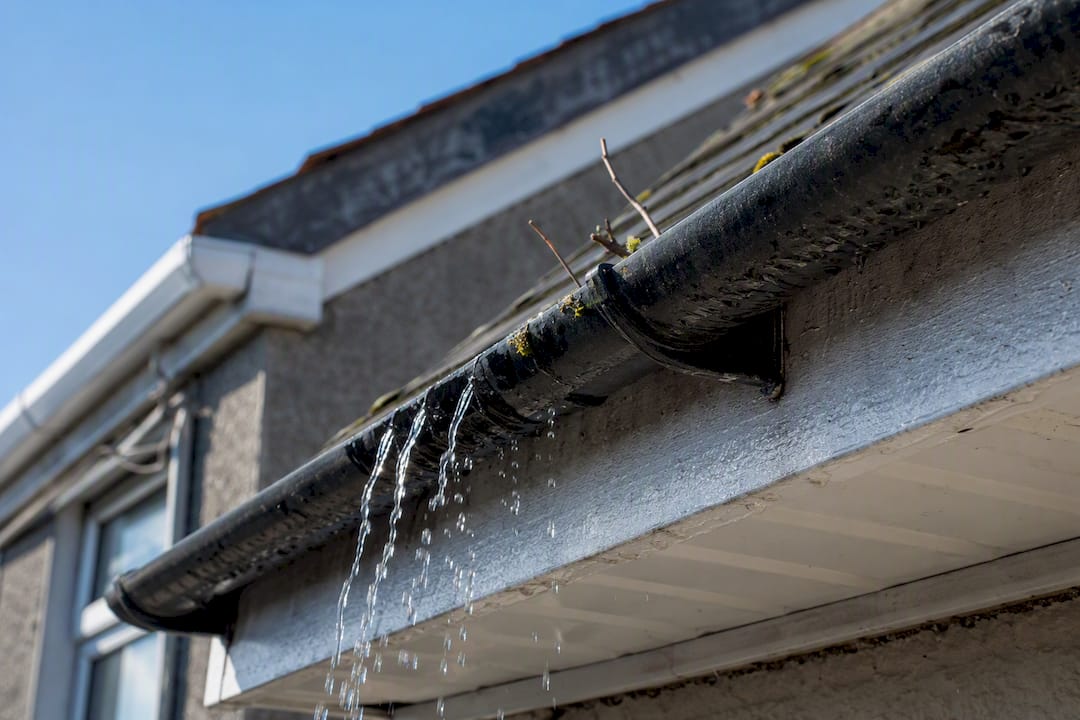
Clean your gutters at least twice a year, in spring and late autumn, and don’t attempt it yourself if you’re on a two-storey property, facing a steep roof, or already seeing signs of structural damage — for detailed professional advice, see Why gutter cleaning matters for your home. That’s the baseline. If your home sits under mature trees or gets hit with pine needles and heavy storms, push that to three or four cleans a year.
- Baseline: twice yearly, spring and late autumn
- Hire a pro if: the property is two storeys or higher, the roof pitch is steep, you’re not confident on a ladder, or you’ve spotted sagging, staining or drainage problems
- Increase frequency if: you’ve got overhanging trees, conifers nearby, or your area sees frequent storms
Key Takeaways
Gutter systems need cleaning at least twice a year, and neglecting that schedule turns a small maintenance task into a fascia, foundation or landscaping repair bill.
| Point | Details |
|---|---|
| Baseline schedule | Clean gutters twice yearly, in late spring and late autumn, at minimum. |
| Increase for trees and storms | Move to 3 to 4 cleans a year with heavy tree cover, conifers, or frequent storms. |
| Know your limits | Hire a professional for two-storey homes, steep roofs, or any structural damage signs. |
| Budget realistically | Expect roughly €80 to €150 for single-storey homes and €150 to €300 for two-storey properties. |
| Book through Workily | Compare vetted, insured professionals and book instantly with photo documentation included. |
Table of Contents
- Why gutter maintenance matters more than most homeowners think
- How often should you clean your gutters?
- How to clean your gutters yourself, step by step
- When DIY stops making sense and you need a professional
- What gutter cleaning costs in Ireland
- A short checklist worth keeping on file
- Why choosing a vetted professional matters
- Types of gutter guards and how much upkeep they need
- How Irish weather changes your gutter maintenance needs
- Preventing debris buildup before it becomes a problem
- Sources
Why gutter maintenance matters more than most homeowners think
A blocked gutter doesn’t just overflow, it redirects water exactly where you don’t want it: down your fascia boards, behind your soffits, and straight into your foundations. Once water sits against timber fascia for a season, rot sets in, and what would have been a €20 job becomes a €300 to €500 repair.
The volumes involved are bigger than people assume. One inch of rain falling on a typical 1,500 square foot roof produces hundreds of gallons of water that has to go somewhere. If your gutters can’t move it, that water finds the cheapest path, usually straight down an exterior wall or into a basement. If you’ve already got a leak forming, a temporary roof leak fix can buy you time before a proper repair.
How often should you clean your gutters?
Twice a year is the number worth remembering: once in late spring, after seed pods and blossom have finished dropping, and again in late autumn, once most of the leaves are down. That schedule works for the average Irish semi-detached or terraced house without heavy tree cover.

It’s not one-size-fits-all, though. Maintenance professionals generally recommend stepping up to three or four cleans a year if you’ve got mature trees overhanging the roof, conifers dropping needles year-round, or you live somewhere that regularly cops the brunt of Atlantic storms rolling in off the coast.
A few practical triggers for scheduling a clean:
- After the main autumn leaf drop, typically late October into November
- After spring blossom and seed season, roughly April to May
- Straight after any significant storm, particularly if you’ve heard debris hitting the roof
- Before winter sets in properly, so gutters aren’t holding water that could freeze and crack the system
How to clean your gutters yourself, step by step
If you’re comfortable on a ladder and your home is single-storey with reasonable access, this is a job you can do safely in an afternoon.
What you’ll need: a sturdy ladder with a stabiliser bar, work gloves, a plastic gutter scoop, a garden hose with a spray nozzle, a bucket or debris bag, and a spirit level. Get someone to spot the ladder while you work, don’t skip this part.
- Position the ladder on firm, level ground and set the stabiliser so it rests against the roofline, not the gutter itself.
- Scoop out large debris by hand, working from the downspout outward, and drop it into your bucket rather than the ground below.
- Flush each gutter run with the hose, working toward the downspout, so you catch anything the scoop missed and check the water actually flows.
- Clear the downspouts themselves, either by feeding the hose down or using a plumber’s rod if they’re blocked solid.
- Inspect seams, joints and hangers for gaps or rust while you’re up there.
- Check the slope with a spirit level. Correct pitch is roughly a quarter to half an inch of fall per 20 feet toward the downspout. Reset hangers if water is pooling instead of draining.
Once you’re down, check that water discharges at least 4 to 6 feet clear of the foundation, look for any visible sagging or separation between sections, and seal small leaks with gutter sealant. Photograph anything that looks wrong, cracks, rust patches, loose brackets, so you’ve got evidence if you need a quote later.
Pro Tip: Do the flow test on a dry day using the hose rather than waiting for the next downpour to find out your gutters don’t drain properly. It’s far easier to fix a slope issue with a level in hand than to guess at it during a storm.
When DIY stops making sense and you need a professional
There’s a point where the risk of climbing up yourself outweighs the money saved, and it’s worth being honest about where that line sits.
Call a professional if any of the following apply:
- Your home is two storeys or higher
- The roof pitch is steep or the eaves are hard to reach safely
- You’ve noticed sagging, separation, or fascia damage that suggests a repair, not just a clean
- Gutters stay blocked even after you’ve flushed them, which often points to a deeper problem like a crushed section or a collapsed downspout
- You have any mobility or balance concerns that make ladder work risky
Ground-level tools and long-reach attachments can clear loose leaves, but they routinely miss compacted sediment, hidden hanger damage, and incorrect pitch. A visual inspection at gutter height catches problems a hose from the ground simply can’t. A vetted tradesperson brings insurance cover, powered flushing equipment, and the ability to spot and fix minor issues on the spot.
Before hiring anyone, ask for proof of liability insurance, confirm they’re registered as a business, and ask whether they document the job with before-and-after photos. A written guarantee on the work is a fair thing to expect too.
What gutter cleaning costs in Ireland
Prices vary with the length of guttering, how many storeys you’ve got, the roof pitch, access difficulty, and how much debris has built up. A ground-floor bungalow with easy access costs less to service than a two-storey house with awkward angles or overgrown trees pressing against the roofline.
As a rough guide, expect somewhere in the region of €80 to €150 for a single-storey home, and €150 to €300 for a two-storey property, depending on length and condition. These are indicative ranges, not guaranteed quotes, and a property with significant repair needs will cost more.
A fair quote should include:
- A full inspection of gutters, downspouts and fascia
- Removal of all debris, not just visible surface leaves
- A downspout flush to confirm water actually clears
- Before-and-after photos as documentation
- Some form of short warranty or guarantee on the work carried out
A short checklist worth keeping on file
Print this out or save it somewhere you’ll actually find it twice a year.
- Debris level in gutters and around downspout openings
- Any sagging or visible separation between gutter sections
- Staining on fascia boards or brickwork below the gutter line
- Plant growth or moss inside the gutter channel
- Downspout flow and whether water discharges clear of the foundation
- Condition of brackets and hangers
- State of any gutter guards fitted
Log the date, who checked it, what you found, and any photos taken. If you’re under heavy tree cover or storm-exposed, check quarterly rather than twice yearly, it takes ten minutes and saves a much bigger job later.
Why choosing a vetted professional matters
Booking blind off a search result means you’ve no way to verify insurance, no before-and-after record, and no real accountability if the job’s done badly. Workily solves that by vetting every professional on the platform, with instant booking for same-day service when you need it.
- Compare two or three verified quotes side by side before choosing
- Check insurance and credentials directly through the platform
- Get before-and-after photo documentation as standard
- Pay securely through the platform rather than handing over cash
Search “gutter cleaning,” compare a few vetted pros, check their credentials, then book.
Types of gutter guards and how much upkeep they need
Gutter guards don’t remove maintenance entirely, they just change how often you need to do it. Mesh screens sit over the gutter opening and stop larger leaves while letting water through; they need clearing of fine debris and moss once or twice a year.
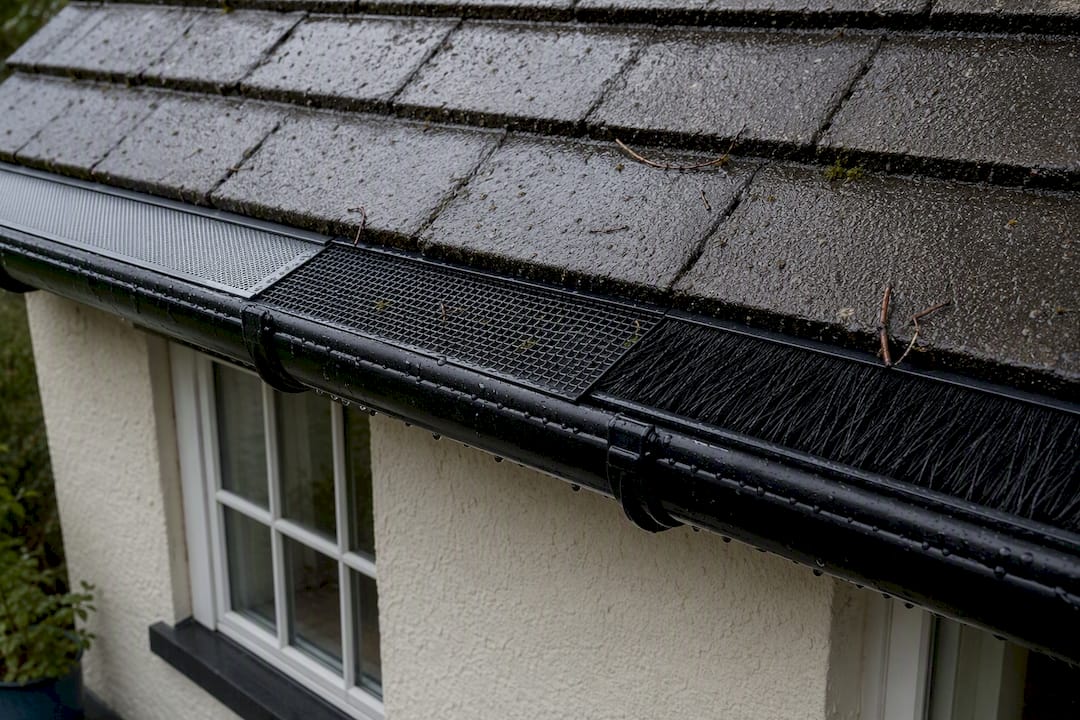
Micro-mesh guards are the finer option, catching pine needles and small seed debris that standard mesh lets through. Kempt’s guidance on gutter maintenance notes that micro-mesh guards often cut cleaning down from twice yearly to once, but they still need an annual check because fine silt and grit can build up on top of the mesh over time. Installed cost for micro-mesh typically runs €5 to €12 per linear foot in market pricing, so a full run on an average semi-detached home represents a real but manageable outlay.
Brush-style guards, essentially a bottle-brush insert sitting inside the gutter channel, are the cheapest option and easiest to retrofit, but they trap fine debris within the bristles rather than keeping it out entirely, which means more frequent clearing than mesh.
Foam guards fit into the gutter channel and block larger debris while allowing water through the porous material, but they degrade faster in Irish weather and can hold moisture, encouraging moss growth inside the foam itself.
Whatever guard type you choose, none of them are a “install and forget” solution. An annual visual check, ideally paired with one of your two scheduled cleans, catches guard degradation, sagging under debris weight, or gaps where pests or moss have gained a foothold.
How Irish weather changes your gutter maintenance needs
Ireland’s weather does the average gutter no favours. Frequent rainfall means gutters are almost constantly under load, so any existing blockage causes overflow far faster than it would in a drier climate.
Autumn and winter storms, particularly those tracking in off the Atlantic and hitting coastal counties like Clare, Kerry and Donegal hardest, dislodge debris, snap weak brackets, and can rip guttering away from fascia boards entirely if it’s already loose. If you’re in one of these more exposed areas, a post-storm visual check is worth doing even outside your normal schedule.
Cold snaps bring their own risk. Standing water in a poorly pitched gutter can freeze, and ice expansion cracks joints and seams that would otherwise last years. This is one of the clearest reasons to get that autumn clean and slope check done before the first hard frost, rather than after.
Wind-driven rain also pushes debris further into gutter systems than still-air rain would, packing leaves and grit tighter against downspout openings. That’s part of why a simple hose flush sometimes isn’t enough to clear a downspout that’s been sitting blocked through a wet, windy autumn, you may need a rod to physically dislodge compacted material.
Milder, wetter winters overall mean moss and organic growth inside gutters is more of a persistent problem here than in drier climates, adding another item to check for on every inspection rather than treating it as a rare find.
Preventing debris buildup before it becomes a problem
The single most effective prevention measure is also the most obvious: keep overhanging branches trimmed back from the roofline. A tree branch hanging over guttering drops leaves, seeds and, in the case of conifers, needles directly into the channel, and trimming it back by even a few feet cuts the volume dramatically.
Seasonal timing matters here too. Pruning deciduous trees in late winter, before the spring growth surge, keeps branches further from the roof through the following autumn’s leaf drop, which is when most blockages happen.
Gutter guards, covered above, are the second layer of defence, reducing how much debris gets into the channel in the first place rather than relying entirely on periodic cleaning to remove it.
Beyond trees, check for moss or lichen growth on the roof itself. Both shed material into gutters over time, and a roof with heavy moss coverage will feed debris into your gutter system continuously, not just seasonally.
If your property backs onto open land, hedgerow, or a green space managed by your local county council, keep an eye on seasonal cutting schedules. Grass clippings and hedge trimmings from nearby verges can end up airborne during strong winds and settle in gutters just as readily as tree debris.
A short word from Thomas
Homeowners often underestimate ladder risk on older Irish properties with uneven ground. If there’s any doubt, use the checklist above, then book a vetted professional through Workily rather than gambling on a wobbly extension ladder.
— Thomas
Get quotes and book a gutter cleaning pro through Workily
Workily cuts out the guesswork of ringing round for quotes: you search once, compare verified professionals side by side, and book the one that fits, often with same-day availability.

Here’s how it works in practice. Search “gutter cleaning” on Workily, and you’ll see a shortlist of vetted local professionals rather than an anonymous directory listing. Compare two or three quotes, check their insurance and reviews directly on their profile, then book instantly through Workily’s booking page with secure payment handled on the platform. If the job turns out to need more than a standard clean, say a fascia repair or a re-pitched section, you can request that through the same booking without starting the search over.
For urgent cases, like a downspout that’s failed mid-storm and is dumping water against your foundation, instant booking connects you with a professional the same day rather than leaving you waiting on callbacks.
Sources
- How Often Should You Really Clean Your Gutters? We Asked Maintenance Pros
- The best way to clean the gutters
- How Often Should I Clean My Gutters? · Kempt