


Bookkeeper rates in Ireland typically run €25–€70 an hour, or €95–€1,500 a month as a fixed package, depending on transaction volume, payroll and VAT complexity. Sole traders usually sit at the lower end; small limited companies and growing SMEs pay more for payroll and quarterly VAT work. The smartest move is to skip hourly comparisons altogether and request two or three scoped quotes that state their transaction assumptions upfront.
TL;DR:
- Bookkeeper monthly packages for small Irish businesses generally range from €95 to €1,500, depending on transaction volume, payroll, and VAT complexity.
- Larger SMEs and e-commerce firms with extensive payroll and multiple platforms typically pay between €600 and €1,200 monthly.
- Outsourcing bookkeeping is usually cheaper than hiring in-house, especially for companies with fewer than 50 employees, due to lower overhead costs.
- Requesting two or three scoped quotes that specify transaction assumptions helps identify true value and avoid hidden charges.
- Automation and clarified scope make a significant difference, with automation potentially doubling transaction volume handled for the same price.
Table of Contents
- Bookkeeper rates in Ireland: hourly, monthly and fixed options
- What moves the price: the main cost drivers
- Pricing examples by business type
- Outsourced bookkeeping versus in-house: what actually costs less
- How to choose a bookkeeper: checklist and red flags
- Getting scoped quotes without the guesswork
- Why value pricing beats hourly billing every time
- Compare quotes and book vetted support through Workily
- Sources
- FAQ
Bookkeeper rates in Ireland: hourly, monthly and fixed options
Most Irish bookkeepers price their work one of three ways: by the hour, as a fixed monthly package, or as an annual retainer agreed upfront. Hourly billing tends to show up for ad-hoc jobs, one-off catch-up work, or businesses with genuinely unpredictable volumes month to month.
Hourly rates for bookkeeping services generally land between €25 and €70, according to Good Company Group’s market research, with the spread driven by experience, location and whether the work involves straightforward data entry or more judgement-heavy reconciliation. A newly qualified bookkeeper working from home might sit near €25 to €35. Someone managing multi-currency accounts or messy historical records will charge closer to the top of that band.
Monthly packages are far more common for ongoing relationships, and they scale with complexity:
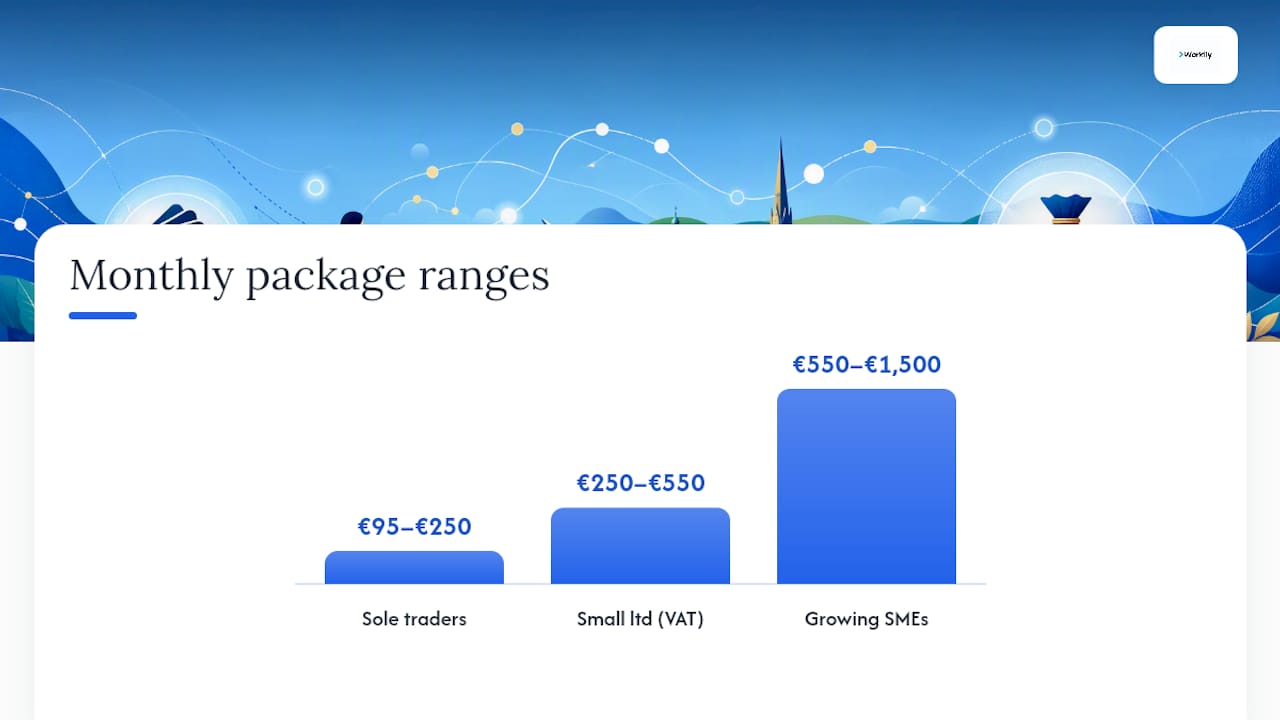
- Sole traders, low volume: roughly €95–€250 a month
- Small limited companies, VAT-registered: roughly €250–€550 a month
- Growing SMEs with payroll or e-commerce: roughly €550–€1,500 a month, per Good Company Group’s pricing data
These packages usually bundle transaction processing, bank reconciliation, and VAT return preparation, though software licence costs (Xero, Sage, QuickBooks) are sometimes billed separately. Always ask whether VAT filing is included or charged as an add-on, since Agile Accounting Personnel’s guidance notes many providers treat quarterly VAT returns and year-end accounts as extras rather than folding them into the base fee.
What moves the price: the main cost drivers
Two businesses with identical turnover can get wildly different quotes, and the gap almost always comes down to five factors.
- Transaction volume: more sales, more bank accounts, more payment channels means more reconciliation hours regardless of revenue size.
- Payroll headcount: per-payslip charges typically run €5–€30 each, according to Forti’s cost breakdown, so a team of ten adds a predictable monthly chunk.
- VAT complexity: multiple VAT rates, EU trade, or e-commerce platforms like Shopify pulling in daily transactions all push fees upward.
- Data quality: disorganised receipts or unreconciled accounts from a previous provider create catch-up work that gets billed separately from ongoing fees.
- Software setup: integrating accounting platforms with sales channels adds both time and licensing cost. Sellers running multichannel operations often need specialist help connecting platforms like MYOB Acumatica with Shopify integrations to keep reconciliation manageable.
Pro Tip: Ask any bookkeeper what automation they use for bank feeds before you compare their quote to anyone else’s. A provider using automated matching rules can often handle double the transaction volume in the same hours, which is exactly why two quotes for the same job can differ by hundreds of euro a month.
Pricing examples by business type
Real numbers help more than ranges alone. Here’s how the bands typically play out for common Irish business profiles.
- Sole trader, low transaction volume (a freelance designer with under 50 transactions a month): expect €95–€180 monthly, or roughly €1,140–€2,160 a year, covering basic reconciliation and an annual return.
- Small limited company, VAT-registered (a café with two bank accounts, bi-monthly VAT filing, and around 200 transactions monthly): expect €250–€450 monthly, or €3,000–€5,400 annually.
- Growing SME or e-commerce business (an online retailer with multiple sales channels, five staff on payroll and daily transaction imports): expect €600–€1,200 monthly, or €7,200–€14,400 a year, with payroll and platform integrations as the main cost adders.
Budgeting annually rather than monthly makes these figures easier to plan around, particularly if your business has seasonal spikes around Christmas trading or the October 31 tax deadline.
Outsourced bookkeeping versus in-house: what actually costs less
For most small businesses in Ireland, outsourcing wins on pure cost. An in-house bookkeeper’s salary alone can exceed the entire outsourced monthly fee, and that’s before employer overheads.
- In-house salary: a part-time bookkeeper might cost €18,000–€28,000 annually before overheads.
- Employer costs on top: Revenue’s PAYE guidance confirms employers must handle PRSI contributions, holiday pay and administration, adding a meaningful percentage to base salary.
- Outsourced equivalent: the same workload often costs €250–€900 a month outsourced, with no recruitment risk or sick-leave cover needed.
Outsourcing tends to be the cheaper route for firms under roughly 50 employees, as Good Company Group notes, simply because you’re not carrying a full salary and its overheads for part-time need. An in-house hire only makes sense once transaction volume is genuinely full-time work, or when a business needs someone physically on-site daily.
How to choose a bookkeeper: checklist and red flags
A clear quote should answer five questions before you sign anything. Ask each provider directly rather than assuming.
- What transaction volume is the quote based on, and what happens if you exceed it?
- Are bank feeds and automated reconciliation included, or billed as extras?
- How many payslips are covered monthly, and what’s the per-payslip rate above that?
- Is quarterly VAT return preparation included in the monthly fee?
- How is historical catch-up or clean-up work priced separately from ongoing service?
Watch for three red flags: a quote with no stated transaction assumption at all, a monthly fee that seems too low for VAT-registered trading, and reluctance to put inclusions in writing. A trustworthy provider will happily document the same detail a legitimate tradesperson would when quoting a job. It’s worth applying the same scrutiny you’d use checking a tradesperson’s credentials before hiring.
Pro Tip: Compare two quotes side by side using the same five questions above. If one provider’s monthly fee is 40% lower but can’t explain what transaction volume it assumes, that gap usually shows up later as surprise catch-up charges.
Getting scoped quotes without the guesswork
There are online platforms that connect Irish business owners with vetted bookkeeping professionals through instant booking, reducing the wait for quotes.
The practical move is requesting two or three scoped quotes through Workily’s Ask a Pro service and comparing their stated transaction assumptions side by side, exactly as outlined in the checklist above. That comparison, not the headline hourly rate, is what tells you who’s actually offering value.
Why value pricing beats hourly billing every time
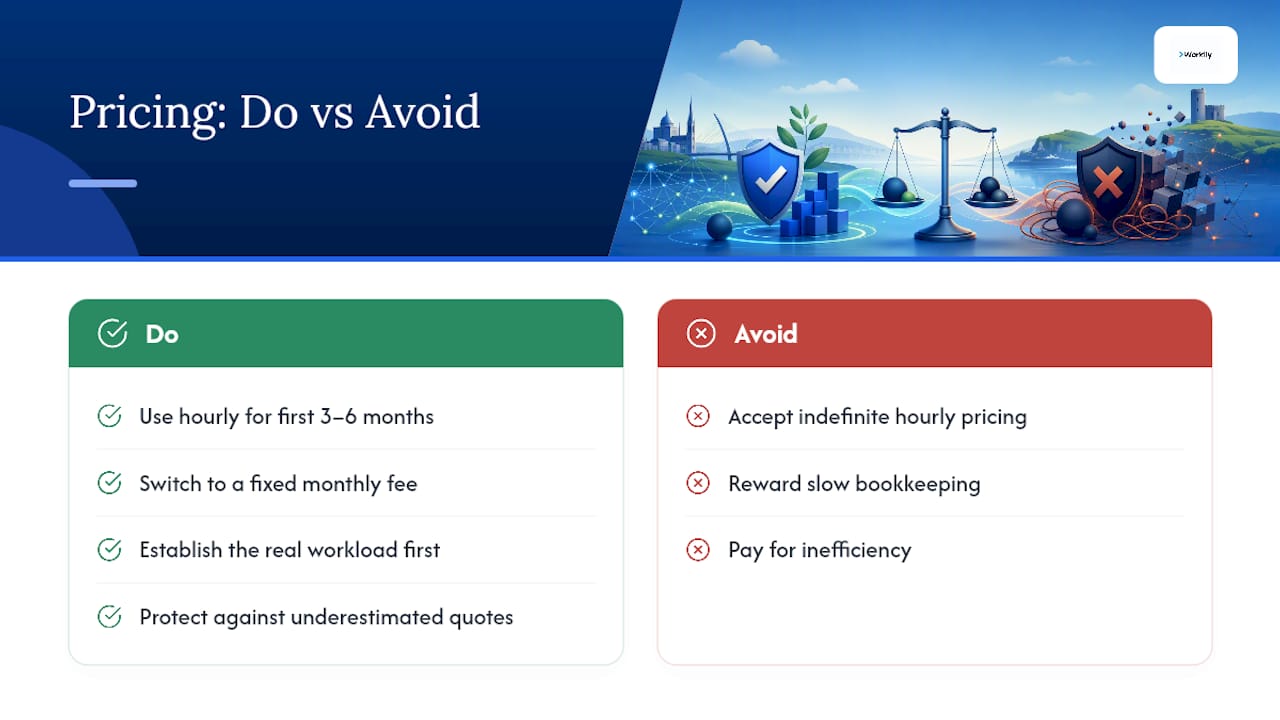
Hourly billing rewards slowness. A bookkeeper using automated bank feeds who finishes your reconciliation in two hours shouldn’t earn less than one still doing it manually in five, yet hourly rates create exactly that perverse incentive, as Xero’s own guidance on pricing points out.
My advice: agree an hourly rate for the first three to six months to establish real workload, then switch to a fixed monthly fee once both sides know what the job actually involves. It protects you from underestimated quotes and rewards your bookkeeper for getting efficient rather than staying slow.
— Thomas
Compare quotes and book vetted support through Workily
Online services offering instant booking with verified professionals allow users to receive scoped quotes promptly instead of waiting for callbacks from accountancy firms.
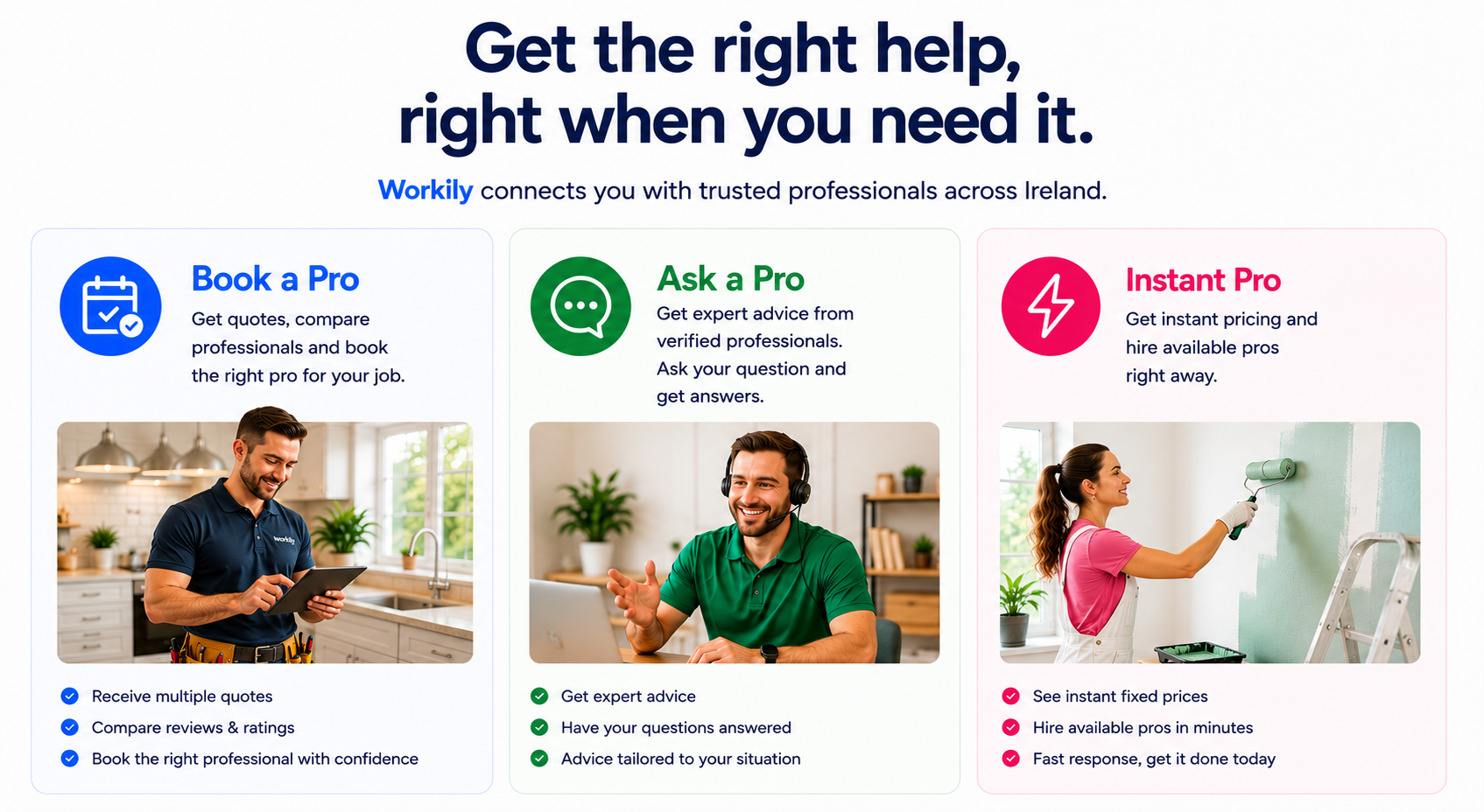
Rather than guessing at a fair rate from a single conversation, request quotes from two or three professionals through Workily’s Ask a Pro platform and compare exactly what each one assumes about your transaction volume, payroll headcount and VAT filing needs. Every professional is vetted before they can take a booking, and same-day availability means you’re not stuck waiting weeks to get your accounts back on track. If you’d rather browse and book directly, Workily’s booking page shows real-time availability for bookkeeping and admin support across Ireland. Start by requesting quotes today and use the checklist above to pick the one that actually fits your business.
Sources
- Value-based pricing guidance | Xero (Ireland)
- Bookkeepers in Ireland: What They Cost & How to Find One | Good Company Group
- Outsourced Bookkeeping Costs in Ireland in 2026 | Agile Accounting Personnel
FAQ
What is a good rate for a bookkeeper in Ireland?
A good hourly rate typically falls between €25 and €70, while a fair monthly package for a small business generally sits between €95 and €550 depending on transaction volume and VAT complexity.
How much should a self-employed bookkeeper charge?
Self-employed bookkeepers in Ireland commonly charge €25–€50 an hour for ad-hoc work, per Hey Jodie’s practitioner guidance, though many move to fixed monthly fees once a client relationship is established.
How much do bookkeepers earn in Ireland?
Earnings vary by client base and pricing model, but bookkeepers charging monthly packages of €250–€1,500 across several clients typically earn more consistently than those relying solely on hourly billing.
What is the hourly rate of a bookkeeper?
The typical hourly rate ranges from €25 to €70, with the higher end reflecting complex reconciliation, multi-currency accounts or urgent catch-up work.
Is it cheaper to outsource bookkeeping than hire in-house?
Yes, for most small businesses. Outsourcing avoids salary, PRSI and recruitment overheads that come with an in-house hire, making it the more cost-effective option for firms under roughly 50 employees.
Does a bookkeeping quote usually include VAT returns?
Not always. Many Irish providers bill quarterly VAT filing separately from the base monthly fee, so it’s worth confirming this before comparing quotes.
How does Workily help with finding a bookkeeper?
Workily lets you request scoped quotes from vetted bookkeeping professionals through its Ask a Pro service, with instant booking and same-day availability in many cases.