


Level every quote to the same written scope before you look at a single total. That’s the whole trick: convert each contractor’s numbers into matching line items for labour, materials, permits and allowances, so you’re comparing three versions of the same job rather than three different jobs. Skip this step and the cheapest quote usually turns into the most expensive one, once the omissions surface mid‑project. The rest of this guide walks through the checklist, the normalisation steps, and how to score what’s left.
TL;DR:
- Normalizing quotes into matching line items is essential to avoid comparing different scopes and hidden costs, preventing costly surprises.
- Contractors’ quotes must clearly include scope details, material specifications, permits, allowances, and payment terms to be reliably compared.
- Use a weighted scoring system that considers total cost, timeline, payment conditions, and warranty to select the best overall value, not just the lowest price.
- Vet contractors by verifying insurance, references, and transparency, avoiding red flags like large upfront deposits or vague scope descriptions.
- The full comparison process, including normalization and scoring, typically takes three to six weeks, with most homeowner effort focused on building the comparison spreadsheet.
Table of Contents
- What a proper contractor quote must include
- Common contractor quote formats and what they actually mean
- How to normalise quotes so they’re actually comparable
- How to score quotes for value, not just the lowest price
- Vetting contractors and spotting red flags before you sign
- Author perspective: what Workily sees homeowners get wrong
- How long does comparing contractor quotes actually take?
- How to clarify ambiguous or incomplete quotes with a contractor
- Common pitfalls when interpreting contractor quotes
- Editorial take: what actually moves the needle on this decision
- Get vetted quotes without the back and forth
- Sources
- FAQ
What a proper contractor quote must include
A quote that can’t answer who, what, where, when and how isn’t ready to compare against anything, according to guidance from The Renovation Blueprint. Vagueness in any of those five areas tends to predict a dispute later, usually over money.
Before you put a single figure into a spreadsheet, check that each quote from a contractor covers:
- Company details and proof: business name, registered address, tax details, and evidence of public liability insurance.
- A clear scope: which rooms or areas, and exactly what work happens in each one.
- Materials, named: brand, grade, and quantity, not just “tiles” or “flooring”.
- Labour separated from materials, so you can see what you’re paying for people versus product.
- Permits, disposal, and site protection, stated explicitly rather than assumed.
- Allowances and exclusions, written down as numbers, not left implied.
- A start date, estimated duration, named site contact, payment schedule, and warranty terms.
If a quote is missing more than one or two of these, that’s not a red flag on its own. Plenty of Irish tradespeople still write quotes on a single page. But it means you’ll need to ask for the missing detail before you can put it on equal footing with the others, and a quote‑versus‑estimate breakdown is worth reading if a contractor is resisting giving you a proper fixed figure at all.
Common contractor quote formats and what they actually mean
Contractors don’t all price the same way, and the format itself can hide risk before you’ve even looked at the number.
- Lump sum: one total figure. Fine if it’s itemised underneath; a black box if it isn’t. Ask for the itemised breakdown behind it.
- Per unit (per square metre, per linear metre): watch the quantities. Two contractors measuring the same kitchen can arrive at different square metreages, and that gap moves the total more than the rate does. Ask each one how they measured.
- Time and materials: no fixed ceiling, which means the final bill can run well past the estimate. Ask for a cap, or at least a realistic worst‑case estimate based on similar jobs.
- Mixed quotes with allowances: a placeholder figure stands in for a fitting or finish you haven’t chosen yet, for example “€1,200 allowance for tiles.” These are the single biggest source of divergence between bids, and converting every allowance to a matched, realistic number is the step most homeowners skip, according to analysis from Hemma.
Whatever format you’re looking at, ask one direct question: “If this figure turns out to be wrong, who absorbs the difference?” The answer tells you more than the total does.
How to normalise quotes so they’re actually comparable
This is the part that separates a proper comparison from three PDFs sitting in your inbox looking vaguely similar.
- Build one spreadsheet from your original brief. List every job component down the left: demolition, materials by area, labour by phase, fixtures, permits, disposal, allowances, exclusions. Add one column per contractor.
- Map each quote into the shared rows. Convert units so they match, square metres to square metres, hours to hours, and don’t let one contractor’s linear‑metre pricing sit next to another’s flat rate without converting both first.
- Force every gap into a visible row. If Contractor A includes skip hire and Contractor B doesn’t mention it, that’s not a saving, it’s a missing line item that will resurface as an extra. Price it in at a realistic market rate and add it to the total.
- Recompute the totals. What you get now is closer to true finished‑project cost rather than the headline figure each contractor originally sent you. A single comparison table that lines every bid up row by row is the practical mechanism for this, and it’s the same method professional estimators use.
- Use the sheet to ask targeted follow‑ups. Send each contractor the gaps specific to their quote and ask them to fill in the numbers.
Pro Tip: Keep the finished spreadsheet even after you’ve picked a contractor. It’s negotiation capital: when a contractor’s number differs from a rival’s on a specific line, showing them the gap in writing often gets you either a matched price or a proper explanation of what they’re doing differently.
How to score quotes for value, not just the lowest price
The normalised total should carry the most weight in your decision, but it shouldn’t be the only factor. Timeline, payment terms and warranty cover all carry real weight too, and scoring them explicitly is what a defensible comparison method from Quotsey recommends over simply picking the smallest number.
A workable default weighting looks like this:
- Normalised total cost: 50%
- Timeline and schedule confidence: 20%
- Payment terms and deposit structure: 15%
- Warranty, insurance and references: 15%
Adjust the split to fit your priorities. If cash flow is tight, weight payment terms harder.
Once you’ve scored each contractor, the sheet tells you where to push back. A low score on payment terms is a negotiation point, ask for a milestone‑based schedule instead of a large upfront deposit. A low score on warranty is a request for clearer written terms before you sign anything.
A higher overall score can justify paying a premium of a few hundred euro if it buys you a firmer timeline or stronger warranty cover. But treat a bid sitting 30 to 40% below the others with real suspicion; that gap usually means cheaper materials, omitted scope like permits or disposal, or an expectation that change orders will make up the difference later, per Quotsey’s guidance on outlier bids. Don’t reward the lowest number just for being lowest.
Vetting contractors and spotting red flags before you sign
A good quote on paper doesn’t guarantee a good contractor. Verify insurance, company registration, and tax compliance before you shortlist anyone, then make short reference calls to the finalists.
Ask each reference: what was the final cost against the original quote, how were change orders handled, did the job finish on schedule, and would they hire the same contractor again. That combination surfaces the pattern fast, according to advice from Hanton QS on turning quote comparisons into hiring decisions.
- Large upfront deposits (anything beyond a modest percentage) before work starts.
- A refusal to itemise the quote or share past client references.
- No proof of insurance, or reluctance to produce it.
- Vague scope language that avoids naming materials, quantities or a finish date.
Quotes significantly below market comparators are a documented pattern worth probing, not a windfall, per the same Quotsey analysis referenced above. Ask for sample contract wording and photos of completed similar jobs before you commit.
Author perspective: what Workily sees homeowners get wrong
The two mistakes that come up again and again: comparing headline totals before levelling scope, and letting skimpy allowances slide because the overall number looks attractive. Both are fixable with the checklist above. Workily’s Ask a Pro service and vetted professional network exist partly because of this pattern, offering a fast way to get a second opinion on a quote or book a matched, verified contractor directly.
How long does comparing contractor quotes actually take?
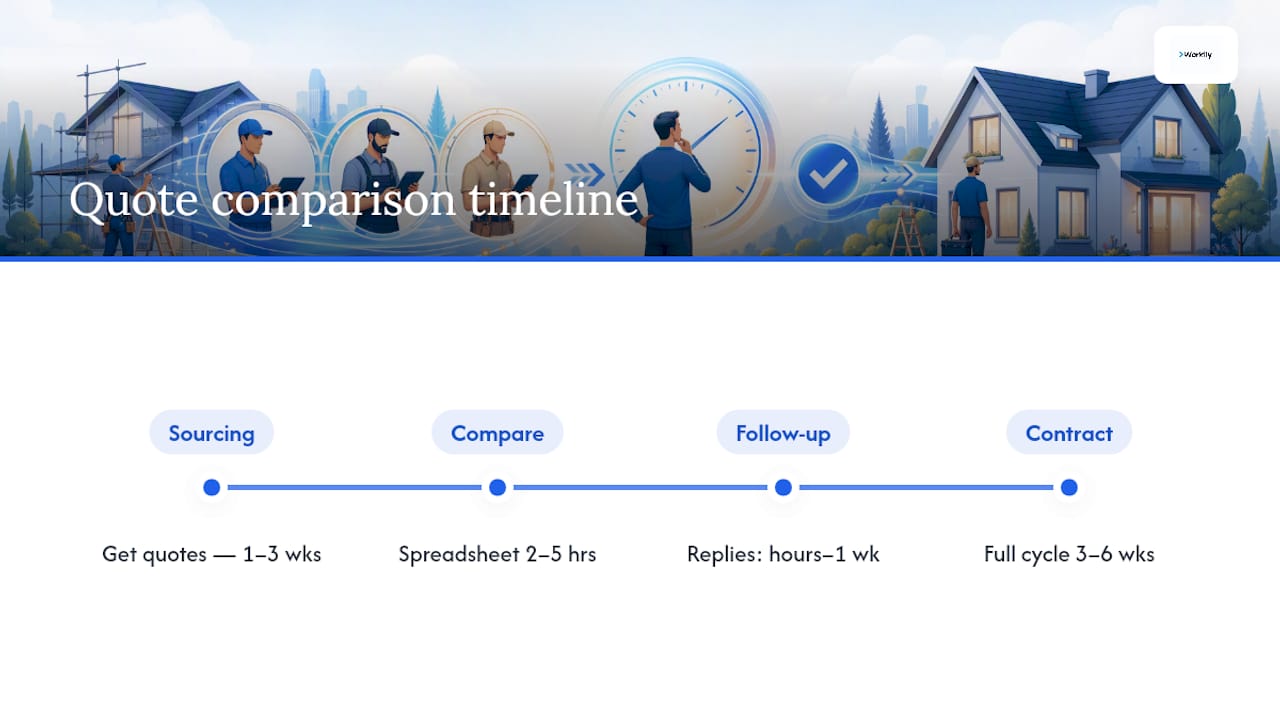
Getting three usable quotes for a mid‑sized renovation typically takes one to three weeks in Ireland, depending on how busy local tradespeople are and how quickly you can arrange site visits. Kitchen and bathroom specialists in Dublin and Cork are often booked out several weeks in advance during spring and autumn, the two busiest renovation seasons.
Once the quotes are in hand, the normalisation and scoring process itself, building the spreadsheet, mapping line items, and following up on gaps, generally takes a homeowner between two and five hours across a few evenings. That’s not a small commitment, but it’s considerably less than the cost of discovering a missing allowance three weeks into the job.
Add another few days for follow‑up questions to contractors and their replies. Some respond within hours; others, particularly sole traders juggling multiple sites, can take a week to get back to you with itemised detail. Build that lag into your planning if you’re working towards a fixed start date, such as a house sale completion or a family event.
The full cycle, from first phone call to signed contract, commonly runs three to six weeks. Rushing it rarely saves time overall; a poorly vetted contractor who causes delays or disputes mid‑project usually costs you far more than the extra week spent comparing properly would have. If your timeline is tight, same‑day instant booking through a vetted marketplace can compress the sourcing stage significantly, though the comparison and vetting work described above still matters just as much.
How to clarify ambiguous or incomplete quotes with a contractor
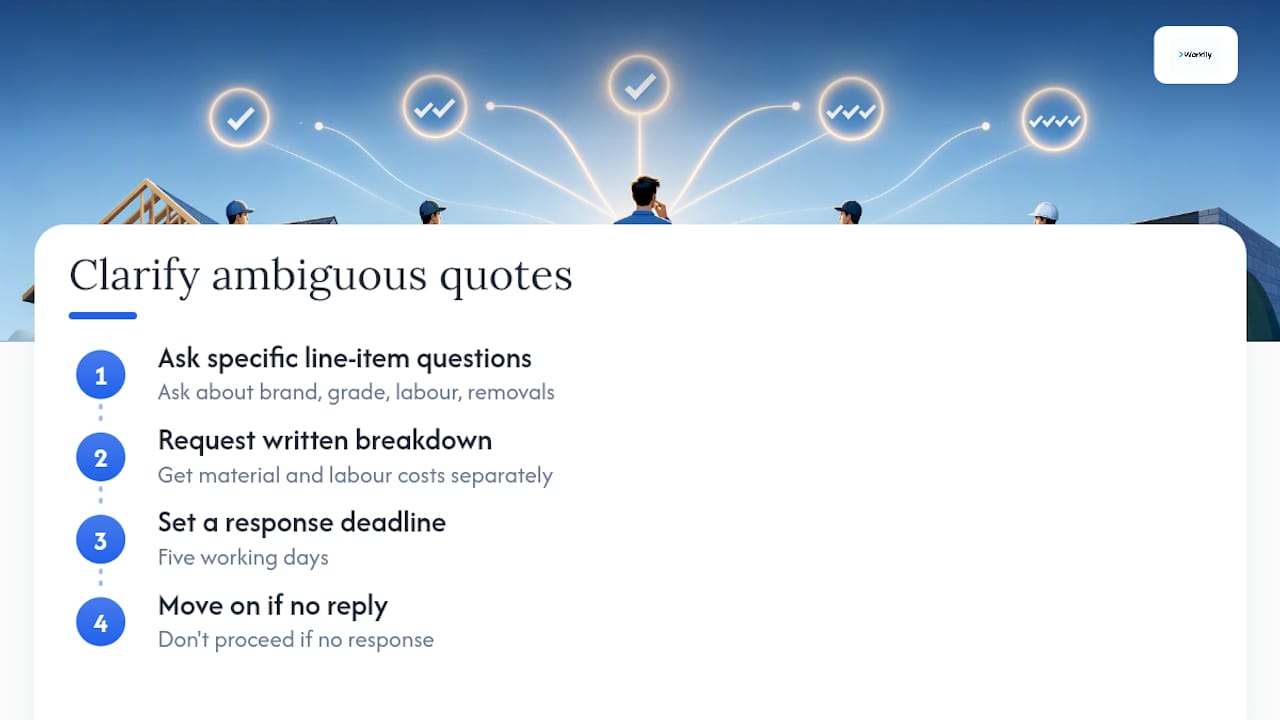
Most contractors won’t volunteer missing detail unless you ask a specific question. General requests like “can you give me more detail” tend to produce another vague paragraph rather than the numbers you need.
Instead, ask line by line. If a quote says “flooring: €3,500” with no further breakdown, ask directly: what brand and grade of flooring, what’s the labour rate separate from material cost, and does that figure include removal of the existing floor. Specific questions get specific answers.
Put your questions in writing, by email rather than a phone call, so the contractor’s reply becomes part of the paper trail. If a dispute arises later over what was included, a written exchange settles it far more cleanly than a remembered phone conversation.
When a contractor pushes back on itemising, that’s useful information in itself. A tradesperson confident in their pricing usually has no problem breaking it down; reluctance to do so is often a sign the number was built to look competitive rather than to reflect the actual job. Compare this against the renovation cost benchmarks for Ireland to check whether a figure is plausible before you ask about it.
Give contractors a deadline for clarification, five working days is reasonable, and move on if they don’t respond. A contractor who’s slow to answer questions before you’ve signed anything is unlikely to communicate better once the job is underway and money has changed hands.
Common pitfalls when interpreting contractor quotes
The single most common mistake is comparing three bottom‑line totals before checking whether they cover the same scope. A €14,000 quote and a €16,500 quote aren’t comparable if one excludes disposal and permits and the other includes them; that €2,500 gap might simply reflect what’s actually in the number.
A second pitfall: treating allowances as real prices. An allowance is a placeholder, and unless you’ve priced the actual tiles, taps or worktop you intend to choose, the allowance figure is a guess dressed up as a number. Match every allowance across all quotes to the same realistic figure before comparing totals, per findings from Hemma on how allowances distort apparent price differences.
A third: assuming a longer, more detailed quote is automatically more expensive or a shorter one automatically cheaper. Detail reflects thoroughness, not price. A one‑page quote that’s genuinely comprehensive can beat a five‑page quote padded with boilerplate.
Fourth, ignoring payment terms until the contract stage. A 50% upfront deposit changes your risk profile substantially compared with a milestone‑based schedule, even if the total price is identical.
Fifth, treating the lowest bid as the default winner without asking why it’s low. Sometimes it’s genuine efficiency. Often it’s an omission that becomes an invoice later.
Editorial take: what actually moves the needle on this decision
The conventional advice on comparing contractor quotes tends to stop at “get three quotes and compare them,” which is true but useless without a method. Three quotes in three different formats, each with its own assumptions baked in, don’t compare themselves. The research consistently points to the same fix: force every bid into identical rows before judging any of the totals.
What’s underrated is how much of the real risk sits in allowances, not headline prices. Homeowners spend hours negotiating the top‑line number and five minutes glancing at a tile allowance that’s a third of what the tiles they actually want will cost. That’s backwards. Fix the allowances first; the headline number sorts itself out once the scope is honest.
Prioritise the spreadsheet over your gut instinct about which contractor “seemed more professional” on the phone. Instinct matters for the working relationship, but it tells you nothing about whether the quote covers skip hire.
— Thomas
Get vetted quotes without the back and forth
Workily shortens the part of this process that eats the most time: finding contractors worth quoting from in the first place. Instead of chasing tradespeople for callbacks, you can book vetted professionals directly through instant booking for jobs like home cleaning, gutter clearing or a boiler service, with same‑day availability in many cases.

For bigger renovation decisions, where you want a second opinion on a quote before you sign, Ask a Pro connects you with a verified expert for a paid consultation to check whether a contractor’s numbers add up. Every professional on the platform goes through Workily’s vetting process, detailed on the Trust & Safety page, so you’re not starting your reference checks from zero. If you’re ready to move, request quotes from multiple verified professionals through Workily and compare what comes back using the checklist above.
Sources
The normalisation and scoring methods above draw on practical guides from Prosnook on bid comparison tables, Hemma on allowances, Quotsey on scoring value over price, and Hanton QS on vetting after quotes arrive. For a deeper look at contractor verification, see SzopaLabs’ guide on what to check before signing.
- How to compare contractor quotes like a pro
- Comparing quotes for your renovation: how to read what’s actually there
- Compare contractor quotes side by side
FAQ
What is a good rate for a contractor in Ireland?
Rates vary widely by trade and region, but the figure that matters more than the hourly rate is whether the total quote is normalised against competitors covering the same scope, materials and allowances. A renovation cost guide for Ireland gives a useful benchmark range before you start comparing bids.
How do you describe a good contractor quote?
A good quote names the company and its insurance details, describes the scope room by room, lists materials by brand and quantity, separates labour from materials, and states payment terms and warranty cover explicitly.
What are typical contracting rates in Ireland?
Rates depend heavily on trade, region and project scope, and Dublin rates typically run higher than rural counties. Rather than anchoring to a single rate, use a normalised, line‑by‑line comparison across at least three local quotes to judge whether a specific price is reasonable for your job.
What are tier 1, 2, and 3 contractors?
This tiering is more common in commercial construction procurement than residential renovation, generally referring to main contractors (tier 1), their subcontractors (tier 2), and specialist suppliers further down the chain (tier 3). For most homeowners hiring directly, this classification isn’t relevant; the checklist and vetting steps above matter more.
How many contractor quotes should I get?
Three is the widely recommended minimum, enough to spot an outlier without drowning in comparison work. Fewer than three makes it hard to tell whether a price is fair; more than four or five rarely adds useful information once you’ve normalised the first three properly.
How much does it cost to get a professional opinion on a contractor quote?
Workily’s Ask a Pro consultations for home improvement queries cost €49 per session, letting you get a second opinion on a quote before you commit to a contractor.