

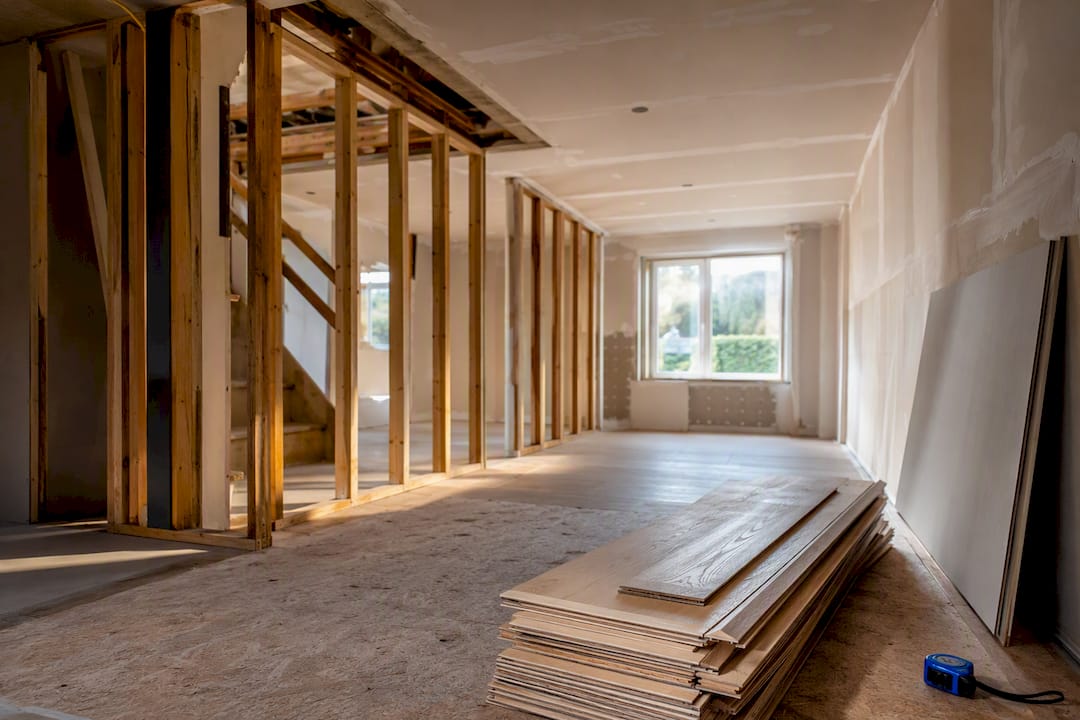
Renovation costs in Ireland for 2026 run from roughly €800 per m² for a cosmetic refresh to over €2,800 per m² for a full structural overhaul, with mid-range work typically landing between €1,500 and €2,500 per m². A typical 3 to 4 bed house doing moderate work might total €120,000 to €200,000. Before you commit a cent, get a professional survey done and gather at least three written quotes.
TLDR:
- Renovation costs for a 140 m² house in Ireland typically range from €120,000 to €200,000 for moderate work, but full structural overhauls can exceed €2,800 per m².
- Costs vary significantly depending on scope, with cosmetic work around €800 to €1,300 per m², and full renovations starting at €2,600 per m², excluding extras like permits and contingencies.
- Soft costs, including architect fees, certifier costs, VAT, and unexpected issues, can add 20% or more to the initial renovation budget.
- Location influences expenses, with urban areas like South County Dublin often 25 to 35% above national averages, and project timelines extend accordingly.
- Proper quote comparison requires detailed itemization and validation, with at least three quotes, staged payments, and independent review recommended before signing a contract.
Table of Contents
- How do you read renovation costs per square metre in Ireland?
- What do individual rooms and trades actually cost?
- What soft and hidden costs catch homeowners out?
- How much does location change your renovation budget?
- Which grants and SEAI supports reduce your net cost?
- How should you compare renovation quotes properly?
- How does Workily help you find reliable renovation quotes?
- Are there tax implications for renovation spending in Ireland?
- Author perspective: where homeowners usually get the sums wrong
- Ready to get quotes? Start comparing vetted pros on Workily
- Sources
How do you read renovation costs per square metre in Ireland?
That €/m² figure on a builder’s estimate rarely means what homeowners assume it does. Most quoted rates cover construction only: labour, materials, and site costs. They usually exclude architect fees, structural engineer sign-off, VAT, and the contingency you’ll almost certainly need. Two contractors can quote the same €/m² number and mean very different things once you check what’s actually inside the price.
For 2026, the working bands look like this: cosmetic renovation (new kitchen units, decorating, flooring, no structural work) sits around €800 to €1,300 per m². Moderate renovation, involving some layout changes, a new bathroom, and partial rewiring, runs €1,500 to €2,500 per m², a range supported by Untangle’s 2026 market analysis. Full or structural renovation, including extensions, load-bearing wall removal, and complete services replacement, typically starts at €2,600 per m² and climbs well beyond that for period properties or listed buildings.
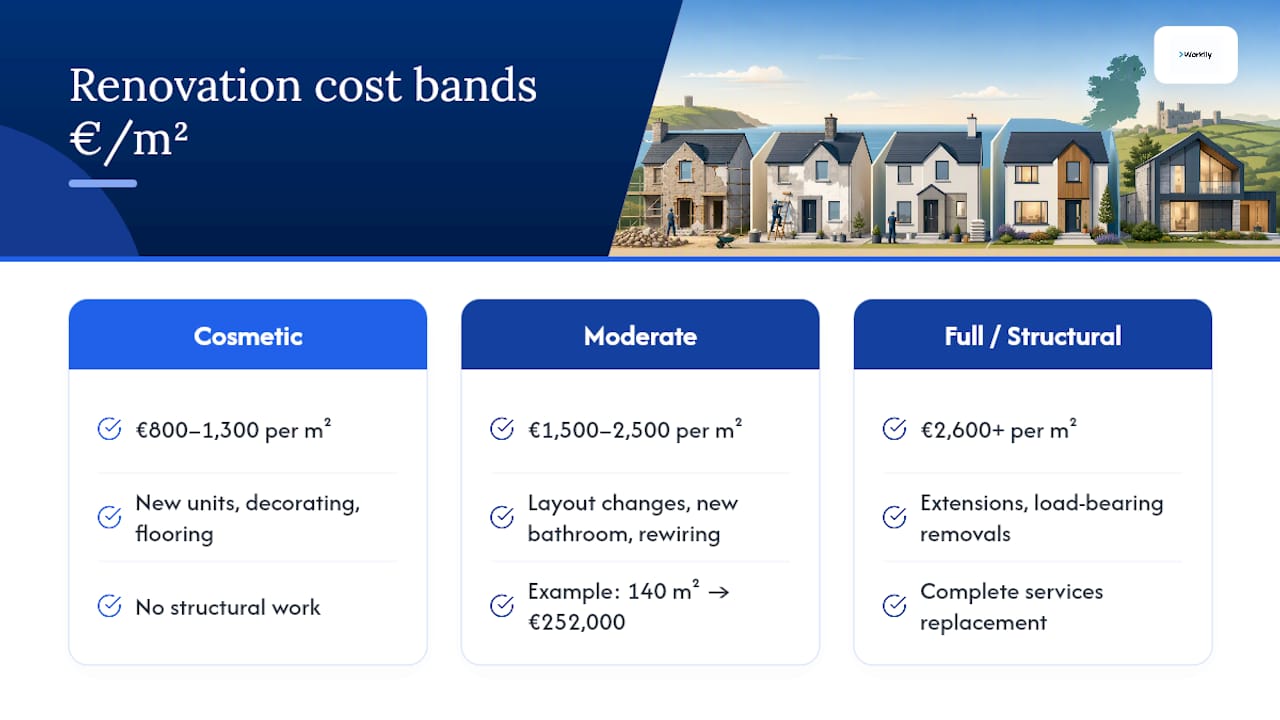
Take a 140 m² semi-detached house needing moderate work. At €1,800 per m² (a reasonable midpoint), that’s €252,000 before fees, VAT, or contingency. Add those on and you’re closer to €300,000. The SCSI’s Real Cost of Renovation report backs this pattern up with case studies showing how quickly a headline figure inflates once the full scope is priced properly.
What do individual rooms and trades actually cost?
Room-by-room budgeting is where most homeowners get their first reality check. A kitchen supply and fit job at the low end (basic units, laminate worktops) can come in under €12,000, but mid-range kitchens with proper cabinetry and stone-effect worktops typically land in the €21,000 to €38,000 bracket. Bespoke joinery, integrated appliances, and knocking through a wall push that figure higher fast.
- Kitchen (mid-range): €21,000 to €38,000, driven up by layout changes and appliance integration
- Bathroom or en suite: €15,000 to €23,000, with tiling and waterproofing eating a large share of the budget
- Full electrical rewire (140 m² house): €11,000 to €17,000, depending on the number of circuits and consumer unit spec
- Full replumb: often bundled with rewiring during structural work, adding a similar range again
- Single-storey extension: typically 12 to 20 weeks on site, priced within the moderate to full renovation bands above
- Attic conversion: usually 6 to 10 weeks, though structural surveys for roof loading can add time upfront
What pushes any of these higher? Moving plumbing or electrical points, working in period properties with uneven floors or walls, and sourcing bespoke finishes rather than standard stock items.
What soft and hidden costs catch homeowners out?
The construction figure is only part of the bill. An Assigned Certifier, required for Building Control (Amendment) Regulations compliance on most extensions and structural work, typically costs €2,500 to €6,500. A structural engineer adds €1,500 to €3,500. Architect fees generally run 8 to 15% of the build cost on larger projects.
VAT is another line homeowners forget. Most renovation labour and many materials attract the reduced 13.5% VAT rate, which adds up quickly on a six-figure job.
Hidden cost reality: surveyors report that undiscovered problems, dry rot, outdated wiring, failed plaster, routinely push renovation budgets 20% or more over the initial estimate.
How much does location change your renovation budget?
National averages only get you so far. South County Dublin can run 25 to 35% above the national mean, driven less by material costs than by contractor availability, site access restrictions, and waste disposal charges in dense urban areas.
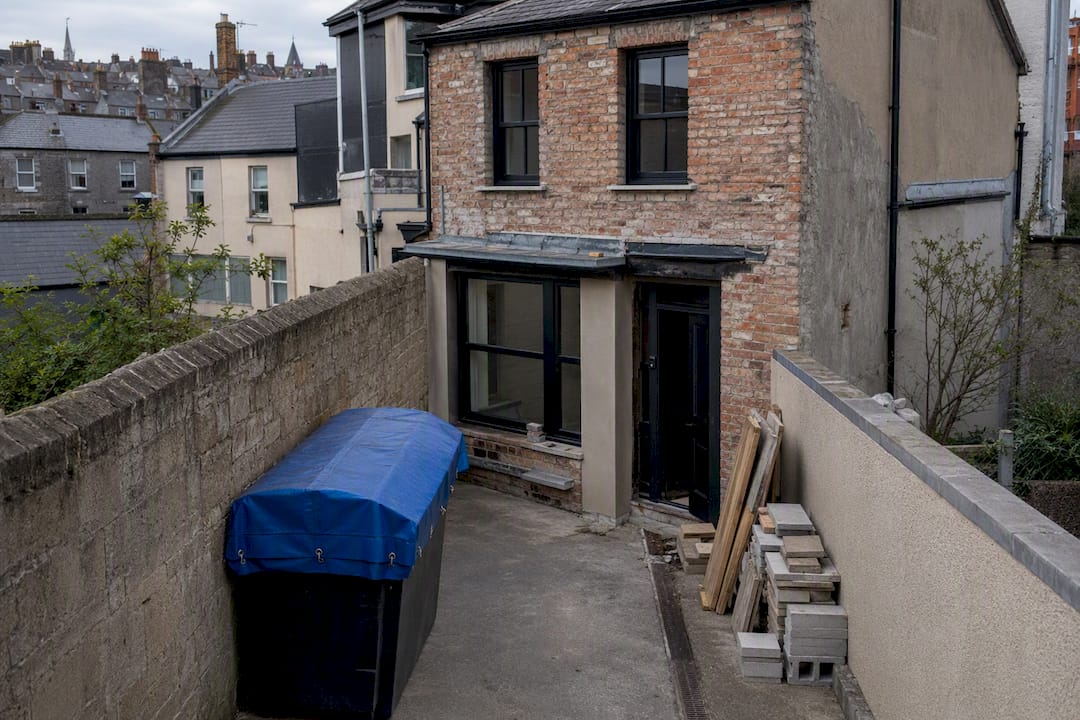
Timelines follow a similar logic: a kitchen refit generally takes 2 to 4 weeks once materials arrive, a bathroom renovation 2 to 3 weeks, a single-storey extension 12 to 20 weeks, and a full house renovation anywhere from 4 to 9 months depending on scope and how quickly planning or BCAR sign-off comes through.
Which grants and SEAI supports reduce your net cost?
SEAI’s home energy grants and the Gov can meaningfully cut your out-of-pocket spend, but timing matters. You must apply and get approval before works start; retrospective claims are routinely refused. Grants also carry caps and can’t always be stacked without documentation proving each element is distinct.
Say your renovation costs €180,000 and you qualify for a vacant property grant plus SEAI insulation support totalling €30,000. Your net cost drops to €150,000, but only if the paperwork was lodged before the first tradesperson arrived. Our energy efficiency guide breaks down which upgrades typically qualify.

How should you compare renovation quotes properly?
A fair comparison starts with insisting every quote uses the same structure. Ask each contractor to itemise labour, materials, waste removal, and VAT separately, and to state explicitly what’s excluded (permits, certifier fees, snagging).
- Get at least three written quotes covering identical scope documents
- Line up each quote’s inclusions and exclusions side by side
- Query any figure that’s dramatically lower, it usually means something’s missing, not that you found a bargain
- Confirm insurance, tax clearance, and relevant qualifications before signing anything
- Set contingency at 10 to 15% and agree staged payments tied to project milestones, not lump sums upfront
Pro Tip: For anything structural, pay a quantity surveyor for an independent second opinion on a contractor’s build-up before signing. It typically costs a few hundred euro and can save thousands.
Our guide on hiring tradespeople in Ireland walks through what a proper quote should include, and our piece on checking if a tradesperson is legitimate covers the specific credentials worth verifying.
How does Workily help you find reliable renovation quotes?
Workily connects you with vetted tradespeople across Ireland through instant booking, meaning you can request quotes and get same-day contact rather than waiting on callbacks. With a 98% satisfaction rate among more than 100,000 customers, the platform’s vetting process and secure payment system take some of the guesswork out of finding trades. The practical workflow: get your survey done, define the scope, request quotes through Workily, then compare them properly before you commit.
Are there tax implications for renovation spending in Ireland?
Grants themselves aren’t generally treated as taxable income for homeowners renovating their principal private residence, but the rules shift for property investors. If you’re renovating a rental property, renovation costs may be treated differently depending on whether the work counts as repair (often deductible against rental income in the year incurred) or improvement (typically added to the property’s cost base for Capital Gains Tax purposes when you eventually sell).
VAT is the area most homeowners misunderstand. The 13.5% reduced rate applies to most renovation and repair labour on private dwellings, and contractors should already be applying this rather than the standard 23% rate. If you’re quoted at 23% for straightforward renovation work, query it, that’s a meaningful overcharge on a large invoice.
Property investors converting a vacant unit under a grant scheme should also keep documentation tight. Gov.ie’s guidance stresses evidence trails for vacant property refurbishment grants, and Revenue can query whether a grant-supported improvement affects your cost base if the property is later sold or let. None of this replaces proper tax advice from an accountant familiar with rental property or investment portfolios, but it’s worth raising the question before works begin rather than after.
Author perspective: where homeowners usually get the sums wrong
Most homeowners underestimate soft costs, not build costs. They’ll price the kitchen accurately but forget the certifier fee, the VAT uplift, and the contingency until the final invoice lands. Get an independent cost check or a quantity surveyor involved whenever a project touches structure, load-bearing walls, extensions, roof work. It’s a small spend that catches expensive mistakes early. Our guide to checking a tradesperson’s legitimacy is worth reading before you sign anything.
— Thomas
Ready to get quotes? Start comparing vetted pros on Workily
Workily is the faster route to accurate renovation quotes because you’re contacting vetted, insured tradespeople directly rather than waiting days for callbacks from a general directory listing.

Once you’ve read through the SCSI’s case studies and worked out a rough budget, the next step is getting real numbers from real tradespeople. Request a quote through Workily and you can have vetted professionals responding the same day, or use instant booking if you need a survey done urgently. Check each pro’s credentials and reviews before confirming, and gather at least three quotes before you decide anything. For larger renovation projects where you’re weighing up whether work counts as maintenance or full renovation, Sherry Property Care’s Dublin homeowner guide is a useful companion read. Start your search on Workily and get your project moving with clarity, not guesswork.
Sources
- Real Cost Of Renovation – Society of Chartered Surveyors Ireland
- Gov
- Untangle: How much does it cost to renovate a house in Ireland in 2026?
- BeforeYouBuild: house renovation cost Ireland 2026