


A vetted professional is someone who has been subject to one or more independent checks, such as ID, licence or criminal-record screening, so a hirer can reasonably trust their suitability for a specified role. Vetting is a process, not a single tick box, and its depth varies by industry and risk. Two signals worth checking on any profile: whether ID was verified, and whether a licence or qualification was confirmed against a real register.
TL;DR:
- Platforms should disclose specific checks performed, such as ID verification, licence status, criminal background, and employment confirmation, to establish genuine vetting.
- Re-verification intervals are crucial; without clear refresh policies, vetting may become outdated, especially for licences or criminal checks with expiry dates.
- A “verified” badge often confirms a single credential, like an ID or licence, but does not imply comprehensive background checks or ongoing suitability assessments.
- Deep vetting is essential for roles involving safety risks or unsupervised work with vulnerable populations, while basic checks may suffice for minor or low-risk tasks.
- Transparency about sources and update frequency is the best indicator of a platform’s vetting process quality, helping users differentiate between superficial verification and thorough background checks.
Table of Contents
- What does vetted mean, and why do organisations bother?
- How vetting actually works: the checks that matter
- Vetted versus verified: the distinction that actually matters
- What actually appears on a vetting check or report
- How to judge whether a vetting process is actually any good
- How Workily vets the professionals on its platform
- When you need deep vetting, and when basic checks are enough
- Book vetted professionals through Workily without the guesswork
- Sources
- FAQ
What does vetted mean, and why do organisations bother?
Vetting means examining someone or something carefully to make certain they are suitable, according to the Cambridge Dictionary. In practice, it is a proactive, systematic way of investigating a person’s background, credentials and suitability before you decide to trust, hire, or work with them.
Organisations vet people because the alternative is expensive guesswork. A tradesperson without insurance who causes water damage to a Dublin apartment, or a childcare worker with an undisclosed conviction, are the kind of costly surprises vetting exists to prevent.
You will meet vetting in several settings: employment recruitment, national security clearances, regulated professions such as medicine or law, and increasingly on service marketplaces where a platform screens tradespeople or consultants before letting them take bookings. The Access Group’s guidance on recruitment screening notes that typical checks cover identity, qualifications or licences, criminal-record or background screening, and employment history, with the depth varying by role and sector. A babysitting platform and a financial services firm are not going to apply the same rigour, and they shouldn’t.
How vetting actually works: the checks that matter
Vetting depth tracks risk. A low-stakes gig gets a light check; a safety-critical or regulated role gets several layers. The checks that recur across employment, security clearance and service marketplaces include:
- Identity checks: confirming a government-issued ID matches the person applying, usually the first and cheapest step.
- Qualification and licence checks: verifying a trade certificate, professional membership, or state licence against the issuing register rather than taking a photo of a certificate at face value.
- Criminal record and background screening: checked within legal limits, which differ by jurisdiction and role, and which often exclude spent or sealed convictions.
- Employment history and reference checks: contacting previous employers or clients to confirm dates, roles and conduct.
- Insurance and role-specific checks: public liability cover for tradespeople, or safeguarding checks (the Irish equivalent of the UK’s DBS system runs through the National Vetting Bureau) for anyone working with children or vulnerable adults.
None of these checks is optional in isolation, but which combination applies depends entirely on what the role demands. An electrician needs proof of qualification and insurance far more than a deep criminal check; a home tutor working with children needs the reverse emphasis.
Vetted versus verified: the distinction that actually matters
“Verified” and “vetted” get used interchangeably, and that is where a lot of confusion starts. Verified means one specific fact or credential has been confirmed, such as an ID document matching a name, or a licence number showing as active on a register. Vetted describes the whole process, a collection of individual verifications stitched together into a judgement about suitability.
Psychology Today’s explanation of its verified badge is a useful real-world example: the badge confirms a therapist’s licence has been checked, and the platform re-verifies credentials when they expire. That is verification of one credential, not a full vetting process covering references, disqualifying history and ongoing conduct.
Practically, this means:
- A profile can carry a “verified” badge while having had no criminal check or reference call whatsoever.
- “Vetted” should imply multiple checks were run, not just one.
- When you see either word on a platform, ask which specific checks it covers before assuming the broader meaning.
What actually appears on a vetting check or report
A proper vetting report is rarely one line saying “passed”. It usually breaks down into distinct findings, each with its own status.
- Identity match: confirmation the name, photo and document details align.
- Licence or qualification status: active, lapsed, or unable to verify, cross-checked against the relevant professional register.
- Criminal record flags: any relevant convictions within legal disclosure limits, or a clear result.
- Employment verification: confirmed dates and roles from named referees or employers.
- Reference feedback: a summary of what past clients or employers said, sometimes with supporting documents attached.
Results usually show as a short summary with flags for anything that needs attention, backed by the underlying documents where the platform allows access. Limits exist too: jurisdictional rules on data protection restrict what can be shared, sealed or spent convictions may never appear, and checks run in one country rarely transfer cleanly to another.
How to judge whether a vetting process is actually any good
The single biggest tell is transparency. A platform that names its data sources, professional registers, government databases, insurance registries, and states how often it rechecks them is doing something real. A platform that shows a generic “verified” tick with no explanation of what sits behind it is asking you to trust a black box.
Before hiring anyone through any platform, it is worth asking:
- Which specific checks were run: ID, licence, insurance, criminal record?
- When was the professional last rechecked, and is there a stated refresh interval?
- Can I see supporting evidence, such as a licence number or insurance certificate, rather than just a badge?
Displaying discrete signals such as confirmed ID, a valid licence number and a verified insurance certificate builds more trust than one unexplained badge, according to Connectively’s analysis of verification signals. A one-off check is also only as good as its last update; a platform with no re-verification policy is showing you a snapshot that could be years out of date.
Pro Tip: Before booking anyone for work inside your home, ask them directly which body issued their trade licence or insurance, and check that registry yourself if it’s public. It takes two minutes and tells you more than any badge.
If you’re weighing up whether to check a tradesperson’s credentials yourself or lean on a platform that has already done it, the questions above work either way.
How Workily vets the professionals on its platform
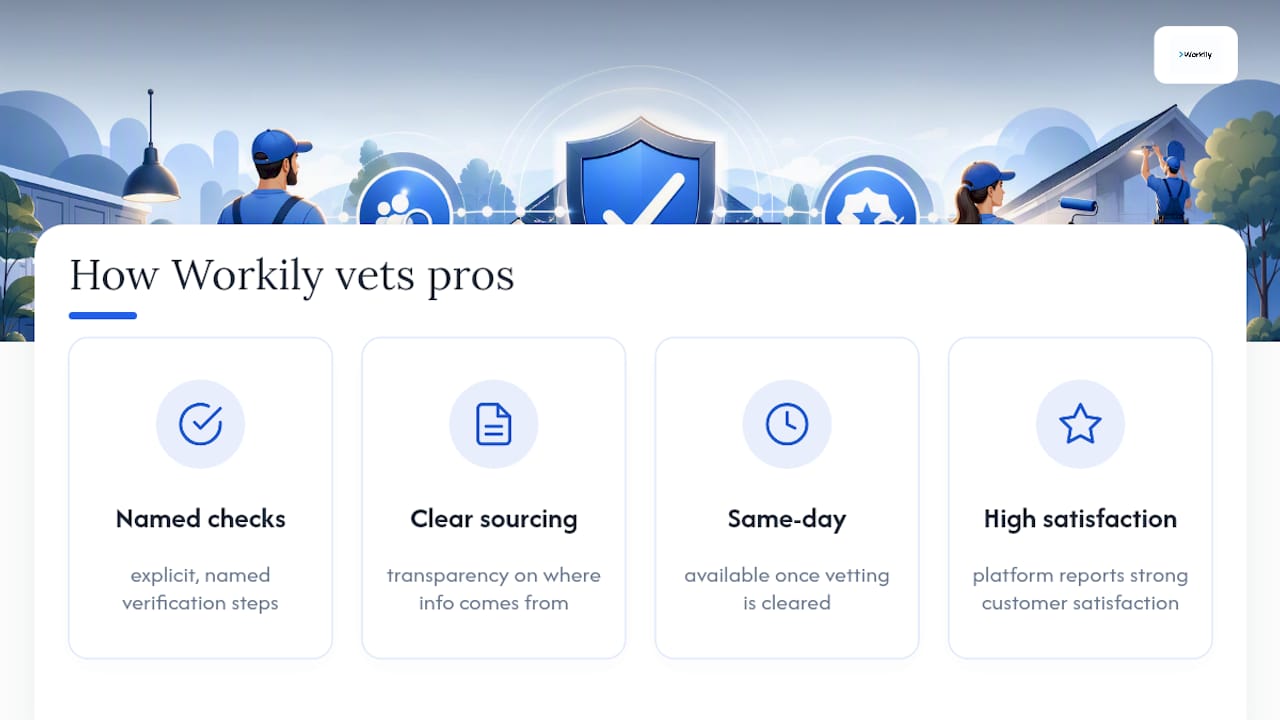
Workily’s marketplace connects homeowners and business owners with professionals across trades, home services, wellness and digital work, and its Trust & Safety framework is built around the same principles outlined above: named checks, clear sourcing, and same-day availability once a professional has cleared vetting. Instant booking only works because the professional on the other end has already been through that process, not because the booking button is fast.
The platform reports a high satisfaction rate among customers, which is worth considering when choosing a service platform for work inside your home. Details of what gets checked and how sit on Workily’s Trust & Safety page, which is the kind of disclosure this article has argued you should look for on any platform, not just this one.
When you need deep vetting, and when basic checks are enough
Match the vetting to the risk. A one-off cleaning job or garden tidy-up mainly needs ID confirmation and a decent review history. Anything involving your home’s structure, electrics, or gas, or anyone working unsupervised with children, needs full licence verification and a criminal check, no shortcuts. Weigh the extra time and cost of deeper vetting against what a mistake would actually cost you, in money or worse.
— Thomas
Book vetted professionals through Workily without the guesswork
Workily gives you a faster route to a vetted tradesperson or consultant than trawling reviews and cold-calling numbers off a van. Every professional on the platform goes through identity and credential checks before they can take a booking, and instant booking means you can often get someone out the same day rather than waiting on callbacks.
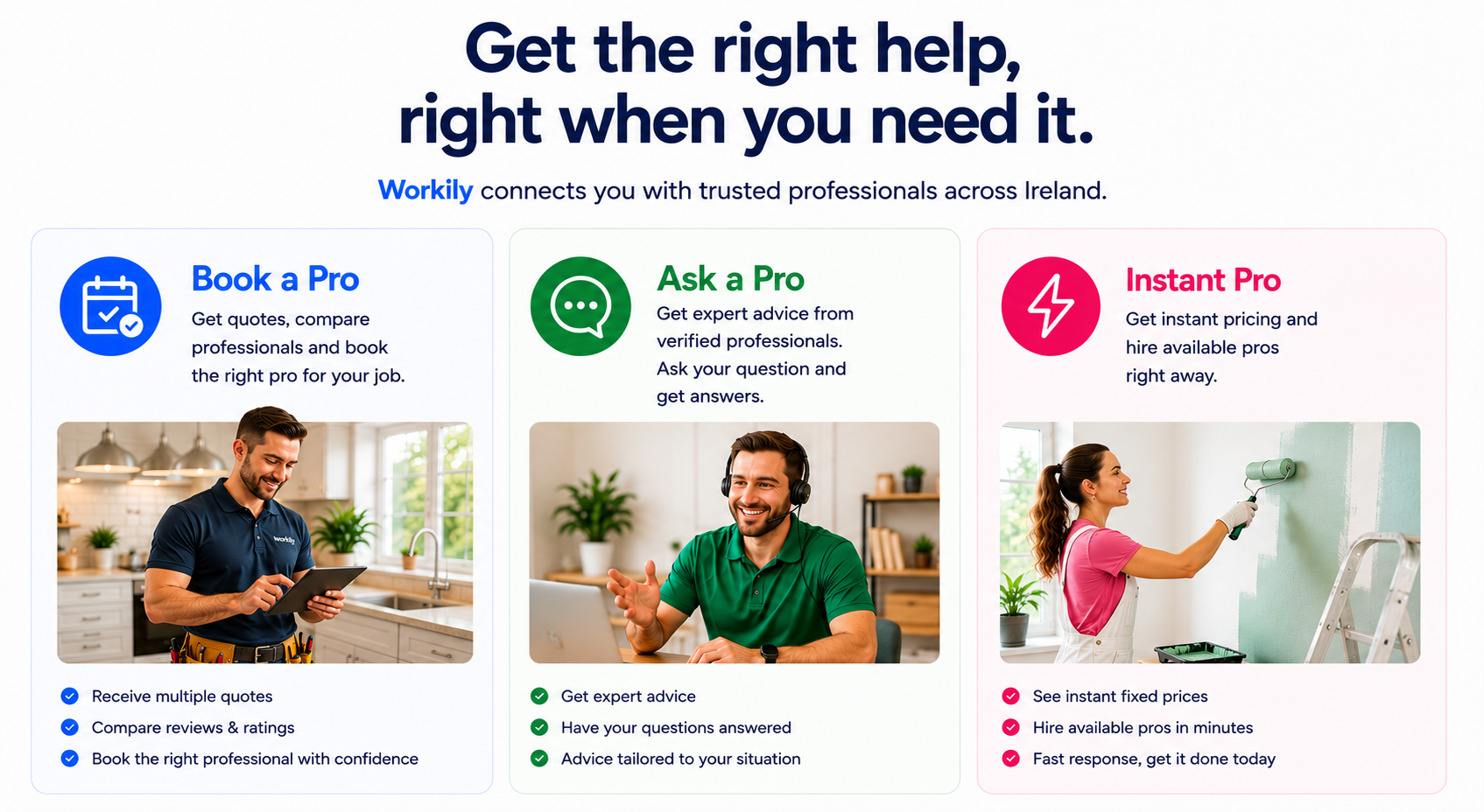
If you’d rather talk something through before committing to a job, Ask a Pro lets you get a video consultation with a specialist first. Otherwise, head to Workily to compare vetted professionals in your area, request multiple quotes, and book the one that fits your job and your budget.
Sources
- Screening and vetting in recruitment | The Access Group
- Vetting | Cambridge Dictionary
- What it means to be verified by Psychology Today | Psychology Today
- Understanding verified profiles | Connectively
FAQ
What is the difference between “verified” and “vetted”?
Verified confirms one specific fact, such as an ID or a licence number, while vetted describes a broader process combining several checks to judge overall suitability.
What does “vetted” mean for a job application?
For a job, being vetted usually means your identity, qualifications, employment history and, depending on the role, your criminal record have been checked before an offer is confirmed.
What shows up on a vetting check?
A typical report includes an identity match, licence or qualification status, any criminal record flags within legal limits, employment verification, and reference feedback.
What does “vetted” mean in general use?
It means someone or something has been examined carefully to confirm it meets the required standard, whether that’s a person, a document, or a company.
Are vetted professionals on Workily background checked?
Workily’s Trust & Safety process includes identity and credential checks on professionals before they can accept bookings, with details published on its Trust & Safety page.
Can a profile be verified but not fully vetted?
Yes. A single verified badge often confirms one credential, such as a licence, without covering criminal history, references or employment verification, so it’s worth asking what else was checked.
How often should vetting be repeated?
Reliable platforms state a re-verification interval, since a licence or clearance confirmed once can lapse or expire; if no refresh policy is stated, treat the check as a snapshot that may be out of date.